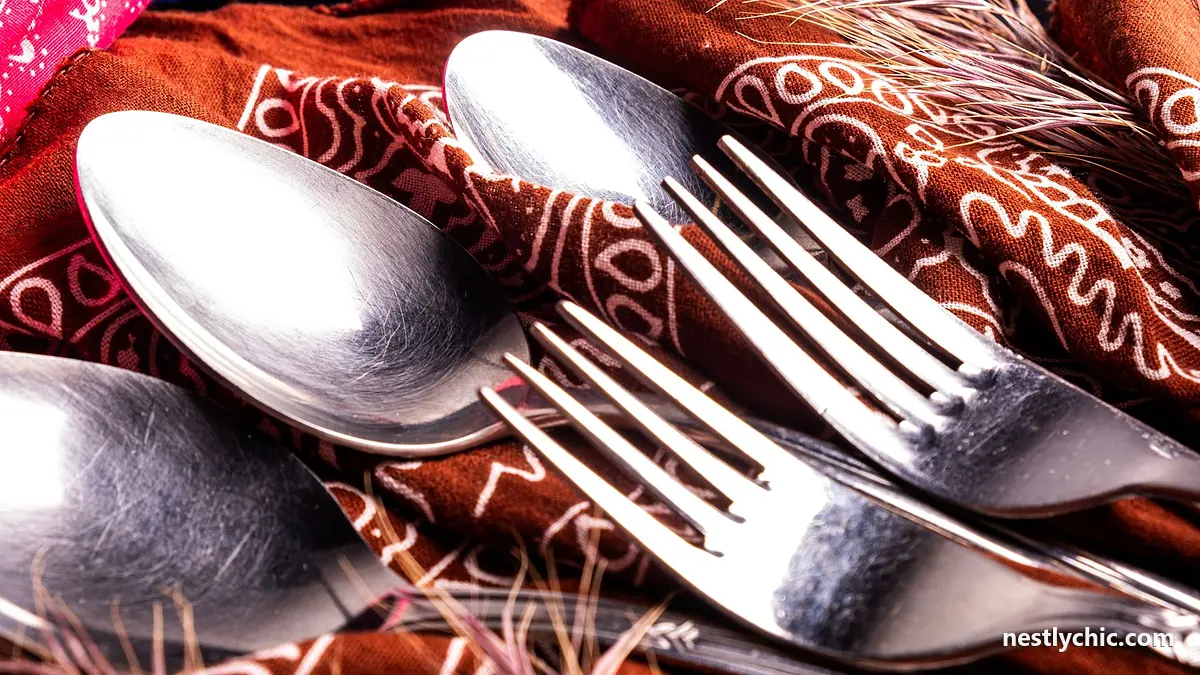
What makes a set feel cheap is thickness, mass and where that mass sits, and none of those three is the number printed on the box. The alloy designation on flatware describes corrosion resistance. It says nothing about how heavy a fork is or how it balances.
The industry itself separates the two. A foodservice supplier's flatware guide states plainly that "the grades of stainless steel do not refer to the thickness (or gauge) of the flatware, which is what determines the weight. The higher the gauge, the thicker / heavier the flatware is" (WebstaurantStore flatware guide, read 2026-09-08). That single sentence explains why two sets sold as the same grade can feel like different objects.
How to choose flatware quality when everything looks the same online
Photographs cannot show mass, and mass is most of the difference the hand registers. A listing showing a beautifully lit fork tells you the shape and nothing about the weight.
So the practical approach has two parts: find out what the listing does tell you, and then handle the set before committing to it if there is any way to do so.
What a listing sometimes tells you: total set weight, weight per piece, and occasionally the gauge or thickness. Any of those is more useful than the alloy number for this specific question.
What it usually will not tell you: where the balance point sits, how sharply the handle edges are finished, how stiff the fork tines are, and whether the knife is a single piece or a blade joined to a hollow handle.
The three things that create the feel
1. Stock thickness, or gauge. The thickness of the metal the piece is made from. Thicker stock means more mass and more resistance to bending. The supplier guide quoted above sets out four commercial weight categories: forged as the thickest and strongest, then extra heavy weight described as premium grade and very difficult to bend, heavy weight described as not easily bent, and medium weight described as the lightest and often bendable in the hand (WebstaurantStore flatware guide, read 2026-09-08).
Those categories are written for restaurants, which is exactly why they are useful: a commercial buyer is choosing on how a piece survives thousands of wash cycles and rough handling, and they have named the property that decides it.
2. Where the mass sits. A piece can be heavy and still feel wrong if all of the weight is in the wrong end. What people describe as balance is the position of the mass relative to where the hand holds the piece.
3. Finish and workmanship at the edges. The transition from handle to bowl or tines, the edges of the handle, and how the tines are shaped. This is the part that decides whether a fork feels finished or feels like a pressing, and it is entirely visible in the hand and entirely invisible online.
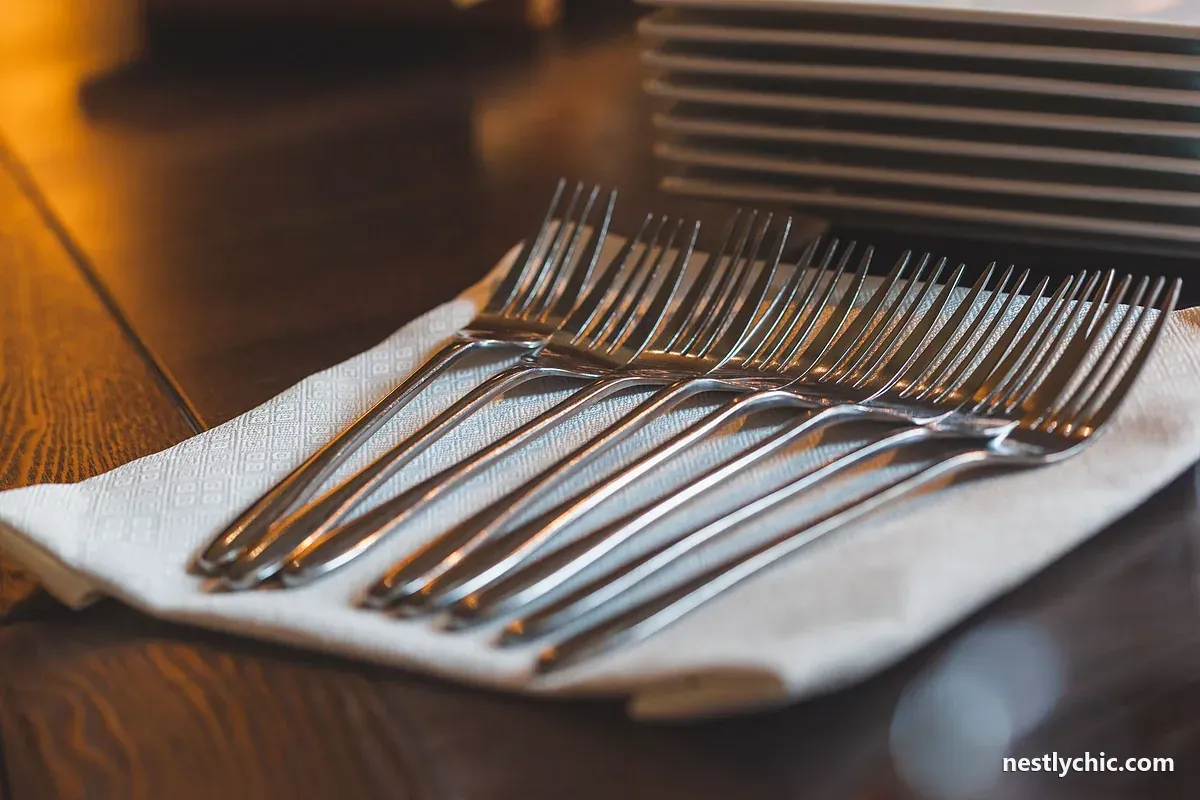
Forged and stamped, described accurately
Both are real manufacturing routes and neither is a scandal.
Stamped pieces are cut and pressed from sheet stock. The pattern is applied to the surface.
Forged pieces are made from thicker stock worked to shape, and the guide above describes forged flatware as made from a single piece of thick stainless steel, creating the pattern on all sides of the handle rather than only stamped on the top (WebstaurantStore flatware guide, read 2026-09-08).
What this changes for a buyer: forged construction is associated with more mass and a heavier feel, so it correlates with what people are trying to buy when they say quality. It is not a guarantee of anything on its own, and a well-made heavier stamped set can be more pleasant to use than a badly finished forged one. The property to judge is still the one in your hand.
What the alloy number does and does not tell you
It tells you about corrosion, not about feel. The British Stainless Steel Association's article on cutlery grades states that 18/10 is used on some cutlery as an alternative to 18/8 and is claimed to indicate better quality steel, but that in practice the "10" does not indicate an actual higher nickel content and is a marketing device, both being the steel known as 304 (British Stainless Steel Association, cutlery stainless steel grades, read 2026-09-08). The real division is between those nickel-bearing grades and 18/0, which contains no nickel and belongs to a different steel family.
That difference is worth understanding and it is a separate subject on this site, covered on its own page about what the two numbers actually cost you. What matters here is only this: a set marked 18/10 can be thin and light, and a set marked 18/0 can be thick and heavy. The number is not a proxy for the thing you are trying to judge.
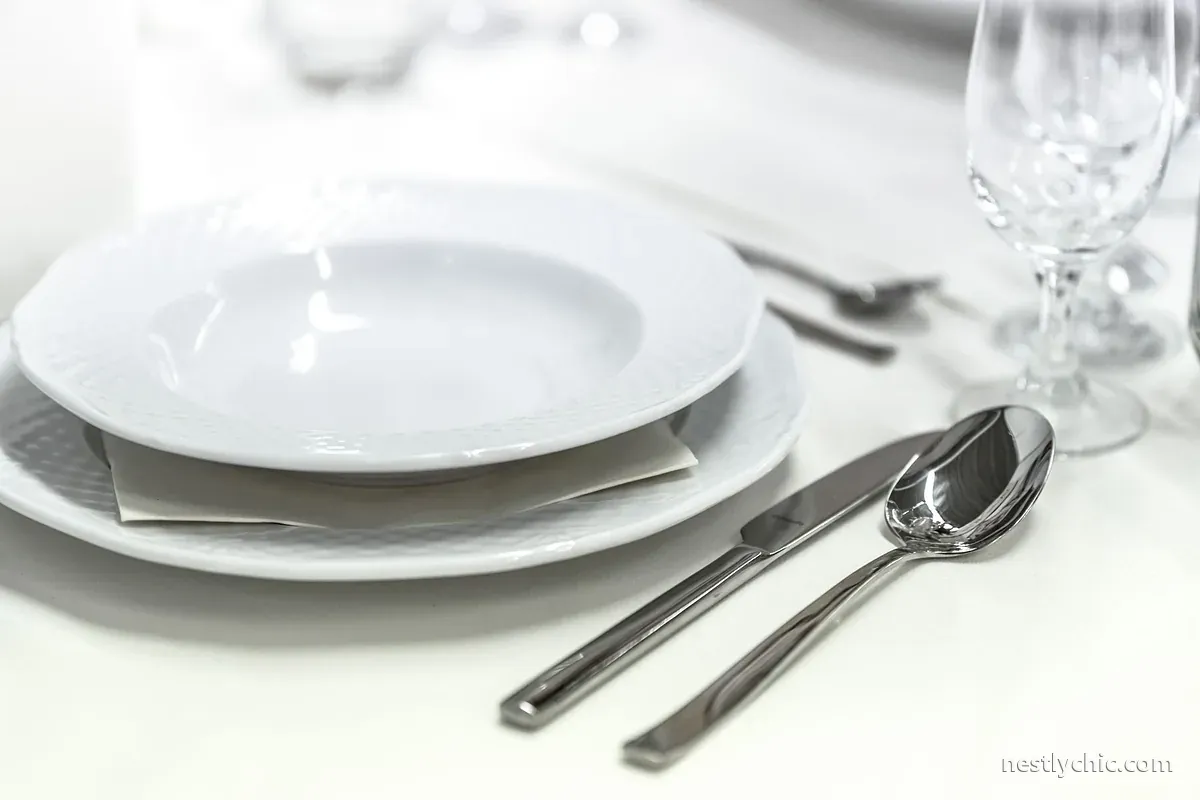
What the makers will actually stand behind
Read a flatware warranty for what it declines to cover, because that is where the expectations are set.
Lenox publishes a lifetime limited warranty stating that its applicable fine quality 18/10 stainless steel flatware is warranted to be free of defects in material and workmanship for the lifetime of the original owner, with defective pieces repaired or replaced with the same or an equivalent item, excluding damage from misuse, abuse, improper cleaning, overheating, neglect, accident, fire or theft. The same warranty states that minor imperfections such as scratches, stains and discolorations are normal (Lenox warranties page, read 2026-09-08).
That last clause is the honest one. A maker offering a lifetime warranty is telling you in the same document that your flatware will scratch and discolor and that this is not a fault. Nobody selling flatware in a photograph mentions it, and a household that knows it in advance is not disappointed at year three.
The two-minute test, if you can hold the set
Pick up a fork the way you hold it to eat. Note whether it feels handle-heavy, tine-heavy or settled. There is no correct answer, only your hand.
Press a tine gently. Note how readily it moves and whether it returns. Medium-weight commercial flatware is described by the supplier guide above as often bendable in the hand, and that is a description of stock thickness you can feel.
Run a thumb along the handle edges. Sharp or unfinished edges are the clearest workmanship signal available without any equipment.
Pick up the knife separately. Knives are frequently made differently from the rest of the set, and a set that feels good otherwise can have a knife that feels hollow.
Then look at the spoon bowl against the light. Thin spoon bowls are a common place for weight to be saved.
Do the same with the set you already own, before buying anything. Knowing what you dislike about your current forks is more useful than any general description of quality, and it is the same audit logic as checking what you already own before buying more.
Where this fits in a kitchen budget
Flatware is touched at every meal by every person, which is an argument for putting money here rather than somewhere that gets used twice a year. It is also a category where a heavier set is not automatically a more expensive one, so the decision is not purely a spending decision. The general reasoning about which categories reward spending is in where to spend and where to save in a first kitchen, and a first kitchen assembled without much money still has options, set out in kitchen essentials on a budget.
One more route worth naming: heavier older flatware turns up secondhand in a way that heavier older dinnerware does not, because metal survives handling that ceramic does not. What to check before buying used kitchen equipment generally is in buying kitchen equipment secondhand.
And the count comes before the character, as always. How many pieces a household needs is arithmetic rather than taste, and it is set out in how many place settings a household actually needs.
FAQ
How do I judge flatware quality before buying? Judge stock thickness, where the mass sits and how the edges are finished, because those are what the hand registers. The alloy grade on the box describes corrosion resistance rather than weight: a supplier's guide states directly that stainless grades do not refer to the thickness or gauge that determines weight.
Is forged flatware better than stamped? Forged construction uses thicker stock and is associated with a heavier feel, which is usually what people mean by better. It is not a guarantee on its own, and finish quality varies within both routes. Handling the piece settles it faster than the label does.
Why does my flatware feel so light? Almost always stock thickness. Commercial weight categories run from forged and extra heavy weight down to medium weight, which a supplier's guide describes as the lightest and often bendable in the hand. A lighter gauge can carry any alloy grade.
Does 18/10 flatware feel heavier than 18/0? Not as a rule. Those numbers describe alloy composition, not thickness. The British Stainless Steel Association describes the 18/10 label as a marketing alternative to 18/8, the same steel known as 304, with 18/0 being a different, nickel-free family. Weight is a separate specification.
Will good flatware stay unscratched? No, and at least one maker says so in its own warranty. Lenox's flatware warranty states that minor imperfections such as scratches, stains and discolorations are normal, alongside a lifetime limited warranty against defects in material and workmanship for the original owner.
Sources, read 2026-09-08: WebstaurantStore flatware guide, a foodservice distributor's published buying guide, cited for its statements on gauge, weight categories and forged construction; British Stainless Steel Association, cutlery stainless steel grades; Lenox warranties page (lenox.com). This page ranks no product, names no recommended set, quotes no price and carries no affiliate link. Brands appear only where a statement is taken from that company's own published document. Nothing here was tested or owned by this site.