Almost every page that answers this is a tableware seller's blog, and almost every one of them answers it with a convention rather than with arithmetic. Service for eight, because sets come in eights.
The number is arithmetic, and there are exactly three inputs.
1. How many people eat here.
2. How often the dishwasher runs.
3. How long you intend the set to last, and what breaks in that time.
The third input is the one every guide leaves out, and it is the one that decides whether you are buying dinnerware once or twice.
The arithmetic
Work through it in this order and the answer falls out.
Start with the household count. Not guests. The people who eat there on an ordinary Tuesday.
Multiply by meals between dishwasher runs. This is the step nobody publishes and it is where the real variation lives. A household of four that runs the dishwasher every evening needs four settings in circulation. The same household running it twice a week needs enough plates for roughly six days of meals, which is a completely different number.
Add for the meals that use more than one plate each. A dinner that uses a dinner plate and a side plate consumes two pieces per person, not one.
Then add breakage headroom. Which is the next section, and it is the reason the arithmetic answer is not the buying answer.
And only then think about guests, because guests are an occasional load on a set that has to work daily.
The input everybody forgets
Things break, and patterns get discontinued.
A set bought for exactly the household size has no slack. The first broken plate takes it below working capacity, and at that point you are trying to buy one replacement piece of a pattern that may no longer exist.
Which is why open stock availability matters more than the piece count. A pattern you can buy single plates from is a different proposition from a pattern sold only as a boxed set, and a discontinued pattern is a third thing again. That is a purchasing question rather than a quantity one and it deserves its own answer.
The practical consequence: buying somewhat above the arithmetic number, from a pattern that is available as open stock, is usually cheaper across a decade than buying exactly enough of something that will be discontinued.
What a "place setting" actually contains
This matters for the arithmetic because a 20-piece set and a 20-piece set are not always the same twenty pieces.
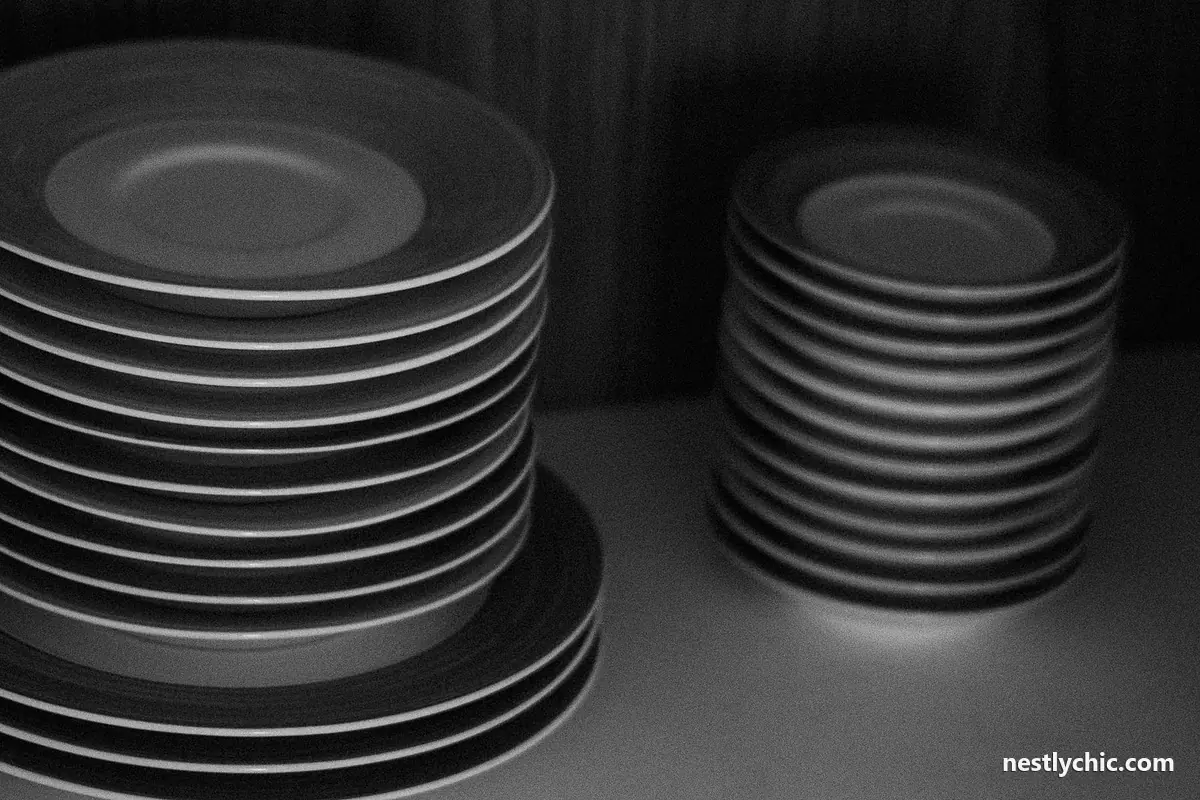
A five-piece setting typically means five pieces per person, which is where the twenties and forties on boxes come from.
Which five varies, and some of them are pieces a particular household will never use. Counting boxes rather than counting the pieces you will actually put on a table is how people end up with cupboards full of saucers.
We take that apart separately in what is actually in a place setting, and it is worth reading before deciding a number, because it changes what the number is counting.
Everyday and good, or one set
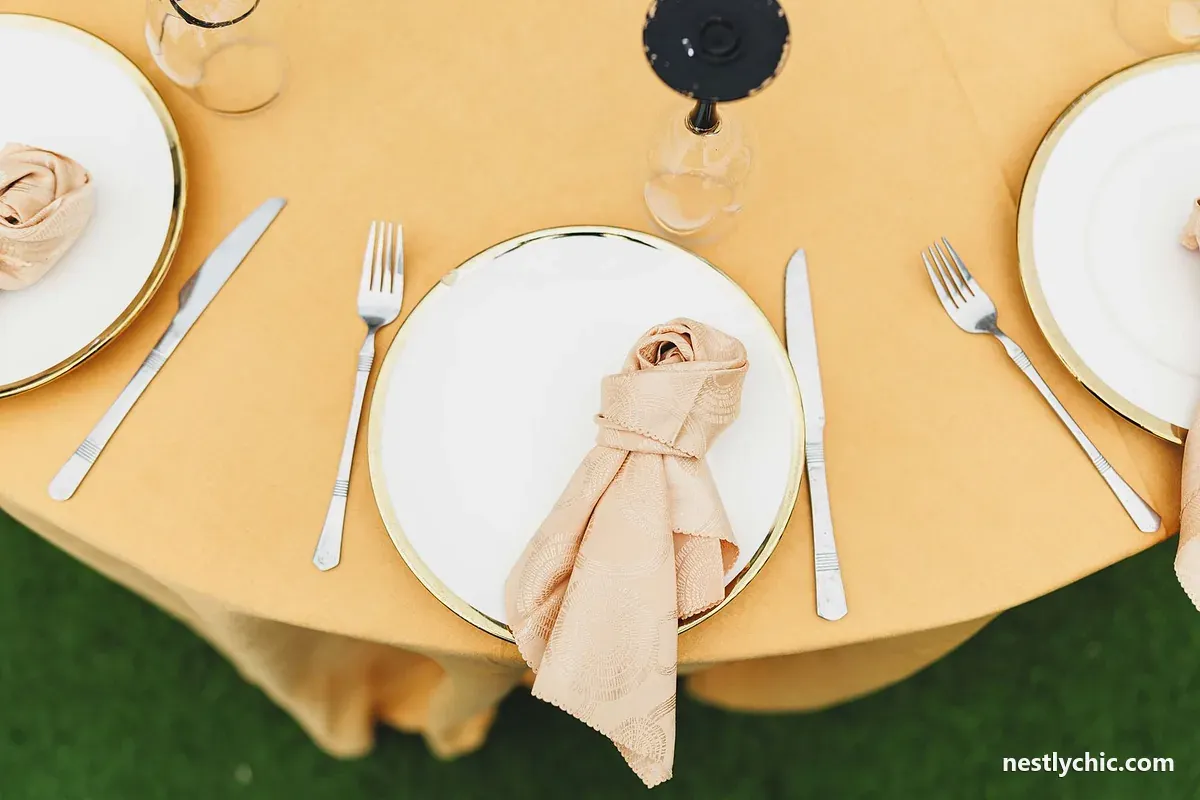
The traditional answer is two sets, and it is worth being honest about who that suits.
Two sets means storage for two sets, which is a real constraint in most kitchens and is the reason many households quietly abandon the second one.
One robust set that is good enough to put in front of guests is the arrangement more households actually run, and it changes the count: it has to cover both the daily load and the largest table you seat.
This is a decision rather than a rule, and it is worth making deliberately rather than by default. The general question of which kitchen purchases are worth buying once for a long time is in where to spend and where to save in a first kitchen.
The constraint nobody measures until it is too late
Cabinet height.
Dinner plates have grown, stacks are heavy, and a shelf that will not take a stack of the plates you bought is a problem discovered at unpacking rather than at purchase.
Measure the shelf height and depth before buying, and measure the plate diameter of what you are considering. Which household dimensions are worth writing down once, and where to find the ones that decide what fits, is in the cabinet, drawer and counter dimensions that decide what fits.
Working the arithmetic, with your own numbers
No figure below is ours. Fill these in and the answer is yours.
| Input | Your number |
|---|---|
| People who eat here on an ordinary day | |
| Meals per day using a plate | |
| Days between dishwasher runs | |
| Plates per person per meal | |
| Total plates in circulation between runs | |
| Headroom for breakage over the years you intend to keep it | |
| Largest table you would realistically seat | |
| Shelf height and depth available | |
| Is the pattern available as open stock |
The last two rows are the ones that turn a number into a purchase, and they are the two that no seller's blog asks you.
What this page will not do
Give you a number. There is no correct universal count and any figure printed here would be a guess about your household.
Quote a price, for a set or per setting. No price appears anywhere on this site.
Recommend a brand or a pattern.
Tell you how long dinnerware lasts. No such figure is published by anybody we could cite, and durability is a material question that belongs on its own page.
FAQ
How many place settings do I need? It is arithmetic rather than convention: household size, multiplied by meals between dishwasher runs, times plates per meal, plus headroom for breakage. Guests are an occasional load on top of a set that has to work daily.
Is service for eight the standard answer? It is the standard box size, which is not the same thing. A household of two that runs the dishwasher weekly and a household of five that runs it nightly need different numbers, and neither is eight for the same reason.
Do I need everyday and good dinnerware? Two sets means storage for two sets, which is the constraint that usually decides it. One robust set covering both loads is what many households actually run.
What does a 20-piece set contain? Typically four five-piece settings, and which five pieces varies. Counting the pieces you will actually use, rather than the number on the box, changes the answer.
Should I buy extra? Buying somewhat above the arithmetic number, from a pattern available as open stock, is usually cheaper across a decade than buying exactly enough of a pattern that gets discontinued.
What should I measure before buying? Shelf height and depth, and the plate diameter of what you are considering. Plates have grown and stacks are heavy.
Sources: this page contains no count, price, dimension or lifespan figure of our own, and cites none. Every number in it is arithmetic performed on the reader's own inputs, which is the point of the page. No brand or pattern is named or recommended.