The essential serving dishes for most households are a large bowl, a medium bowl, a large platter, a smaller platter or board, and a handful of serving utensils. Size each one to the largest dish you actually cook, not to the number of guests you might have. Gravy boats, tureens and cake stands come later, or never.
Before buying any of it, count the bakeware you already own. A good share of what reaches the table in most homes never leaves the dish it was cooked in.
Essential serving dishes: the short list
| Piece | What it covers | How to size it |
|---|---|---|
| Large bowl | Salad, pasta, a big batch of anything tossed | The largest salad or pasta your household makes, with room to toss |
| Medium bowl | Sides: rice, vegetables, potatoes | One side dish for a normal dinner |
| Large platter | A roast, a whole fish, sliced meat, a sheet of roasted vegetables | The largest roast you cook, laid flat with room to carve |
| Small platter or board | Cheese, bread, fruit, appetizers | Whatever you serve before or after the main meal |
| Serving utensils | Two large spoons, a slotted spoon, tongs, a ladle if you serve soup | One per serving dish on the table at once |
That is five items, and it covers nearly every weeknight and most holidays. Nearly every page-one list agrees that bowls and platters come first. Where they differ is in how many specialty pieces follow, and most of those are optional.
Size to the largest dish, not the largest party
Serving dishes are the one part of the table where a guest count is the wrong input.
A platter's job is to hold the largest single thing you cook. If the biggest roast your household makes is a whole chicken, the large platter has to hold a whole chicken with room to carve. If it is a holiday turkey, the platter has to hold the turkey. The number of people eating doesn't change that; the size of the bird does. The same reasoning sizes the pan the roast comes out of, set out in roasting pan sizing for the bird you actually cook, and the platter should be sized to match the pan, not the table.
A bowl's job is to hold one batch. A larger household makes a larger batch, so bowl size does track household size, but through the recipe, not through the guest count.
Guest count decides how many dishes are on the table at once, not how big each one is. That is why the list above has one of each size rather than a stack of identical bowls.
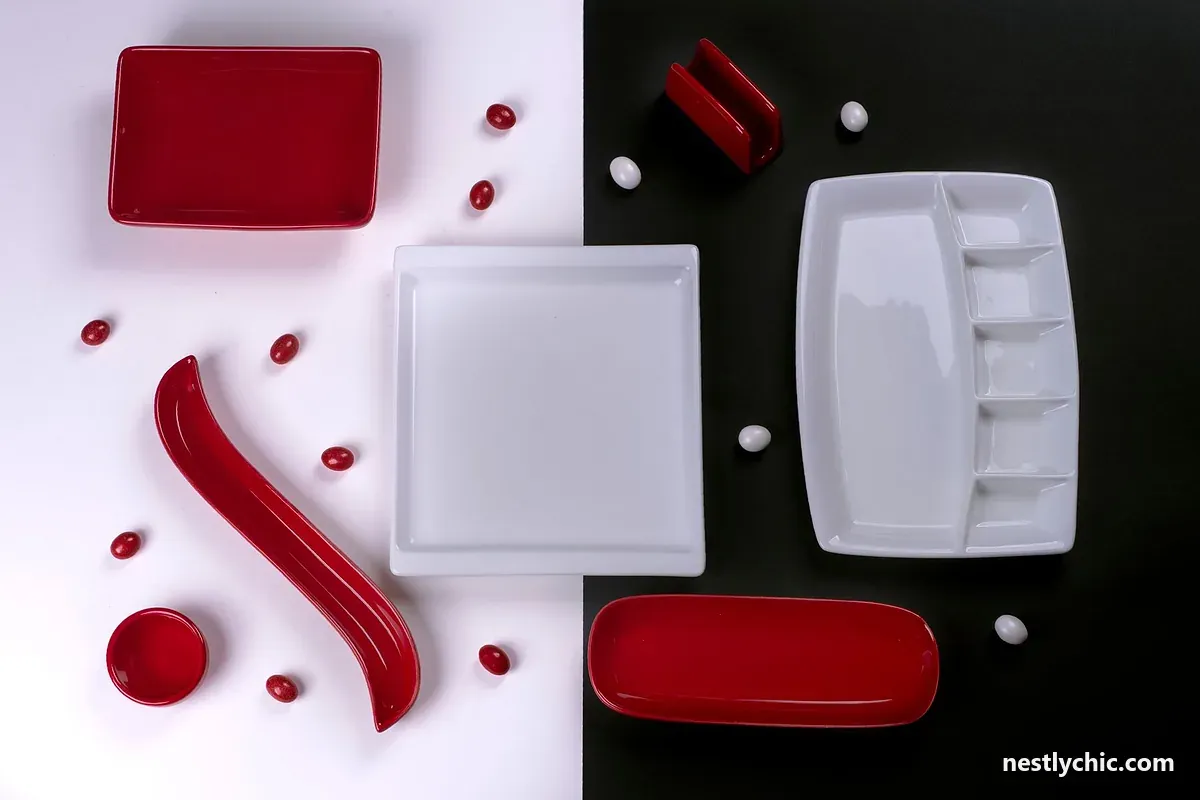
The serving dishes you may already own
This is the step that saves the most money and the most cabinet space, and page-one lists usually skip it.
Oven-to-table bakeware is serveware. A casserole dish, a gratin dish or a pie plate goes straight from the oven to the table in most homes, and a good-looking one replaces a serving dish for everything cooked in it. Several of the ranking lists include a casserole dish for exactly this reason. If you already own the core pieces in the bakeware a kitchen needs, count them before buying anything with "serving" in the name.
A cutting board is often the cheese board. A clean wooden board makes a serviceable board for bread and cheese, and it doesn't need to be a separate purchase.
Mixing bowls sometimes do the job. A plain glass or ceramic mixing bowl works as a salad bowl on an ordinary night. It won't look like serveware, but it works.
What is left after that count is your real shopping list, and it is usually shorter than expected.
Material: what changes on the table and in the sink
Serving dishes come in the same materials as dinnerware, and the same trade-offs apply. The differences between porcelain, stoneware, bone china and earthenware are set out in what changes between dinnerware materials. Three points are specific to serving pieces.
Size makes weight matter. A large stoneware platter holding a roast is heavy to carry. Check the weight before buying if anyone in the house will struggle with it.
Size makes the dishwasher matter. A platter too large for the dishwasher gets washed by hand every time, and a piece that is a chore to wash gets used less. Measure the lower rack before buying the large platter.
Size makes storage matter. A large platter needs a shelf deep and wide enough to hold it flat. Check the cabinet it will live in before it arrives, not after.
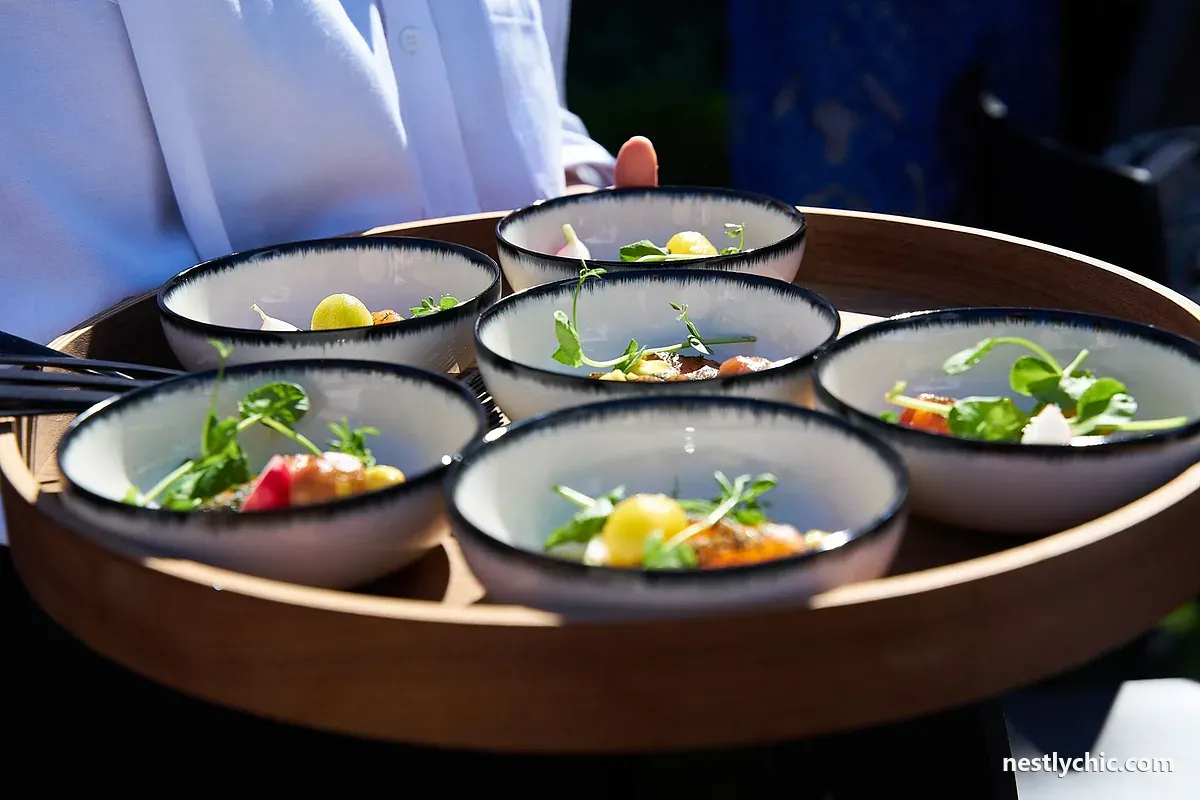
Decorative, handmade and imported pieces: the FDA note
Serving pieces are where many households buy handmade, antique or imported pottery, often as gifts or souvenirs, and this is the part of the table where the FDA has published specific advice.
The FDA's questions-and-answers page on lead-glazed traditional pottery (content current as of 10/27/2017, read 2026-09-11) lists the types that need particular attention: pieces that are handmade with a crude appearance or irregular shape, antique, damaged or excessively worn, bought from flea markets or street vendors, or brightly decorated in orange, red or yellow, "as lead is often used with these pigments." It notes that pottery made only for decoration may carry a warning stamped on the bottom, such as "Not for Food Use" followed by "May Poison Food." The full guidance is on the FDA's page, Questions and Answers on Lead-Glazed Traditional Pottery.
The same page states that if a consumer tests a piece and finds it contains leachable lead, the FDA strongly advises against using it "for cooking, serving, or storing food or drinks," and that "no amount of washing, boiling, or other process can remove lead from pottery." The FDA's broader page, Lead in Food and Foodwares (content current as of 01/06/2025, read 2026-09-11), notes that ornamental and decorative ceramicware containing lead must carry a label identifying the danger of using it with food.
What that means for buying serving pieces: check the underside of any decorative or imported piece before food goes on it, and treat a "not for food use" stamp as exactly that. This page doesn't clear or condemn any specific product, and neither does a single home test. For anything you are unsure about, the FDA's pages are the place to start.
What you can skip, or add later
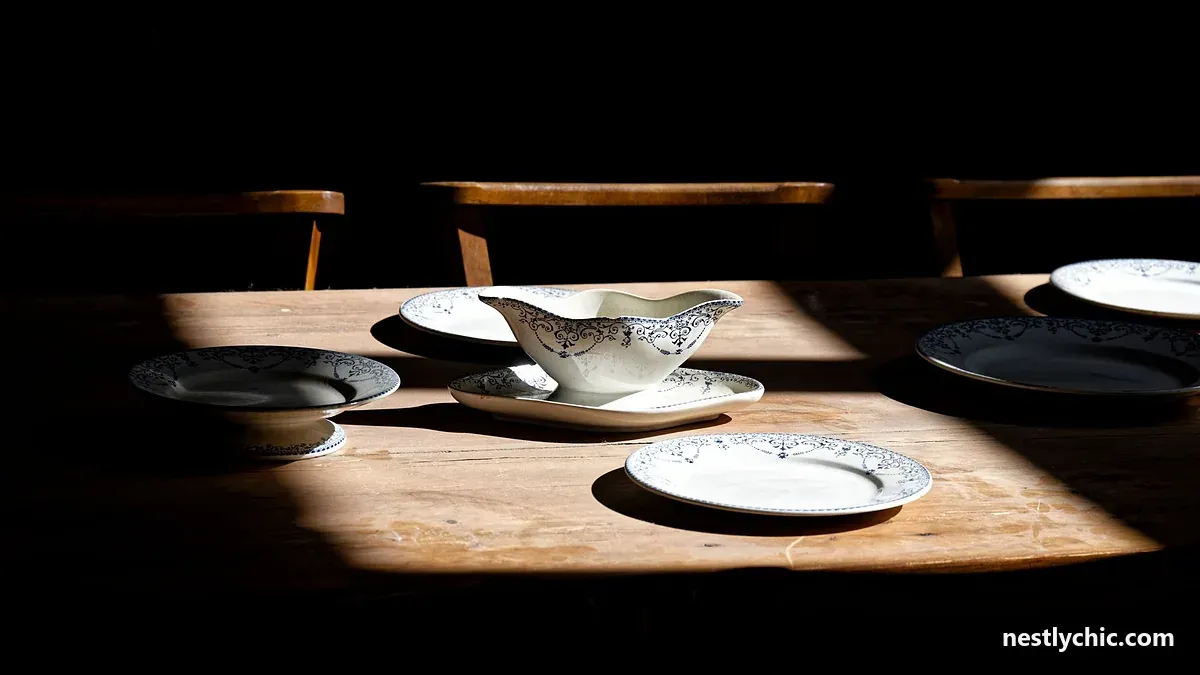
- Gravy boat. Useful at holidays, idle the rest of the year. A small pitcher or a heatproof measuring jug does the same job.
- Tureen. Worth it only if soup is served at the table often. A large bowl and a ladle cover most soup.
- Butter dish, cake stand, deviled egg plate. All genuine and all occasional. Buy them when the occasion is on the calendar, not in the first kitchen order.
- Matching serveware sets. A set of three nesting bowls in one pattern often gives you one size you'll use and two you won't.
The test for any extra piece is how many times a year it comes out. If the honest answer is once, borrowing or a stand-in usually beats storing it.
Where serving dishes fit in the first-kitchen order
Serving pieces are rarely day-one purchases. The table works for weeks with dinner plates and whatever the food was cooked in. Buy the large bowl and the large platter when the first meal that needs them is coming up, and leave the rest until the household's cooking habits show what is missing.
For how serveware sits alongside plates, bowls and glasses in the total count for the table, how many place settings a household actually needs holds the arithmetic. Serving dishes sit outside that count on purpose: they scale with the largest dish, not the number of diners.
FAQ
What are the most essential serving dishes? A large bowl, a medium bowl, a large platter, a smaller platter or board, and a few serving utensils cover most meals. Specialty pieces such as gravy boats and tureens can be added later if the household actually uses them.
What size serving platter do I need? Size it to the largest single thing you cook, usually a roast or a whole bird, with room to carve. The number of guests matters less than the size of the biggest dish, so match the platter to the roasting pan.
Can I use a casserole dish as a serving dish? Yes. Oven-to-table bakeware is serveware in most homes, and a good-looking casserole or gratin dish replaces a separate serving dish for anything cooked in it.
Are handmade or imported ceramic serving bowls safe for food? Not all of them. The FDA identifies handmade, antique, worn, flea-market and brightly decorated pottery as types that need particular attention for lead, and says decorative-only pieces may be stamped "Not for Food Use." Check the underside and read the FDA's guidance before using such a piece for food.
The short version
Start with two bowls, two platters and a few utensils. Size them to your biggest dish. Count your bakeware before buying anything labeled "serving." Check that the large pieces fit the dishwasher and the shelf. Look at the underside of any decorative or imported piece before food goes on it.
Sources, read 2026-09-11: U.S. Food and Drug Administration, Questions and Answers on Lead-Glazed Traditional Pottery; U.S. Food and Drug Administration, Lead in Food and Foodwares. This page ranks and recommends no product, quotes no price and carries no affiliate link. Nothing here was tested or owned by this site.