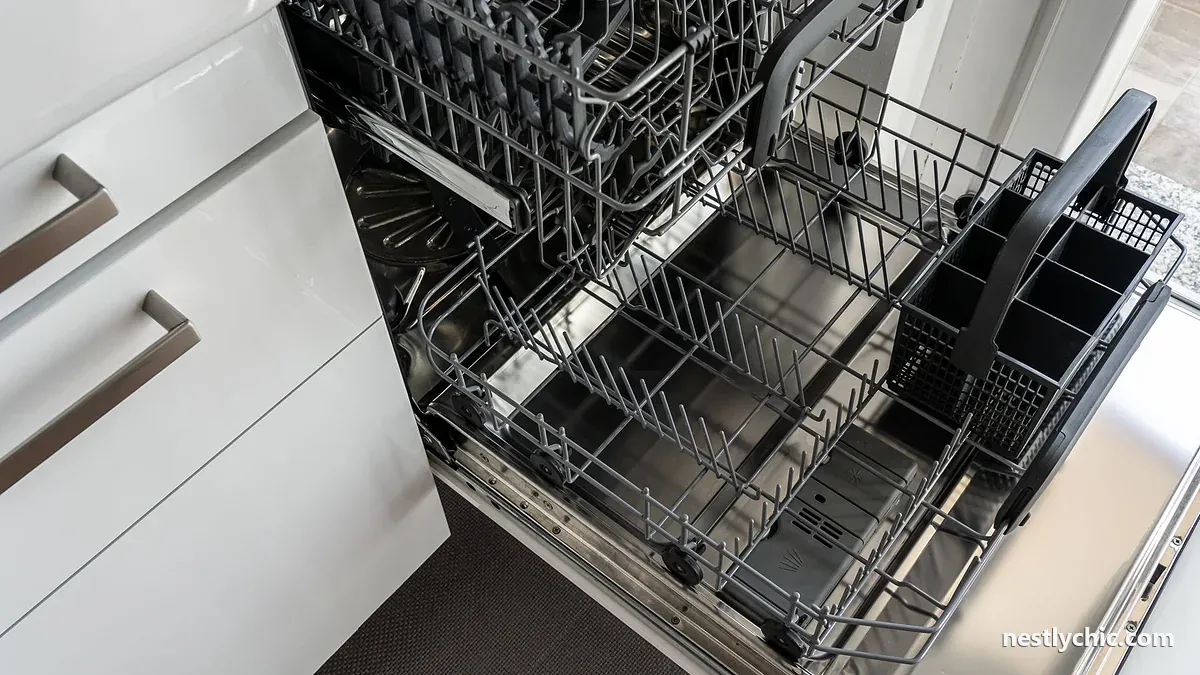
Short answer: How to choose a dishwasher comes down to four decisions, in this order: the size your cabinet opening takes, the rack layout that fits the dishes you actually own, the tub material, and the noise rating. The decibel (dBA) number is real, but it is measured by each maker in its own test room, so treat a gap of a few points between brands as a hint, not a verdict. Tub material mostly shapes noise and how the machine handles heat. Racks decide whether your plates, pans and glasses fit at all.
The question behind most dishwasher searches is blunt: "The quiet one costs a lot more. Is that real?" Partly. The rest of this guide explains which part.
Start with the opening, not the showroom
A built-in dishwasher slides into a gap between base cabinets, so the gap decides your shortlist before any feature does. Bosch's dishwasher buying guide, read on September 25, 2026, lists its standard model as a 24 inch width, 34 inch height machine that fits "up to 16 place settings," an ADA-compliant standard model at 24 inches wide and 32 inches high, and a compact model at 18 inches wide and 32 inches high. Those are one maker's numbers for its own range. Other makers publish their own, and each model's installation sheet gives the exact cutout it needs.
If you are replacing an old unit, measure the opening itself, not the old machine. Measure width at the top and bottom, height from the floor to the underside of the counter, and depth to the back wall. Floors get retiled and counters get replaced, and either one can take a fraction of an inch out of the height. Our guide to standard kitchen cabinet dimensions explains why a base cabinet run is usually built around fixed widths, and why an older kitchen may not match them.
Installation itself connects to a water supply, a drain and power. That is work for a licensed plumber or electrician where your local code requires one, and the maker's installation instructions are the document to follow. This guide stops at choosing the machine.
How to choose a dishwasher by rack layout
Racks are where a dishwasher earns or loses its place in your routine, and they are the feature most people check last. The test is simple: will the things you wash every day fit where the machine wants them to go?
Three checks matter more than any feature name:
- Plate height on the bottom rack. Oversized dinner plates and wide rimmed plates can block the spray arm or refuse to stand in the tines. If your plates run large, check the maximum plate height on the spec sheet. Our guide to plate sizes, and why yours may not fit the cabinet covers why plate diameter causes fit problems in more places than one.
- Stemware and tall glasses on the top rack. An adjustable top rack that can be raised or lowered changes what fits on both levels.
- A third rack, or a basket. A shallow third rack takes flatware and utensils lying flat. Bosch's buying guide, read on September 25, 2026, says its standard third rack "provides the perfect space for flatware and large utensils," and that its flexible third rack "adds 30% more loading area compared to a Bosch dishwasher with two racks." That figure compares Bosch models with each other, not with other brands.
The trade most people miss: a third rack can take height away from the top rack. If you wash tall glasses daily, a traditional silverware basket may suit you better than a third rack. Neither is better in general. The right one is whichever matches your cupboards.
Place settings are a label, not a load
A "place setting" rating tells you how many standard settings fit in a maker's own loading pattern. Your real load includes pans, mixing bowls and a cutting board that no place setting includes. Size the machine to your household's daily pile, and use the rating to compare models against each other. Our guide to how many place settings a household actually needs helps you size the dish set first, which tells you how many plates will be waiting for the machine each night.
Tub material: what stainless, plastic and hybrid actually change
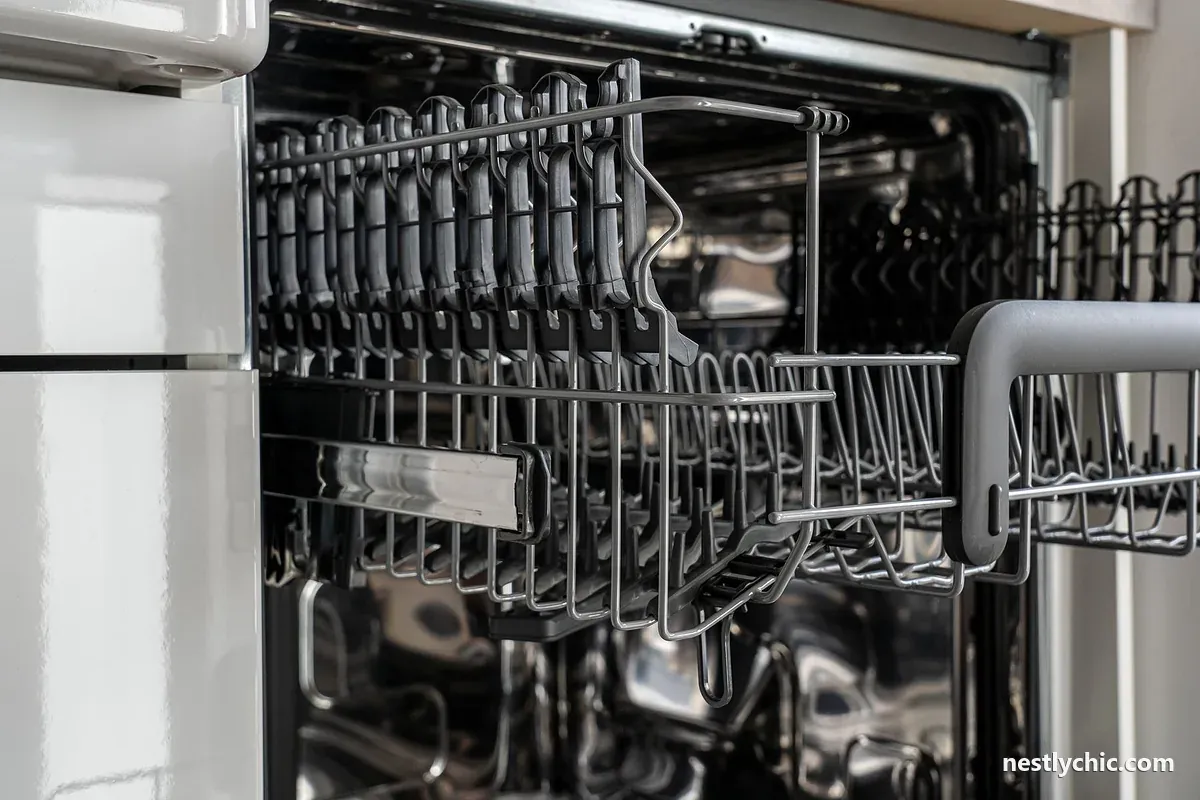
The tub is the box the water sprays inside. Three constructions are common in current machines, and they differ in material chemistry, not just looks.
GE Appliances offers stainless tubs, plastic tubs under its PermaTuf name, and hybrids that pair a stainless inner door with a plastic tub. On its support page defining a stainless steel tub, read on September 25, 2026, GE states that its stainless tubs "incorporate both 304 and 430 grade stainless," with the top and bottom made of 304 and the center made of 430. On its PermaTuf page, read the same day, GE describes the plastic liner as a "tough, durable polypropylene-base material" and says it "will not chip, peel or crack in normal use. And it can not rust."
| Tub type | What it is | What it changes for you |
|---|---|---|
| Stainless | Steel tub and steel inner door | Dense walls; GE bonds sound-deadening material to them |
| Hybrid | Stainless inner door, plastic tub | Stainless where you see it when the door opens, plastic behind |
| Plastic (polypropylene) | Molded tub and door liner | Lighter walls; GE says its liner cannot rust |
Why the material matters for noise and drying
The material reason is mass and heat. Steel is dense and conducts heat well; polypropylene is lighter and conducts heat poorly. A heavy wall is harder to set vibrating as the spray arms and pump run, and the two materials behave differently as the cycle heats and cools. GE's page on quiet features, read on September 25, 2026, describes bitumen, "a combination of asphalt and rubber that is heat-bonded to the door and/or sides of the stainless steel tub/door," along with mastic, insulation blankets and a sealed toekick. That is why stainless tubs tend to arrive bundled with other quieting parts.
The honest limit: tub material is rarely the only thing that changes between a cheaper and a pricier model. The quieter machine often has more insulation, a different motor or a different vent design too. GE notes that "not all features are found on all models." You are buying a package, and the tub is one visible part of it.
Plastic items in your load are a separate issue. A thin plastic container carries little heat out of a hot rinse, so water sitting on it evaporates slowly whatever the tub is made of. If most of your containers are plastic, read how the maker describes its drying system rather than assuming a stainless tub fixes it. Our guide to what the dishwasher-safe symbol guarantees covers which items belong in the machine at all.
What the decibel rating means, and what it does not
The dBA figure on a dishwasher is an A-weighted decibel reading, a measure of sound adjusted toward how the human ear hears it. Lower is quieter. Decibels run on a logarithmic scale, so a gap of a few points is a larger difference than it looks on paper.
What most buying guides skip is how the number is produced. GE Appliances' page on dishwasher quietness testing, read on September 25, 2026, says: "All of our dishwashers are tested in a reverberation room in accordance with American Noise Standard Institute (ANSI) standards." It adds that the machine is loaded with "a ten place setting and a recording is taken one meter away from the dishwasher," and that the main wash noise is recorded and analyzed. GE's quietness testing page also mentions "a sound jury of more than 500 consumers."
GE's companion page on describing dBA levels, read the same day, adds the caveat that matters most: "Actual sound levels can be a little different once an appliance is installed in the home." It names installation location, cabinetry, flooring, countertops and load size as factors.
So the number is a controlled reading, taken one meter from the machine in a room built for measurement. Your kitchen is not that room. An open-plan kitchen with a hard floor and a stone counter can sound louder than the rating suggests. A closed kitchen with the dishwasher boxed into cabinetry can sound quieter.
What counts as quiet depends on who you ask
There is no single industry threshold for "quiet." Bosch's quiet dishwashers page, read on September 25, 2026, says: "Generally, any model operating at a decibel rating of 48 dBA or lower is deemed quiet," and that its quietest models operate "between 38 dBA - 48 dBA." Bosch's own buying guide, read the same day, frames it differently: "A very quiet dishwasher clocks in at around 40 decibels." Two pages from one maker, two framings. That is normal marketing, and a reason to compare numbers rather than labels.
For reference points, GE's dBA page lists "Normal conversation" at 60 dBA and "Whispering at 5 feet" at 20 dBA.
So is the quiet one worth paying more for?
Here is the part no model page will tell you. The rating matters most when three things are true:
- The dishwasher sits in an open space where people talk, watch TV or sleep nearby.
- You run it while you are in the room, not overnight with doors closed.
- The gap between the two models you are comparing is large, not two or three points.
If the kitchen is closed off and you run the machine after bed, the premium buys less. Also check that you are comparing like with like: the ratings come from each maker's own test, and brands do not publish a shared test report you can line up side by side. For judgments on how quiet a specific model really sounds, an independent testing organization such as Consumer Reports is the right place to look, since this guide has not tested any machine.
Features to check, and features to skip
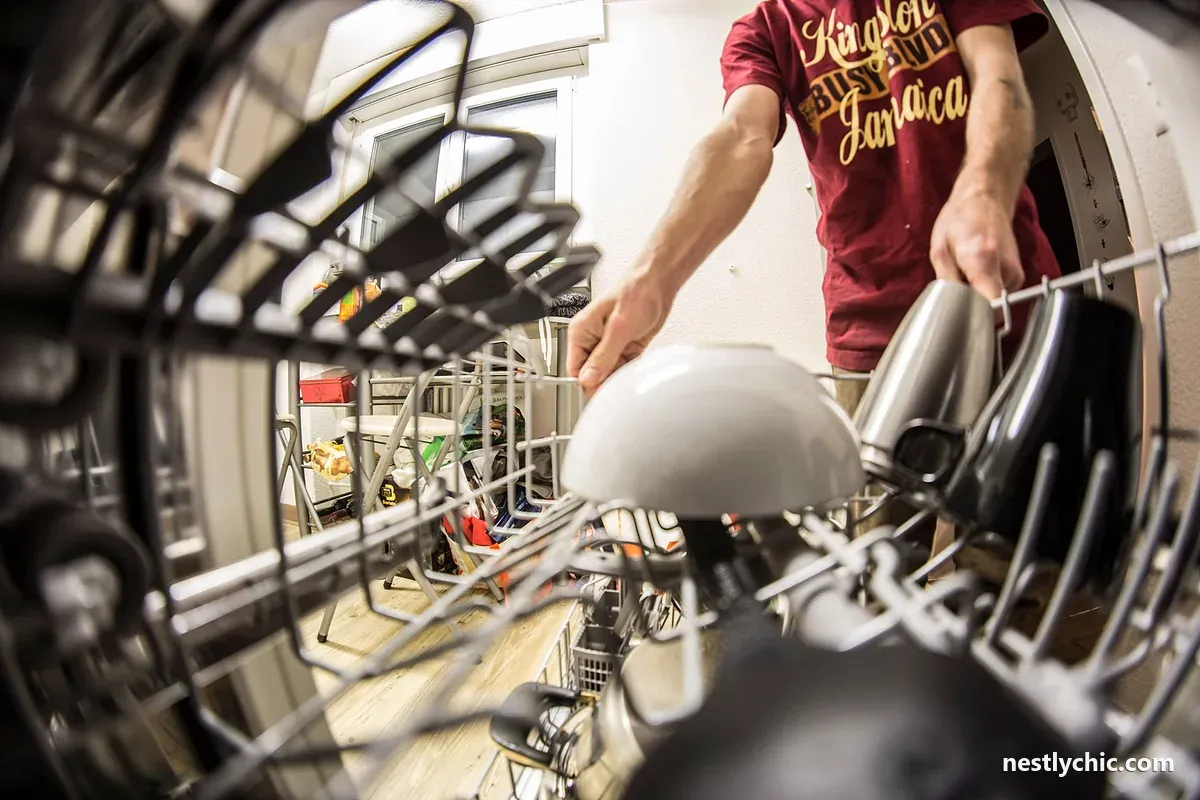
A few features change daily use; many only change the price.
- Adjustable tines and racks: worth it if your dishes are oversized or oddly shaped.
- Third rack versus basket: decide by your glassware, as above.
- Hidden or front controls: a design and household choice. Front controls show cycle status at a glance.
- Sanitize option: Bosch's buying guide describes one that ends each cycle with an extra hot wash, heating the water to 162°F. Treat it as a cycle option the maker describes, not a promise about anything beyond the dishes.
- Specialty cycles you will never pick: most households settle on one or two cycles they use every time.
A short buying checklist
- Measure the opening: width top and bottom, height to the underside of the counter, depth to the wall.
- Hold your largest dinner plate and tallest glass against the rack dimensions on the spec sheet.
- Choose the rack layout, third rack or basket, based on what you wash daily.
- Choose tub material knowing it travels with other quieting features.
- Read the dBA figure as one maker's lab reading, and weigh it against where your kitchen sits and when you run the machine.
- Leave installation to a licensed trade where your code requires it, following the maker's instructions.
Frequently asked questions
What is a good decibel rating for a dishwasher?
It depends on the maker's definition. Bosch's quiet dishwashers page calls 48 dBA or lower quiet, and its buying guide describes about 40 decibels as very quiet. Compare numbers across models rather than relying on the word "quiet," and remember installed sound can differ from the lab figure.
Is a stainless steel tub better than plastic?
It is usually quieter, because stainless tubs tend to come with sound-deadening material bonded to them. GE describes its plastic polypropylene liner as unable to rust and resistant to chipping and cracking in normal use, so plastic is not a weak choice, just a different trade.
Does a third rack reduce space for tall glasses?
It can. A third rack sits above the top rack and can limit how high that rack goes. If you wash tall stemware daily, check the top rack's maximum item height with the third rack in place, or choose a model with a silverware basket instead.
How is a dishwasher's dBA rating measured?
GE Appliances says it tests its dishwashers in a reverberation room to ANSI standards, loaded with ten place settings and recorded one meter away. Other makers may describe their methods differently, so ratings across brands are not a perfect like-for-like comparison.
Can I install a dishwasher myself?
A dishwasher connects to water, a drain and electrical power. Follow the maker's installation instructions, and use a licensed plumber or electrician wherever your local code requires one for those connections.