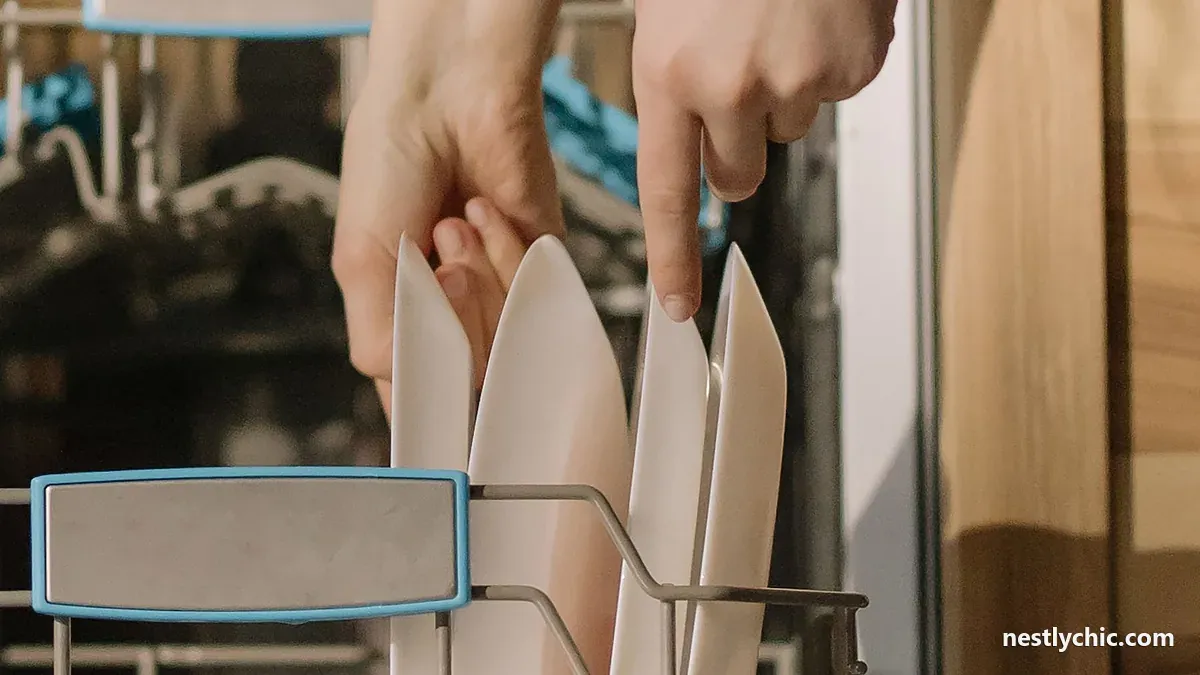
There are usually four marks on the underside of a plate and none of them is a certification issued by an outside body. They are manufacturer claims, made by the company that made the piece, and understanding that is most of what there is to know.
Which does not make them useless. A manufacturer stating that a piece is dishwasher safe is a commitment about its own product, and it is far more useful than a guess. It is just not a test result from an independent laboratory, and it is not a guarantee of anything the mark does not mention.
The trap is what the marks do not say, and that is where this page spends its time.
The four marks, and what each one is a claim about
Dishwasher safe. A claim that the piece can go through a domestic dishwasher cycle without the maker considering it damaged. Notice what it is silent about: how many cycles, at what temperature, with what detergent, and whether the decoration survives as well as the body.
Microwave safe. A claim that the piece does not itself become a hazard in a microwave, and that heating food in it is intended. Silent about: whether it gets hot enough to burn your hand, which many microwave-safe pieces do, and about metallic decoration, which is the exception that catches people out.
Oven safe. A claim, usually with a temperature attached, and the temperature is the part that matters. Silent about: thermal shock, which is a separate property from a maximum temperature. Oven safe does not mean it can go from a refrigerator into a hot oven.
Freezer safe. Same shape of claim in the other direction, and again silent about the transition between temperatures rather than the temperatures themselves.
Read that list again and the pattern is clear: every mark describes a destination and none of them describes the journey between destinations. Thermal shock is a transition problem, and it is the one that produces a breakage with hot food in it. This site treats every thermal limit as a per-product figure published by the maker, and the terminal page for it is glass, ceramic and stoneware bakeware: thermal shock and what cracks.
The decoration exception
Metallic decoration and microwaves do not mix, and this is the case where a plate can be entirely fine as a material and still be wrong for a microwave.
Gold or platinum banding, metallic lustre and some decals contain metal. Whether a specific decorated piece is microwave safe is a manufacturer statement, and where the piece carries no mark at all, the absence of a claim is not a claim.
The related decoration point for dishwashers is that a body that survives a dishwasher indefinitely and a printed or applied decoration that does the same are two different things. Fading, silvering and loss of pattern over years is a decoration failure rather than a material one, and the mark on the base does not usually distinguish them.
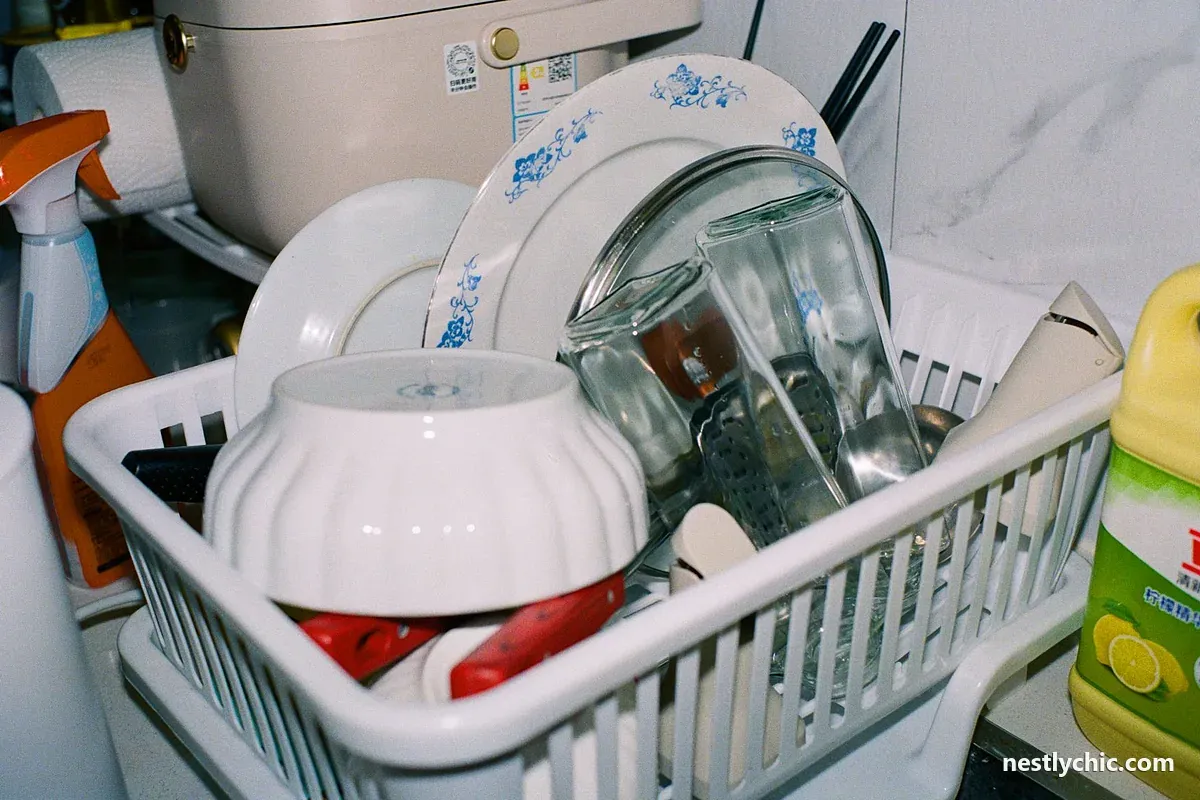
The three things no mark on a plate covers
Chipping. Nothing on the underside says a piece resists chipping, and no independent body certifies chip resistance for domestic dinnerware. Durability language on a box is marketing rather than a standard.
What the glaze contains. Dishwasher and microwave marks say nothing about glaze composition, which is a separate subject with a genuine safety dimension in one narrow category: lead and cadmium in glazes on decorative and imported ceramics. That has its own page on this site, with FDA sourcing, and none of it is decided by a dishwasher symbol.
How long it lasts. No published figure exists for the service life of domestic dinnerware, and none appears anywhere on this site.
What to do when there is no mark at all
Common on older pieces, inherited pieces, handmade pieces and anything bought abroad.
Treat the absence as an absence rather than as a permission. No mark means the maker has not made the claim, which is different from the maker saying no and also different from the piece being fine.
Look for the maker. Many publish care information for current and past ranges, and a pattern name on the base is usually enough to find it.
Where there is no maker, no mark and no information, the honest position is that you do not know, and this site is not going to clear a specific piece for you. That is particularly true of decorative, handmade and imported ceramics, where the question is not only about dishwashers.
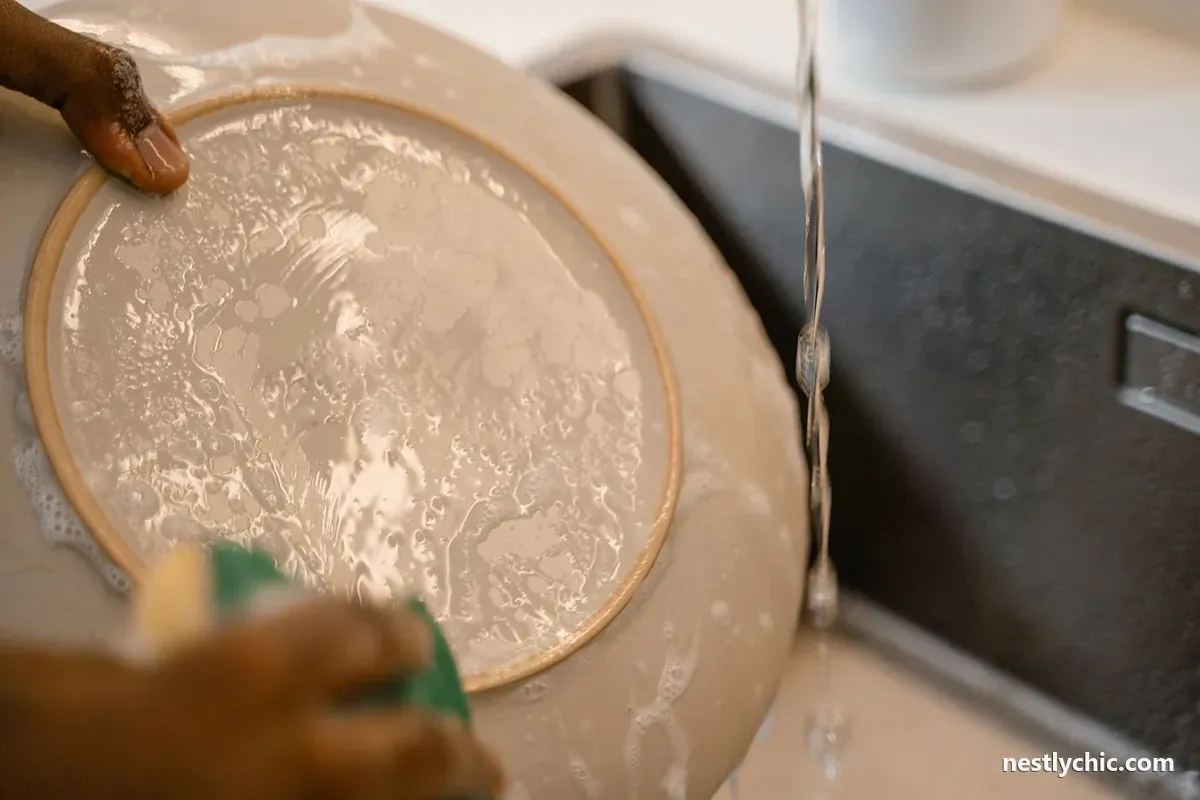
The dishwasher question people actually have
Which is usually not "will it survive one cycle" but "will this set still look right in five years of daily washing."
No mark answers that, and no independent standard covers it.
What does bear on it is the body and the glaze, and the material differences that decide porosity and crazing. We set those out in porcelain, stoneware, bone china and earthenware: what the material changes.
And what a manufacturer warrants is worth reading before buying, because a warranty is a written commitment with a duration on it, unlike a symbol.
The practical checklist
| Before you buy | Why |
|---|---|
| Look at the underside for all four marks | Each is a separate claim and the absence of one is meaningful |
| Note whether an oven mark carries a temperature | The temperature is the useful half of that claim |
| Check for metallic decoration | The microwave exception |
| Read the maker's care information, not just the base | It usually says more than the symbols do |
| Read the warranty terms | A written commitment with a duration, unlike a mark |
| Assume nothing about temperature transitions | No mark on a plate covers thermal shock |
FAQ
Are the symbols on the bottom of my plates certifications? No. They are manufacturer claims about the maker's own product rather than test results from an independent body. That does not make them useless; it does mean they guarantee only what they state.
Does oven safe mean I can take it from the fridge to a hot oven? No. An oven-safe mark is about a destination temperature, not about the transition between temperatures. Thermal shock is a separate property and its limits are manufacturer-specific.
Why is my microwave-safe plate too hot to hold? Microwave safe means the piece is intended for heating food in a microwave, not that it stays cool. Many microwave-safe pieces get hot from the food they contain.
Can decorated dishes go in the microwave? Metallic decoration is the exception, and whether a specific decorated piece is microwave safe is a manufacturer statement. Where there is no mark, there is no claim.
There are no symbols on my dishes at all. What now? The absence of a mark is not a permission. Look for the maker and the pattern name, which usually leads to published care information. Where there is none, the honest answer is that you do not know.
Do the symbols say anything about safety? Not about glaze composition, which is a separate subject with its own answer on this site, and not about durability, which no independent body certifies for domestic dinnerware.
Sources: this page quotes no temperature figure, no cycle count, no price and no lifespan figure, and cites none, because every one of those is manufacturer-specific and the reader is routed to their own maker's published care information. Thermal limits are routed to this site's glass, ceramic and stoneware bakeware page, which is the terminal page for them. Glaze safety, including lead and cadmium in decorative and imported ceramics, is a separate subject on this site with its own FDA sourcing and is not addressed here. No brand or pattern is named or recommended.