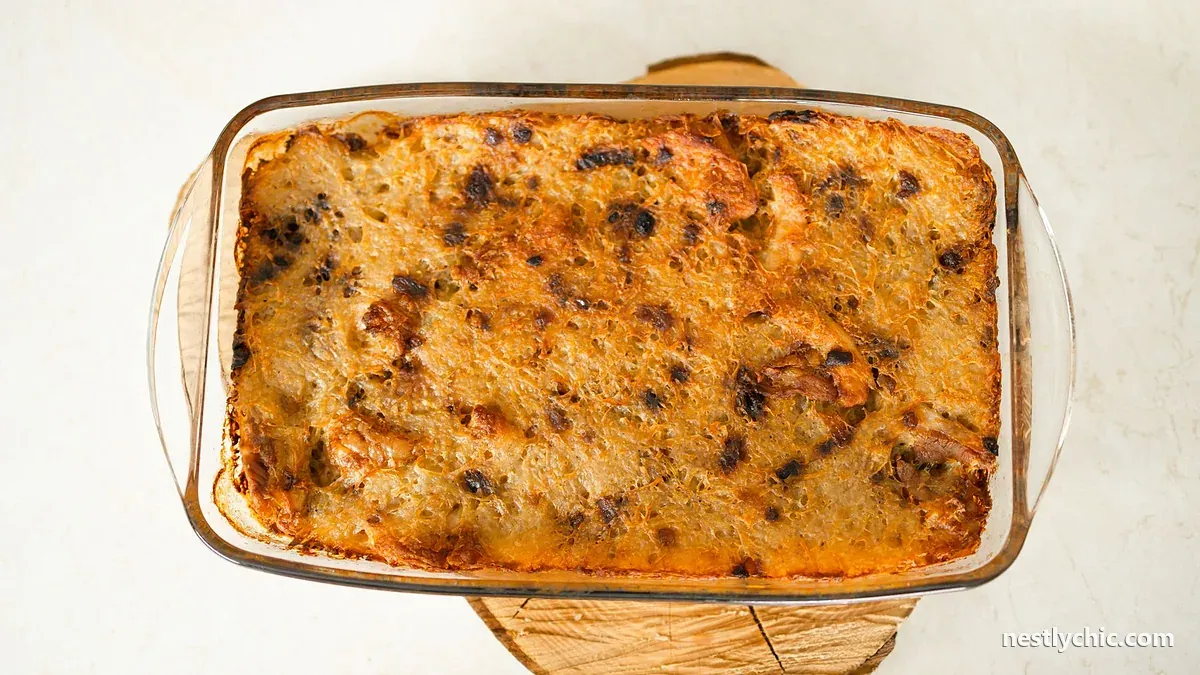
The glass against metal argument is nearly always about browning: which one gets the edges crisp, which one bakes evenly, which one you can see through. That is a real difference and it is the smaller one.
The difference that decides which dish you should own is what happens when each one is pushed past its limit. A metal pan that has been mistreated warps, discolors or dents, and you carry on using it. A glass dish that has been mistreated can fracture, and the manufacturer of one of the best known lines of glass bakeware describes that failure in its own safety wording as the product suddenly fracturing "into many small pieces," with the risk of "property damage or serious personal injury from cuts or burns."
That is the honest framing for this comparison. Not which browns better. Which fails safely.
"Oven-safe" is not a property of a material
The single most useful thing to understand here: there is no oven temperature that is safe for glass, or for ceramic, or for stoneware, as categories. The limit belongs to the specific piece, it is set by the company that made it, and it is published on that company's own care information. Two glass dishes that look identical can carry different instructions, because they are different products made of different formulations.
So the question "can glass go in the oven" has no general answer, and any page that gives you one, including a number, is telling you about a dish that is not yours.
What can be shown is what one manufacturer actually publishes, as an example of how specific these instructions are and how much stricter they are than normal kitchen habit.
What one manufacturer publishes, read at the source
Anchor Hocking's care and use information for its glass bakeware, read on its own site on August 26, 2026, states the following. These are that company's instructions for its own products and they are quoted here as an example, not as a rule for anyone else's dish:
- "Use the dish in pre-heated gas and electric conventional or convection ovens up to 425ËšF"
- "Not for use on or under a flame or other direct heat source, including on a stovetop, under a broiler, in a toaster oven or on a grill."
- "Do not add liquid to a hot dish. Handle hot dishes with a dry cloth or potholder."
- "Never place hot dish on wet or cold surfaces."
- "Do not heat empty or nearly empty dish in microwave."
- "Do not allow dish to come into contact with interior sides of oven or microwave which could cause localized overheating of dish or handle."
- "Do not use if chipped, cracked, or noticeably scratched."
And on what happens if those are ignored: failure to follow them may cause "(a) the product to suddenly fracture into many small pieces; (b) spot overheating of the dish or the handle which could result in property damage or serious personal injury from cuts or burns."
Read that list against how a glass dish is used in an ordinary week. A broiler finish on a casserole. A hot dish set down on a wet counter. Liquid added to deglaze something that just came out. A toaster oven, because it is smaller and quicker. Every one of those is named specifically, by the manufacturer, as a thing not to do. That is the information gain on this page, and you can read it on their site in two minutes.
The part almost nobody knows: the damage is cumulative and delayed
The same care information includes a sentence worth reading twice:
"Scratches from certain cleaning materials and utensils, impact damage or other misuse can weaken glassware causing unexpected breakage immediately or at a later date when exposed to sudden or severe temperature changes."
Immediately, or at a later date. That is why the reasoning most people apply here does not work. "I have done this for years and nothing happened" is not evidence that the dish is fine, because the mechanism described is one where the weakening happens on one day and the break happens on another.
It is also why "do not use if chipped, cracked, or noticeably scratched" is on the list. A chipped dish is not a cosmetically imperfect dish. By the manufacturer's own account it is a dish that has been weakened, in a product whose failure mode is fracturing.
Ceramic and stoneware are not glass, and are not each other
They get grouped together because they are all the not-metal option, and the grouping is not useful.
Stoneware, glazed earthenware, porcelain bakeware and borosilicate or tempered soda-lime glass are different materials with different manufacturers, different thicknesses and different published limits. We found no source that publishes a single temperature rule covering them, and we are not going to invent one. Some pieces are rated for higher oven temperatures than the glass example above, some are explicitly cleared for the broiler and some are explicitly not, and some are rated for a heat source that glass bakeware is generally kept away from entirely.
The rule that does hold across all of them is procedural rather than numerical: find the maker's own care information for the piece you own, and treat that as the only authority. Where a piece has no traceable maker, no listing and no care sheet, you have a dish with no published limits, and the safe assumption is the conservative one.
Where metal is genuinely the better answer
Not because it is stronger in a general sense, but because of what it is allowed to do.
- Anything that finishes under a broiler. If a broiler step is part of how you cook, the dish needs to be rated for it, and the glass example above is explicitly excluded.
- Anything that starts on a burner and moves to the oven. Direct flame or a hot element is a separate rating.
- High-temperature roasting, where the temperature exceeds what the piece is rated for. Above a dish's published ceiling, the dish is out of scope regardless of how it looks afterward.
- Anything you will slide, bang or stack heavily. Impact damage matters more when the failure mode is fracture.
And where the non-metal piece is the better answer: dishes that go from oven to table, anything you want to see the sides of while it cooks, and anything acidic or long-cooking where you would rather not use a reactive surface. This is a genuine trade, not a hierarchy, and it is the same logic that runs through the four-material comparison for cookware, where the answer is also usually two things rather than one.
What this means when you are buying
Six things to check, before you own the problem:
- Find the care information before you buy, not after. It is usually on the maker's site under care, use or safety, and if you cannot find it for a piece, that is itself a fact about the piece.
- Read the maximum oven temperature and compare it against what you actually cook. A ceiling below your usual roasting temperature is a dish with a narrower job than you thought.
- Read whether the broiler is allowed. This is the single most common mismatch between what a piece is rated for and what a recipe asks for.
- Read whether direct heat, a toaster oven or a grill is allowed. These are separate exclusions and they are often listed separately.
- Check what it says about the microwave, including whether it may be heated empty or near-empty.
- Keep the paperwork. The care sheet is the document you will want in two years, and it is the same reason registering an appliance and filing its documents is worth the ten minutes rather than throwing the box away on the day.
What this page will not tell you
- A safe oven temperature for glass, ceramic or stoneware in general. There is none. The number belongs to the piece.
- How many degrees of temperature change causes a fracture. We found no manufacturer publishing a threshold in those terms, and the wording that is published is qualitative: sudden or severe.
- Whether your existing dish is still safe. We cannot see it, and the guidance quoted above is explicit that damage can be present before the failure is.
- How to repair or restore a damaged piece. This site does not publish repair procedures for cookware or bakeware, and for a material whose failure mode is fracturing, a repaired piece is not a fixed piece.
- A price, a price band or a value comparison. By design, everywhere on this site.
Questions people ask
Can I take a dish from the fridge straight into a hot oven?
Look at the maker's instruction for your piece. The example quoted above tells users to use the dish in pre-heated ovens and separately warns against sudden or severe temperature changes, which is the category that question falls into. Where the instructions do not answer it, treat the conservative reading as the answer.
Is borosilicate glass better for this?
Different glass formulations behave differently, and manufacturers publish different instructions for different products. That is exactly why the answer has to come from the piece rather than from the word on the box. What a label says the material is does not tell you what the maker rates that specific dish to do.
My dish has a small chip and it has been fine.
The manufacturer quoted above says not to use a chipped, cracked or noticeably scratched piece, and says weakening can lead to breakage immediately or later. "It has been fine so far" is not a test that can distinguish those two cases.
Metal pans warp in my oven. Is that a safety problem?
It is an annoyance and a cooking problem rather than the kind of failure this page is about, which is the underlying point: the two materials fail differently, and one of them fails safely.
Sources. All quoted safety wording is from Anchor Hocking's own care and use information for its glass bakeware, read on anchorhocking.com on August 26, 2026, and is quoted as that manufacturer's instruction for its own products. No temperature limit, thermal-shock threshold or oven rating is generalized across brands or materials anywhere on this page, per the map's own requirement for this row. Nothing here was tested by this site, no piece of bakeware is named, ranked or recommended, and no price appears.