
Short answer: The over the range vs countertop microwave choice is really a choice about commitment. An over-the-range (OTR) microwave frees counter space and doubles as the vent and light above your cooktop, but it is a mounted appliance: it needs a wall and cabinet that can carry it, its own electrical circuit, and a professional install. A countertop microwave costs you counter space and little else. Pick OTR when counter space is scarce and your kitchen can take the install; pick countertop when the people using it need to reach it easily.
The question behind most searches is simple: "Which one do I buy, given where my kitchen is?" This guide answers that as a buying decision. Where the microwave physically goes and exactly how it is mounted belong to the maker's installation instructions and the installer, and we point you to those rather than rewrite them.
What each type actually is
A countertop microwave is a freestanding box. You plug it into an outlet, and you can move it, replace it or put it in a cupboard without touching the wall.
An over-the-range microwave hangs above the range, fixed to the wall behind it and the upper cabinet above it. It usually carries a fan and lights on its underside, so it also does the job a range hood would do in that spot. That is the core trade: one appliance doing two jobs, in a space that would otherwise hold a hood.
A third option, the built-in or drawer microwave set into cabinetry, exists too. It needs cabinet work of its own, so this guide sticks to the two most kitchens choose between.
Over the range vs countertop microwave at a glance
| Question | Over-the-range | Countertop |
|---|---|---|
| Counter space used | None | A permanent patch of counter |
| Installation | Mounted to wall and cabinet by a qualified installer | Plug in |
| Electrical | Dedicated circuit, per GE Appliances | An outlet, per the maker's manual |
| Also vents the cooktop | Yes, in the same unit | No; the range needs its own hood |
| Height | Above the cooktop, fixed | At counter height, wherever you choose |
| Easy to swap later | No; the replacement has to fit the same mounting | Yes |
| Reach for children and shorter adults | Harder, and over a hot cooktop | Easier |
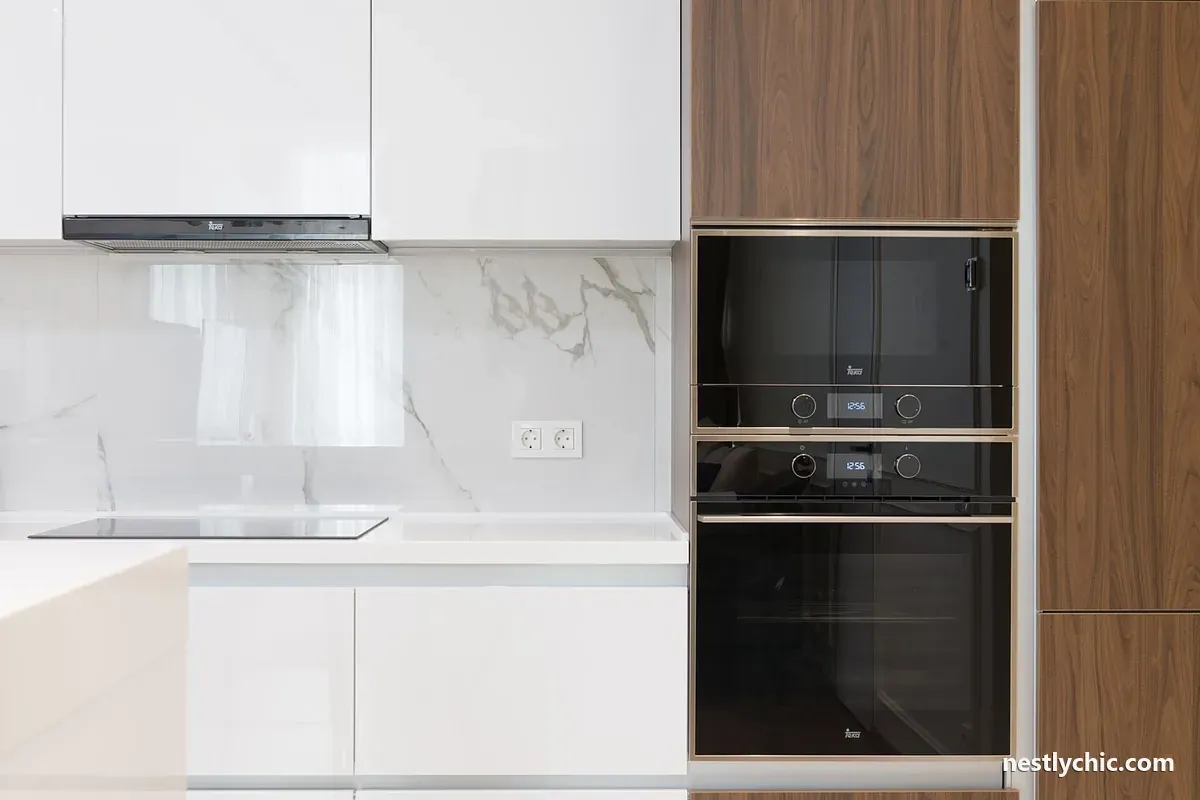
What an over-the-range microwave commits you to
The OTR decision is really four smaller decisions, and you want answers to all four before you order one.
It needs a dedicated circuit
GE Appliances' page on microwave electrical requirements, read on September 25, 2026, states that microwaves "require a 120 volt, individual, properly grounded branch circuit" with a 3-prong grounding type receptacle and a 15 or 20 amp breaker or time-delay fuse, and that over-the-range models need a dedicated circuit. If your kitchen does not already have one where the microwave will hang, adding it is a licensed electrician's job. Find that out before you buy, because it can change the real cost of the choice more than the difference between models.
It cannot live anywhere else
GE's page on over-the-range installation air clearance, read on September 25, 2026, says these units "cannot be used on a counter or shelf" because the underside is not flat. It also sets a fixed mounting height, measured from the floor and from the cooktop, and says they should not go in enclosed spaces where the bottom is covered. In plain terms, an OTR is not a microwave you can change your mind about later. If you remodel, move the range or decide you want a proper hood, the OTR does not follow you to the counter.
It needs a wall and cabinet that can hold it
An OTR is mounted to the wall behind it and the cabinet above it. The installation instructions for each model spell out the wall construction, cabinet size and hardware it requires, and they differ by model. Read them for the exact model before you buy, not after it arrives. If the cabinet above your range is the wrong depth or the wrong width, you may need a kit, a different model or cabinet work.
Mounting a heavy appliance overhead is at least two-person work, and it is a job for a qualified installer. We do not describe the mounting steps here, and it is not a job to treat as a quick weekend project. If you are buying new, count professional installation as part of the decision from the start.
It becomes your cooktop vent
Because the OTR takes the hood's place, choosing one is also choosing how your cooktop is vented. Some models vent outside through a duct, and some recirculate air through a filter back into the kitchen; which one your kitchen can use depends on whether a duct exists. If you cook on gas, or often cook at high heat, weigh that ventilation question on its own merits before deciding an OTR is the right vent for your range. Read the installation instructions for any conditions on the cooktop below, especially if your range is gas.
What a countertop microwave commits you to
Very little, which is its main strength. It takes a patch of counter, needs an outlet within reach of its cord, and needs whatever space around it its own manual specifies. When it fails, you unplug it and carry in a new one.
The real cost is counter space, and in a household that cooks a lot, prep space is not a small thing. If you are still working out how much counter your household needs, our guide to sizing a kitchen to the household walks through how the number of people cooking changes what a kitchen needs.
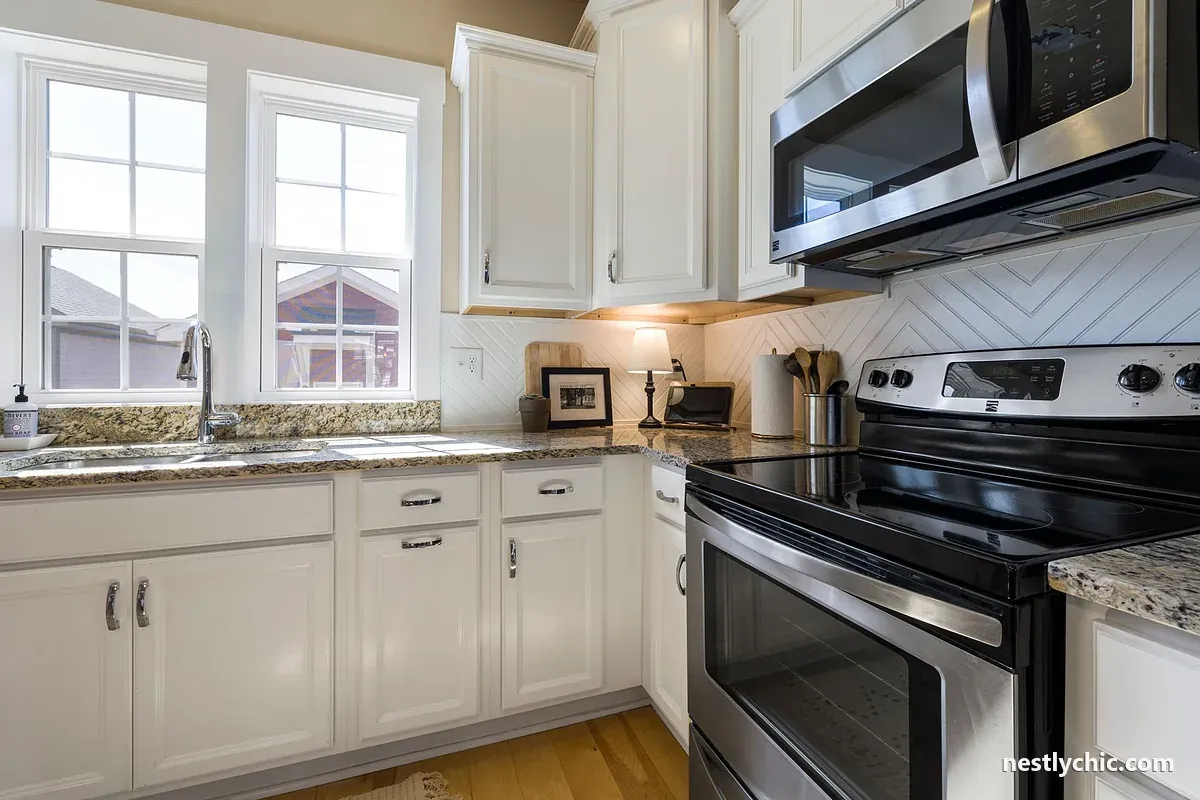
The reach question most guides skip
Here is the part appliance guides rarely say plainly: height is a safety decision, and it cuts both ways.
An OTR sits above the cooktop. Anyone lifting a hot bowl of soup out of it is reaching up, at or above face height, over a range that may be hot. For a tall adult that is fine. For a shorter adult, an older relative or a teenager just learning to cook, it means lifting hot liquid overhead, which is exactly the motion you would design out if you could.
Young children face the opposite problem. A study of microwave-related injuries treated in US emergency departments from 1990 to 2010, published by Smith and colleagues in the American Journal of Emergency Medicine in 2013 and read on September 25, 2026, found that "the average injury rate for children ≤5 years of age was more than double that of individuals older than age 5 years," and that almost three-fourths of injuries in that age group were scald and thermal burns. The authors described face and upper-trunk injuries as "consistent with children reaching over their head to remove an item from the microwave oven."
The same authors warned against assuming height solves it: "Placing the microwave out of the reach of a child may encourage them to climb onto chairs or counter-tops, thus increasing the potential for spills or falls." They favored engineered safety features over placement alone.
Rush University Medical Center reported in November 2020 that the national microwave oven standard had been updated to require child-resistant doors, with compliance required by March 31, 2023. If young children live in or visit your home, check how a model's door opens before you choose it, whichever type you buy, and keep hot contents out of their hands regardless of where the microwave sits.
So the reach test is about your household, not the appliance:
- Adults of mixed heights, older relatives, or children learning to cook: countertop, at a height everyone can lift from without reaching overhead.
- A household of tall adults with little counter space: OTR is easier to justify.
- Toddlers in the home: neither height is a safety plan on its own. Look at the door design and supervision.
When each one is the better buy
Choose over-the-range when:
- Counter space is genuinely short and you want it back.
- There is no range hood above the cooktop now, and the OTR's venting suits how you cook.
- The wall, cabinet and electrical supply already meet the model's requirements, or you are prepared to pay professionals to make them.
- Everyone who will use it can lift hot food from that height comfortably.
Choose countertop when:
- You already have a range hood you are happy with.
- People of different heights, or older family members, will use it daily.
- You want to replace it easily later, or you expect to remodel.
- You would rather not add an electrician and an installer to the purchase.
The honest trade-off: neither type is better in general. An OTR buys you counter space and pays for it in installation, reach and flexibility. A countertop model buys you simplicity and pays for it in counter space. For a first kitchen, where you are still learning how you use the room, our guide to where to spend and save in a first kitchen explains how to decide which purchases deserve the bigger commitment.
If you do buy a mounted appliance, keep its installation instructions with the rest of its paperwork; our kitchen appliance warranty registration guide covers what to keep and why.
Frequently asked questions
Can I put an over-the-range microwave on the counter?
No. GE Appliances says over-the-range microwaves cannot be used on a counter or shelf, because the underside is not flat. An OTR has to be mounted as its installation instructions describe.
Does an over-the-range microwave need its own circuit?
According to GE Appliances, over-the-range models need a dedicated circuit: a 120 volt, properly grounded branch circuit protected by a 15 or 20 amp breaker or time-delay fuse. Adding a circuit is work for a licensed electrician.
Is an over-the-range microwave safer for children?
Not automatically. A 2013 study in the American Journal of Emergency Medicine warned that placing a microwave out of a child's reach may encourage climbing, increasing the risk of spills and falls. Door design and supervision matter whichever type you choose.
Does an over-the-range microwave replace a range hood?
It takes the hood's position and includes a fan and lights, so it does the venting job in that spot. Whether it vents outside or recirculates depends on the model and on whether your kitchen has a duct, so check that before buying.
Can I install an over-the-range microwave myself?
It is a heavy appliance mounted overhead to a wall and cabinet, on a dedicated circuit. Treat it as a job for a qualified installer following the model's instructions, and leave any new electrical work to a licensed electrician.