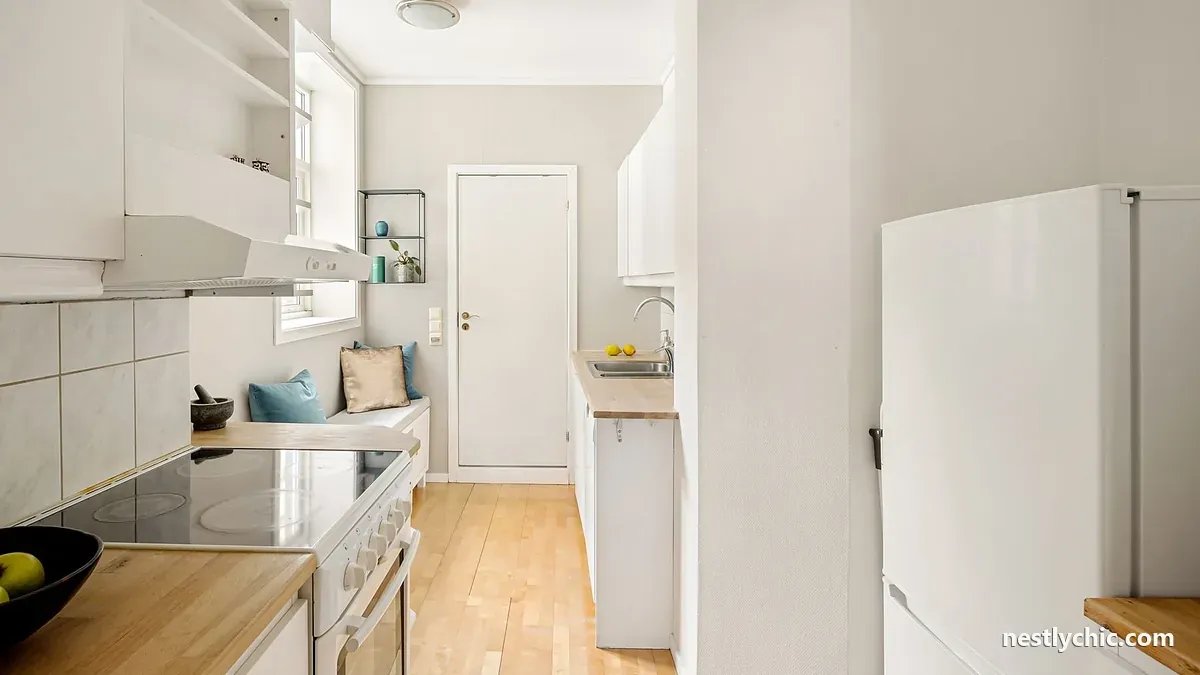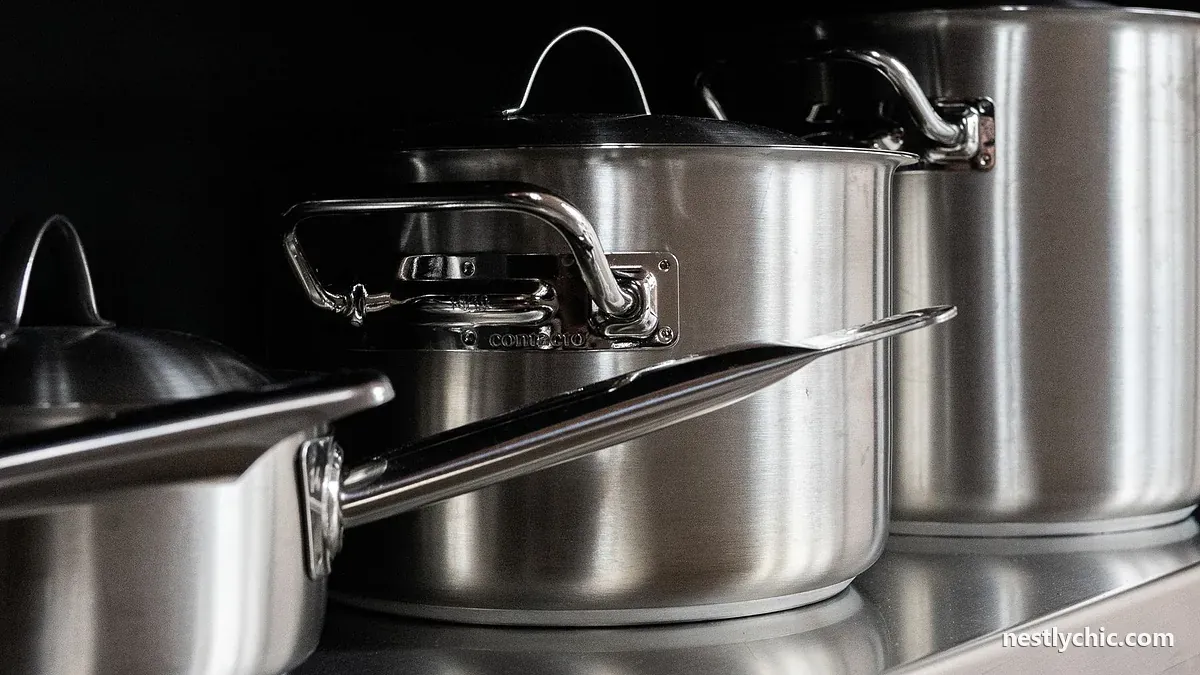
Kitchen items fall into three groups when household size changes. Capacity items — stockpots, skillets, mixing bowls, baking sheets, colanders — scale directly, and going from two people to four generally means one size up in each. Quantity items — plates, bowls, glasses, flatware, storage containers — scale with the number of people but not one-for-one, because you need enough for a meal plus what is in the dishwasher. Single-tool items — knives, peelers, can openers, thermometers, measuring cups — do not scale at all. A household of six needs the same one chef's knife a household of one does.
Almost every "essentials for a family of four" list is a fixed inventory for a fixed number of people, which is not much help if there are three of you, or five. The rule below works for any number.
The Three Ways an Item Responds to Household Size
The mistake in most kitchen lists is treating household size as a single dial that scales everything. It does not. Sorting items into the three groups first makes the whole question tractable.
Capacity items are ones where the item's size directly limits how much you can make at once. If the pot is too small, you cook in two batches or you do not cook the dish. These scale with the number of people you cook for, and they are the group where getting it wrong is most annoying.
Quantity items are ones where you need a number of identical things. These scale with people, but the multiplier is not one per person — it accounts for what is dirty, what is in the dishwasher, and whether anyone else eats at your table.
Single-tool items are ones where you need exactly one regardless. Cooking for six does not require a second peeler; it requires the same peeler for slightly longer. This group is larger than most people expect, and recognizing it stops a lot of unnecessary spending.
Scales Directly: Capacity Items
These are sized to the number of people, and the general guidance across cookware guides is consistent: households of four or more benefit from the next size up in each category compared with the typical two-person recommendation.
The commonly recommended starting points for a household of about four are an 8-quart stockpot, a 10 to 12 inch skillet as the most versatile everyday size, and a 2 to 3 quart saucepan as the all-purpose choice. These figures come from cookware retailer and cooking guides rather than from any standards body, so treat them as a well-established consensus starting point rather than a specification — the right size for you also depends on whether you batch-cook and how often you have people over.
The scaling logic underneath is more durable than the numbers. A stockpot is sized to the largest single thing you make in it, which for most households is a batch of soup, stock, pasta water or a chili. A skillet is sized to how much you can get in a single layer, because food stacked in a skillet steams rather than browns — that is a physical constraint, not a preference, and it is the real reason a too-small skillet is frustrating. Mixing bowls and colanders follow the same pattern.
Baking sheets are the exception that proves the rule: they cannot scale, because the oven fixes their maximum size. When a household outgrows one baking sheet, the answer is a second sheet, not a larger one.
Partially Scales: Quantity Items
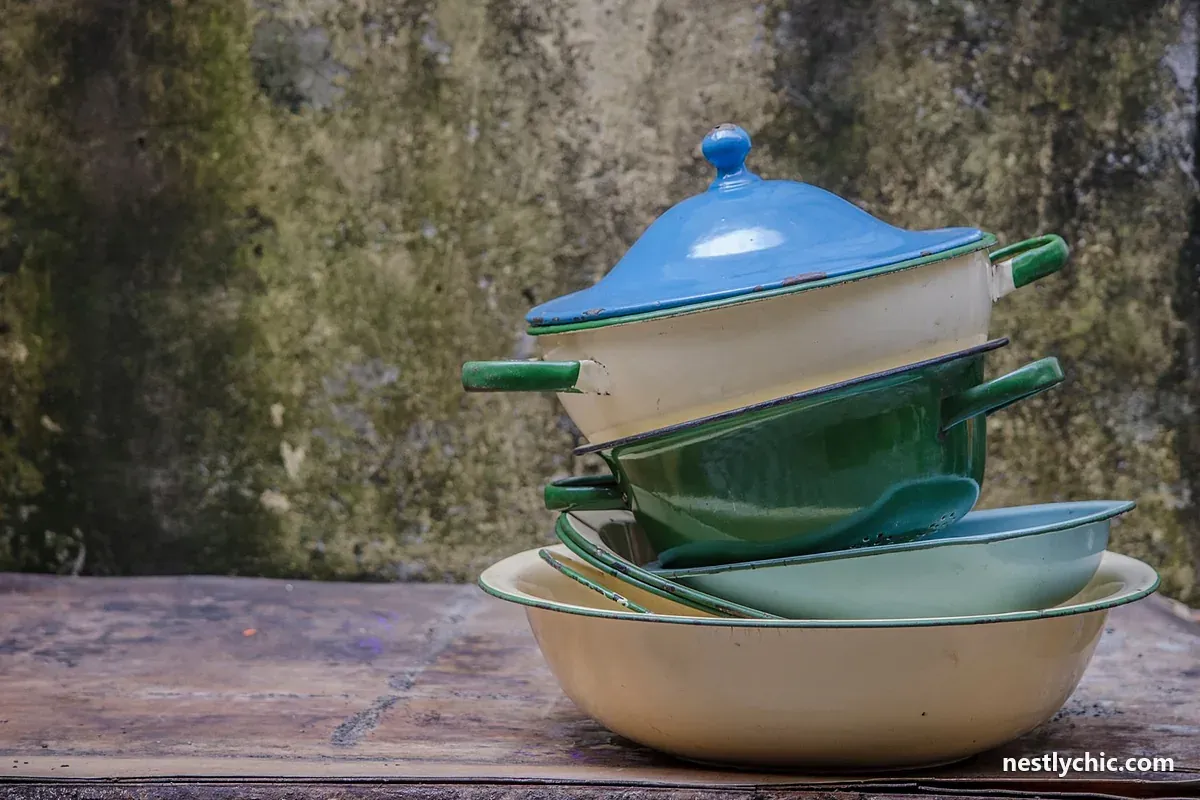
Plates, bowls, glasses and flatware scale with people, but the useful number is higher than one per person and lower than the "service for twelve" a lot of sets default to. The reason is simply that not everything is clean at once — some of it is dirty, some is in the dishwasher, and having exactly enough means running the dishwasher on a schedule dictated by your plate count.
The detailed arithmetic for place settings — how many settings a household should own, how the count changes if you entertain, and how the pieces within a setting are counted — belongs to a dedicated dinnerware guide rather than to a general sizing piece, and this site covers it there rather than restating it here.
Food storage containers behave the same way, scaling with how much you cook at once rather than strictly with headcount. A household of two that batch-cooks on Sundays may need more containers than a household of four that cooks fresh each night. Sizing containers to your cooking pattern rather than your headcount is the more reliable rule.
Does Not Scale: Single-Tool Items
This group absorbs most of a kitchen list and it is worth naming explicitly, because it is where "essentials for a family of four" articles quietly pad their counts.
One chef's knife. One paring knife. One peeler, one can opener, one whisk, one set of measuring cups and spoons, one instant-read thermometer, one box grater, one set of tongs. A household of six needs each of these exactly as much as a household of one, and no more of them.
The genuine exceptions are the items used simultaneously during a single prep session — cutting boards being the clearest case, where a second is about keeping raw meat prep separate from everything else rather than about how many people are eating. That is a workflow reason, not a headcount reason, and it applies to a household of two just as much.
The Scaling Table
| Item | 1 person | 2 people | 4 people | 6 people | Group |
|---|---|---|---|---|---|
| Stockpot | Small | Small–medium | Medium (around 8 qt is the common recommendation) | Larger, or a second pot | Capacity |
| Skillet | 8–10 in | 10 in | 10–12 in | 12 in, plus a second | Capacity |
| Saucepan | 1–2 qt | 2 qt | 2–3 qt | 3 qt, plus a second | Capacity |
| Mixing bowls | Small nesting set | Small nesting set | Full nesting set | Full set, largest sized up | Capacity |
| Baking sheets | 1 | 1–2 | 2 | 2–3 | Capacity (by count, not size) |
| Plates / bowls / glasses | Enough for the meal plus a spare cycle — scales with people, not one-for-one | Quantity | |||
| Flatware | Same rule as plates | Quantity | |||
| Storage containers | Scales with how much you batch-cook, not with headcount | Quantity | |||
| Chef's knife | 1 | 1 | 1 | 1 | Single tool |
| Paring knife, peeler, can opener, whisk, grater, thermometer, measuring cups | 1 each | 1 each | 1 each | 1 each | Single tool |
| Cutting boards | 2 (workflow, not headcount) | 2 | 2 | 2 | Single tool |
Read down the last column rather than across the row. The column is the part that generalizes.
Where Sizing Stops Working and Duplication Starts
Scaling up has a ceiling, and it arrives sooner than most lists admit.
A larger pot becomes unwieldy: heavy when full, awkward to lift, slower to heat, and difficult to store. A larger skillet eventually exceeds what a single burner can heat evenly, which produces a pan with a hot center and cool edges — a genuine cooking problem rather than an inconvenience. Past roughly the six-person mark, most households are better served by two medium pieces than by one very large one, because two pieces can be used at once and a single large piece cannot.
Two medium skillets also cook faster than one enormous one, since both get full burner contact. The switch from "buy bigger" to "buy a second" is the most useful single judgment in sizing a kitchen, and it applies to skillets first, saucepans next, and stockpots last.
The Constraint Nobody Mentions: Burners and Oven
Cookware guides size pots to people. What actually limits a household's cooking is often the range and the oven, and no amount of cookware fixes it.
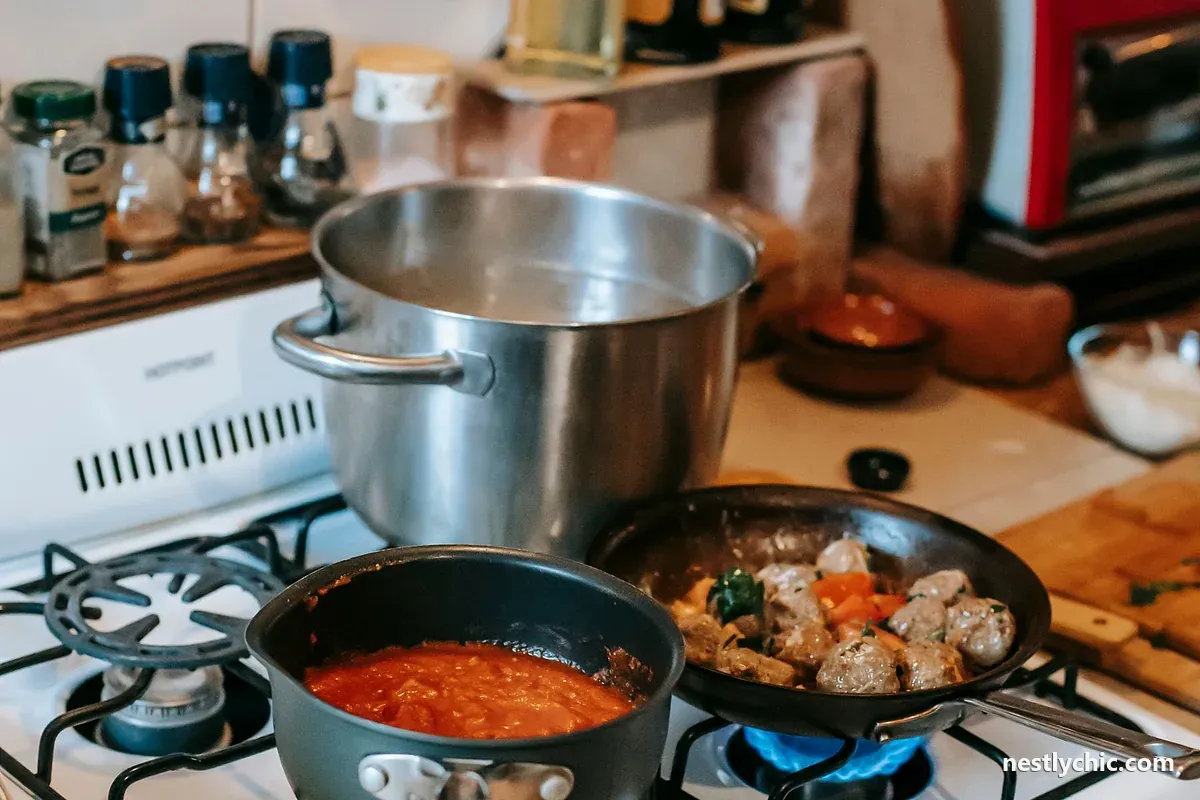
A standard four-burner range means four things can be hot simultaneously, and the physical spacing between burners means you cannot always use all four when two of the pans are large. An oven fits a fixed number of sheets, and putting a third one in changes how the first two cook. These are the real ceilings on cooking for a larger household, and they are worth checking before buying cookware sized to a number the range cannot support.
The practical consequence is to measure and count before buying: how many burners, how much space between them, and what actually fits in the oven side by side. This is the same discipline that governs everything else in a new kitchen, and it is covered alongside the rest of the inventory in the new home kitchen checklist. If you are working from a list that seemed sized for a smaller kitchen than yours, why a new-home list is not a first-apartment list covers what else changes. For what each of these sizes costs at different budget levels, every price on this site lives in kitchen essentials by budget, and the order to buy them in is set out in the three-month buying timeline.
FAQ
How many pots and pans does a family of four actually need? Fewer than most sets contain. A skillet, a saucepan and a stockpot cover the large majority of everyday cooking, with a second skillet and a sauté pan as the most common useful additions. The number of pieces matters less than whether each one is sized to how much you cook at once.
What size stockpot is right for a family of four? Around 8 quarts is the size most commonly recommended as a starting point for four people across cookware guides. Larger is worth considering if you batch-cook or make stock; note that a bigger pot is also heavier and harder to handle when full.
Do I need more knives for a bigger household? No. Knives are single-tool items — one chef's knife and one paring knife serve any household size. Extra knives are about the kinds of cutting you do, not the number of people you cook for.
How many plates should I buy? More than one per person, so that a meal does not depend on the dishwasher having finished. The detailed place-setting count, including how it changes if you entertain, is covered in this site's dedicated dinnerware guide rather than here.
When should I buy two of something instead of one bigger one? When the bigger version stops fitting the burner, gets too heavy to handle when full, or becomes hard to store. For most households that point arrives with skillets first — two medium skillets cook better than one oversized one, because both get full contact with a burner.