To choose tablecloths and napkins that last, read the fiber-content label first, then the weave and any finish, and pick the fiber that matches how often the cloth will be washed. Cotton is the easy all-rounder, linen trades wrinkles for a long life, polyester and blends trade absorbency for easy care, and finishes like stain release change how a cloth behaves in the wash.
Color and pattern are a separate decision, and this page leaves them alone. The question here is which cloth still looks right after the tenth wash.
How to choose tablecloths and napkins: start with the fiber label
In the United States, tablecloths and napkins are covered by federal fiber-content labeling. The Federal Trade Commission's business guide to the Textile and Wool Acts, "Threading Your Way Through the Labeling Requirements Under the Textile and Wool Acts" (July 2014, read 2026-09-11), lists "Tablecloths, napkins and doilies" among the household textile products covered by the fiber-content labeling rules. You can read the full list in the FTC's Threading Your Way guide.
That means the fiber content is information you can expect to find, on the tag, the packaging or the product listing. It is the single most useful fact about a table linen, because almost everything about how it washes follows from it.
Care instructions are a different matter. The FTC's separate guide to its Care Labeling Rule, "Clothes Captioning: Complying with the Care Labeling Rule" (May 2014, read 2026-09-11), describes that rule's scope as textile apparel worn to cover or protect the body, and the guide is written around clothing. See the FTC's Clothes Captioning guide. So treat the fiber content as the dependable part of a table linen's label, and read any care instructions as the maker's advice, not as a federally standardized label.
What each fiber trades off
| Fiber | What it does well | What it gives up | Suits a household that |
|---|---|---|---|
| Cotton | Absorbent, soft, takes frequent washing, widely available | Wrinkles, can shrink if the fabric wasn't pre-shrunk, stains set if left | Wants cloth napkins every day and a cloth that just goes in the wash |
| Linen | Strong, gets softer with washing, absorbent, dries fast | Wrinkles heavily, usually costs more, the relaxed rumpled look is part of the deal | Accepts wrinkles and wants a cloth that lasts a long time |
| Cotton-linen blend | Some of linen's texture with fewer wrinkles | Behavior depends on the ratio on the label | Wants linen's look with less ironing |
| Polyester | Resists wrinkles, holds color, dries quickly, handles frequent washing | Less absorbent, so a spill beads or spreads instead of soaking in; napkins feel less soft | Washes often and never irons |
| Poly-cotton blend | A middle ground: softer than polyester, fewer wrinkles than cotton | Absorbency and feel sit between the two | Wants low effort without an all-synthetic feel |
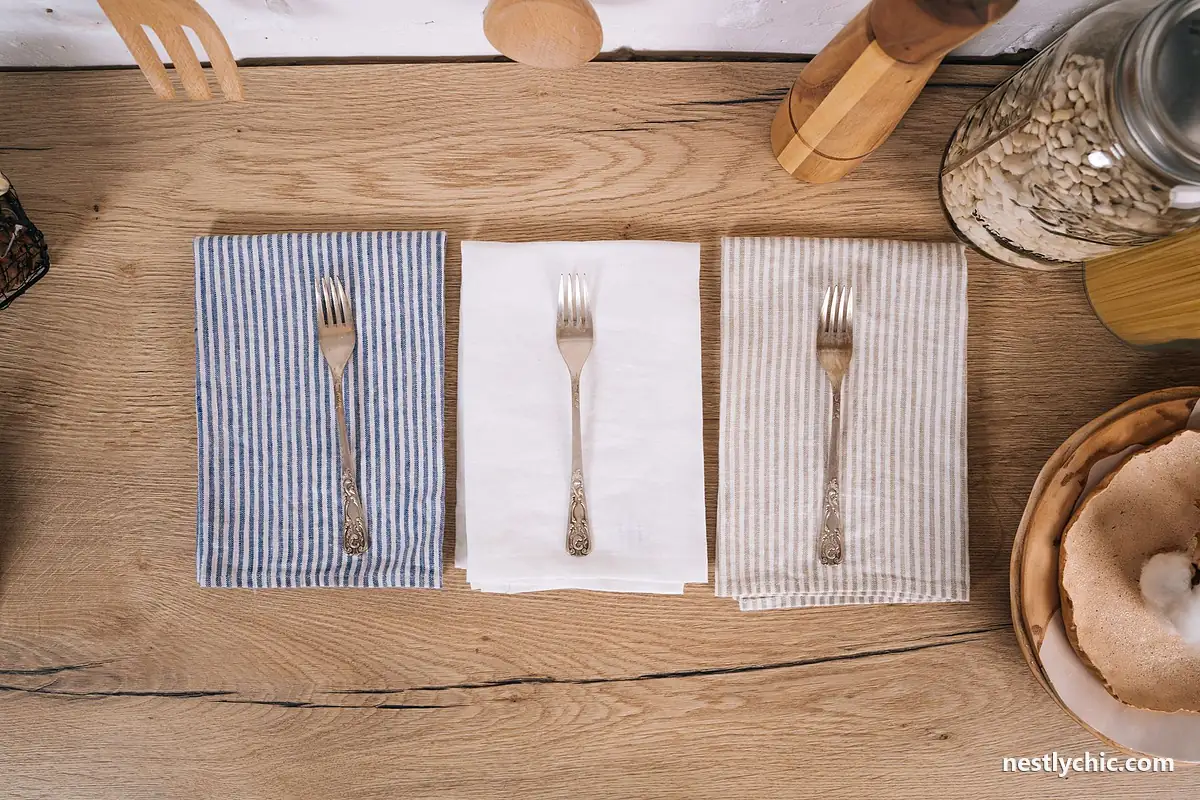
The biggest mistake is buying for the photograph. A crisp white linen cloth in a product photo has been pressed. If nobody in your house will iron, the cloth on your table will look like linen straight out of the dryer, and you should decide in advance whether that's acceptable.
Napkins and tablecloths are different buying problems
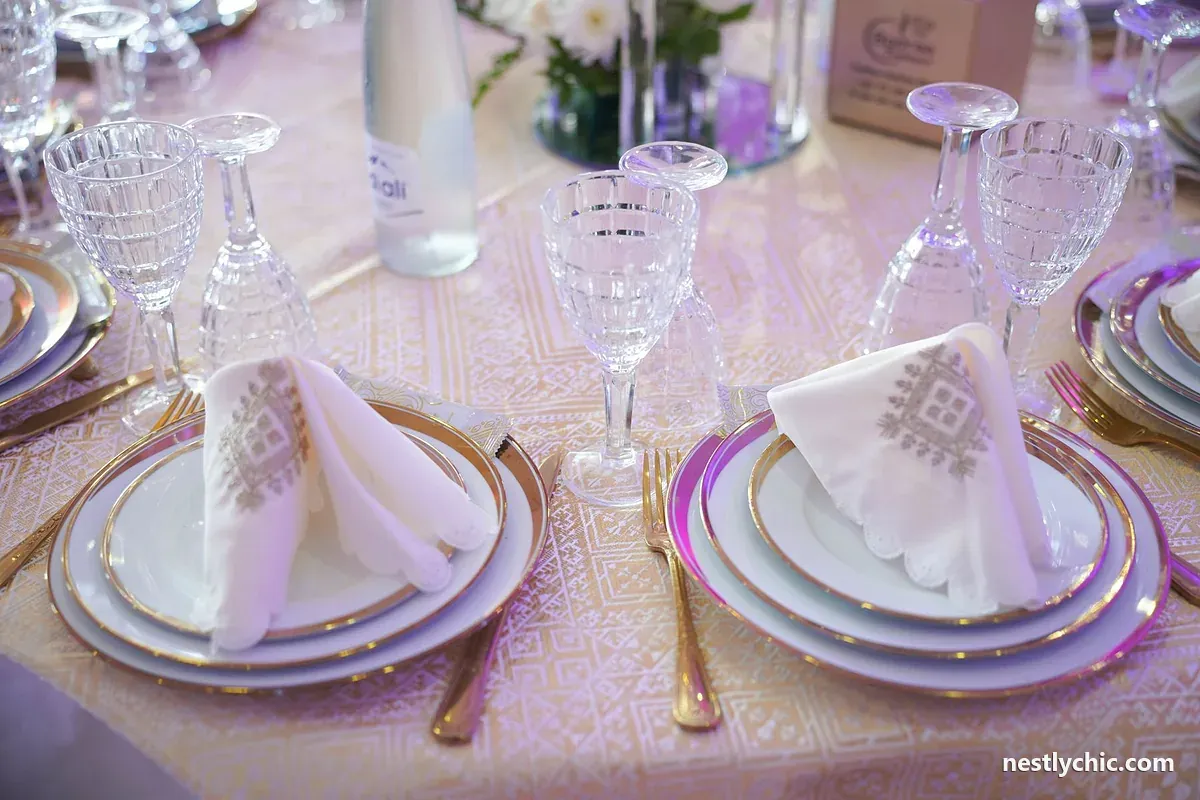
A napkin's job is to absorb. It gets used on hands and mouths, it gets washed after every use, and it lives or dies on absorbency and on surviving constant laundering. That points most households to cotton or linen for napkins, even if the tablecloth is a blend.
A tablecloth's job is to cover and protect. It gets washed less often than napkins, it has to hang evenly, and it matters more that it resists wrinkles and stains than that it absorbs. That is where polyester and blends earn their place.
So the two don't need to be the same fiber. A polyester or blend tablecloth with cotton napkins is a practical pairing for a household that washes often. The napkins do the absorbing; the cloth does the covering.
Weight and weave: the parts of the label that aren't there
The fiber content is on the label. The weight and the weave often aren't, and they matter almost as much.
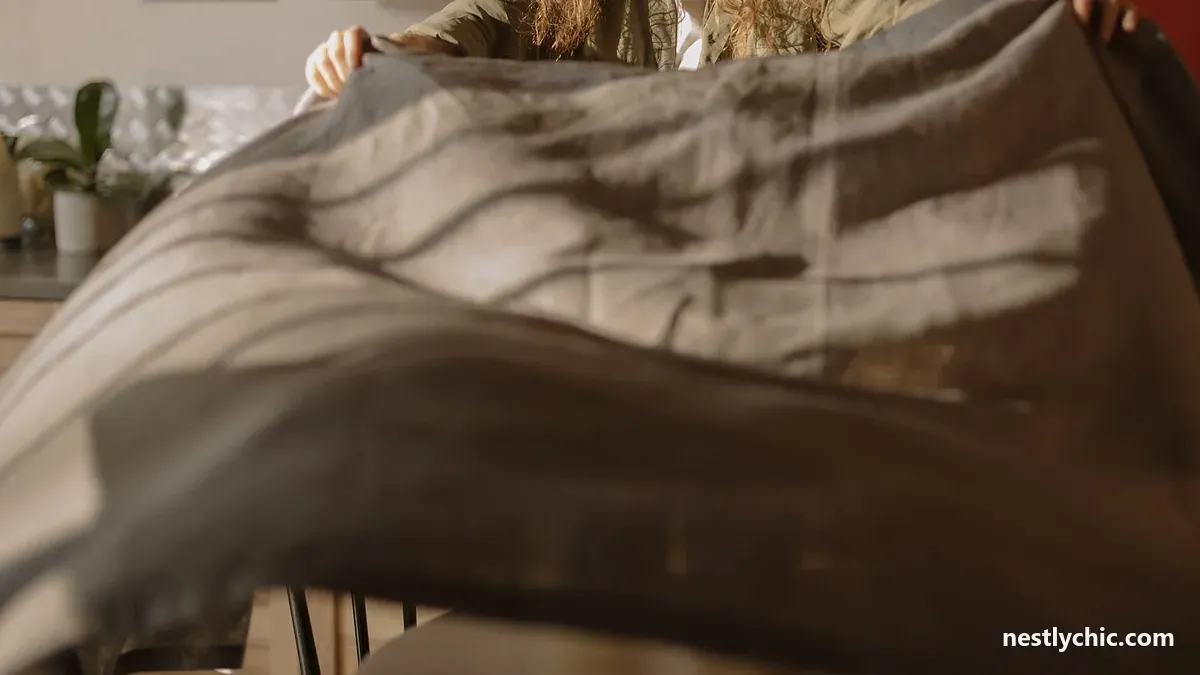
Weight. A heavier cloth hangs better, lies flatter and wears longer. A thin cloth looks fine new and shows wear, pilling or see-through patches sooner. If the listing gives a fabric weight, compare it across options. If it doesn't, the product photos of the cloth hanging off a table edge are the next best evidence: a cloth that drapes in a straight fall is heavier than one that flares.
Weave. A tight, plain weave is the most durable everyday choice. Damask and jacquard weaves, with a pattern woven in, are traditional for formal cloths and are durable, but they're usually heavier and costlier. Loose or open weaves look relaxed and snag more easily.
Hems. Check how the edges are finished. A deep, even hem survives the wash better than a narrow one, and napkin corners are where cheap construction fails first.
Finishes: stain release, wrinkle resistance and what they cost
Many table linens carry a finish, often described as stain resistant, stain release, easy care or wrinkle free.
These finishes change the fabric's behavior, usually by making it shed spills or resist creasing. They are one reason a polyester or blend tablecloth can look better after a family dinner than an untreated cotton one.
They also change how the cloth handles. A treated napkin may absorb less than an untreated one, which is a trade-off for something whose job is to absorb. And the maker's care instructions for a finished fabric are worth reading before buying, because a finish may carry its own washing or drying advice. Since the care label isn't standardized the way the fiber label is, the product listing and the maker's own care notes are where to look.
Sizing a tablecloth without a chart
Sizing is where most tablecloth returns come from, and it doesn't need a chart.
Measure the tabletop, length and width, or the diameter for a round table. Decide how far you want the cloth to hang over each edge. A short overhang suits everyday use and keeps the cloth out of laps; a longer drop looks more formal and gets in the way more.
Add that overhang twice to each dimension. A cloth for a table of a given length needs to be that length plus the overhang at both ends, and the same for the width. Compare that figure with the cloth's stated size, remembering that cotton and linen may shrink a little in the wash unless they were pre-shrunk.
Napkin size follows use. A napkin big enough to cover a lap when seated is the practical minimum for a meal napkin. Smaller cocktail napkins are a separate, optional item.
How many to own
Napkins follow the place-setting count, plus a buffer for the laundry cycle. If cloth napkins are used daily, the count has to cover the days between loads, the same logic set out for plates in how many place settings a household actually needs.
Tablecloths are fewer. Most homes use one everyday cloth, and a second so there is one on the table while the other is in the wash, plus one for occasions if the household wants it. Kitchen towels, oven mitts and pot holders are a different category with a different fiber rule, covered in kitchen linens and small consumables.
Where table linens fall in the buying order: late. They're not first-week items, and they're among the easy things to add to a registry, as set out in the housewarming and first-home registry. Buying them after a few months of eating at the table also tells you whether cloth napkins are an everyday habit or an occasional one, which decides both the fiber and the count.
FAQ
What is the best fabric for a tablecloth that gets washed often? Polyester and poly-cotton blends resist wrinkles and dry quickly, which suits frequent washing without ironing. Cotton also takes frequent washing well but wrinkles more. Linen is very durable but wrinkles heavily. Check the fiber-content label, which FTC rules cover for tablecloths and napkins.
Should napkins be the same fabric as the tablecloth? No. Napkins need to absorb, so cotton or linen usually works best, while a tablecloth benefits more from wrinkle and stain resistance. Mixing a blend tablecloth with cotton napkins is a practical choice.
How do I know what size tablecloth to buy? Measure the tabletop, choose how far you want the cloth to hang over each edge, and add that overhang twice to each dimension. Allow for a little shrinkage in cotton or linen that wasn't pre-shrunk.
Are stain-resistant napkins a good idea? They shed spills better, but a finish can reduce absorbency, which is the main job of a napkin. They suit tablecloths more naturally than napkins. Read the maker's care notes, since finishes may carry their own washing advice.
The short version
Read the fiber label first, since it's the dependable part. Choose napkins for absorbency and tablecloths for easy care. Prefer a heavier cloth with a tight weave and a deep hem. Size by measuring the table and adding the overhang twice. Decide before buying whether anyone will iron, because that decides between linen and everything else.
Sources, read 2026-09-11: Federal Trade Commission, Threading Your Way Through the Labeling Requirements Under the Textile and Wool Acts; Federal Trade Commission, Clothes Captioning: Complying with the Care Labeling Rule. This page ranks and recommends no product, quotes no price and carries no affiliate link. Nothing here was tested or owned by this site.