
A housewarming registry works best when it is built from what the kitchen still actually lacks, not copied from a generic gift list. Start from an honest inventory: what has already been bought in the weeks since move-in, and what is genuinely still missing. List the durable, shared-use, one-per-household items that group gifting tends to under-deliver on, and leave off consumables and anything with a strong personal-preference component, since those are poor fits for a list other people are choosing from. This piece covers how to build that list from the kitchen side. How much a given guest should spend, and how to choose a gift for someone as a person rather than as a kitchen, is a different question this site does not answer.
Build the Registry From What Is Already Stocked, Not From a Template
Most registry checklists online are written as a fixed template: cookware set, dinnerware, food storage containers, linens, repeated with minor variation across dozens of sites. That template assumes a kitchen at day zero, before anything has been bought.
A registry built a few weeks after move-in is a different document, because the day-one and week-one basics are usually already covered by then, either bought directly or filled in from the three-month buying timeline. The useful registry at this point fills the actual gap between what has been bought and what the household still wants, not a generic starting inventory. That means the first step in building one is an honest look at what is already in the cabinets, not a copy-paste of someone else's list.
The Duplication Problem: Why Four Cheese Boards Happen
Registries invite group gifting, and group gifting has a predictable failure mode: cheap, easy-to-choose items get duplicated, while the one expensive item nobody wants to buy alone goes unbought. A cheese board, a set of dish towels, or a small gadget is an easy, low-stakes gift choice for several guests independently, which is exactly how a household ends up with four of them and none of the one item that actually would have helped.
The fix is not to avoid a registry. It is to weight the list toward items expensive or specific enough that duplication is unlikely, and to include at least one item explicitly priced for group contribution, since several guests pooling toward one substantial item is a genuinely useful registry function that a flat list of small items does not enable.
What Belongs on a Registry: Durable, Shared-Use, One-Per-Household
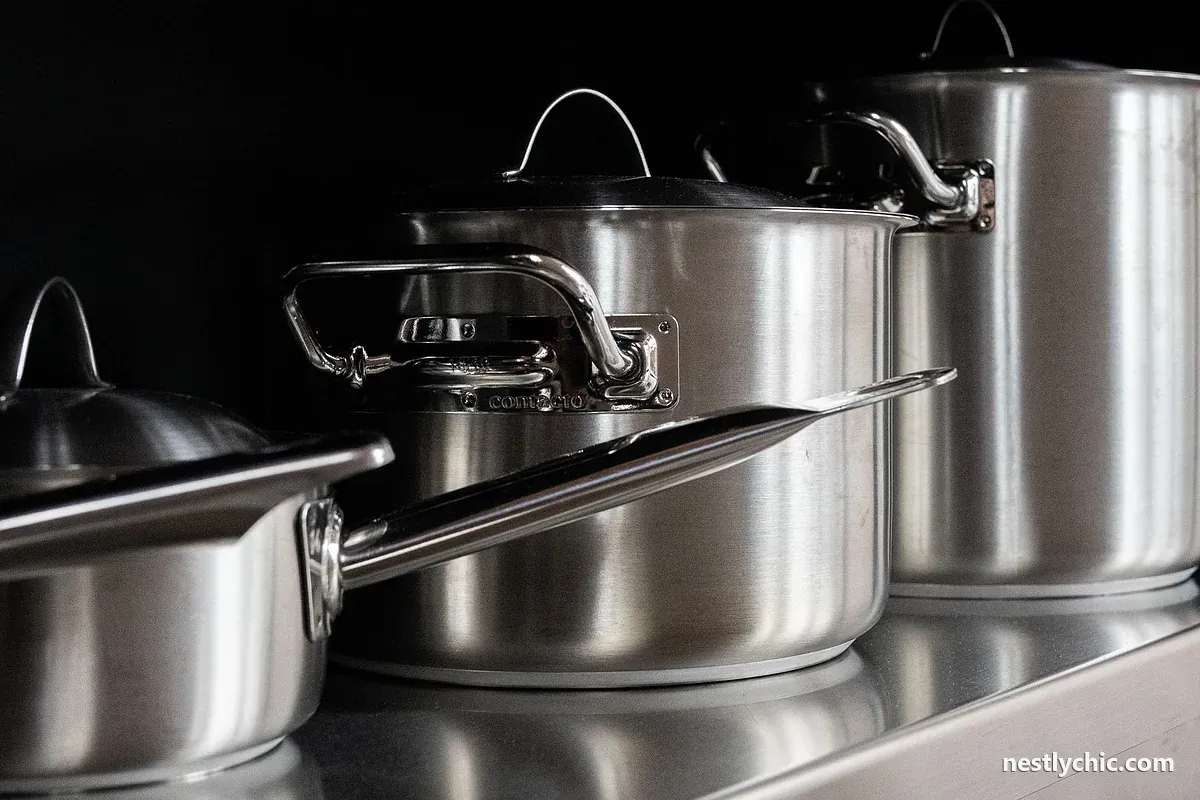
Items that belong on a housewarming registry share three properties: they are durable rather than consumable, they are used by the household as a whole rather than by one person's preference, and a household typically needs exactly one, not several. Cookware, a stand mixer or other larger appliance, quality bakeware, and serving pieces for entertaining fit this pattern. They are also, not coincidentally, the categories most households postpone buying for themselves, which is part of what makes them good registry candidates in the first place.
A useful way to test a candidate item before adding it to the list: would the household have bought this for themselves eventually anyway, and is it something that gets used weekly rather than a few times a year. An item that passes both tests is a strong registry candidate; an item that fails either one is usually better left off, however common it is on other checklists.
What Does Not Belong: Consumables and Strong-Preference Items
Two categories are consistently poor registry fits, even though they appear on many generic checklists. Consumables, cleaning supplies, foil, paper towels, coffee, run out and get restocked constantly; a registry gift of them is used up within weeks and does not represent the kind of investment a registry is meant to enable. Items with a strong personal-preference component, a specific dinnerware pattern, a particular color scheme, are a poor fit for a list other people are choosing from, since the household is likely to have opinions the registry cannot communicate well, and a mismatched choice here is wasted goodwill on both sides.

The One or Two Big-Ticket Items Worth Listing Even Though Nobody Buys Them Alone
Every registry benefits from one or two items that are genuinely too expensive for a single guest to buy comfortably but are exactly what group contribution is for. This is where the registry earns its keep beyond what a household would have bought for itself anyway. The right candidate here is whatever single item the kitchen inventory review turns up as the actual, specific gap, not a generic "big appliance" placeholder, since a vague entry gets skipped by guests looking for something concrete to give.
If the Household Already Has Most of the Basics
A registry built well after move-in, for a second home, or for a household that already owned most of a kitchen's worth of equipment before moving, looks thinner than a first-time template, and that is correct rather than a problem to pad around. In that case the registry is better built around genuine upgrades and the household's specific remaining gaps than stretched to match a generic checklist's item count.
FAQ
What should go on a housewarming registry for someone who just moved? Whatever the kitchen inventory review shows is genuinely still missing, weighted toward durable, one-per-household items. A useful registry is built from the specific gap, not copied from a generic template.
How do I avoid getting five of the same small gift? Weight the registry toward higher-value or more specific items that are less likely to be an easy, low-stakes choice for multiple guests, and include at least one item explicitly suited to group contribution.
Should consumables like cleaning supplies go on a housewarming registry? Generally not. Consumables are used up quickly and do not represent the kind of one-time investment a registry is best suited for.
How much should guests spend on a housewarming gift? That is a question about the guest's relationship to the household, not about the kitchen's inventory, and it is outside what this article covers.
Should I put items on the registry that I already own, just an old or worn version? If the current version genuinely limits what the household can cook, or is close to failing, it is a reasonable registry candidate. If it is only cosmetically worn but still functions correctly, a registry slot is better spent on a genuine gap than on an upgrade that was not otherwise a priority.