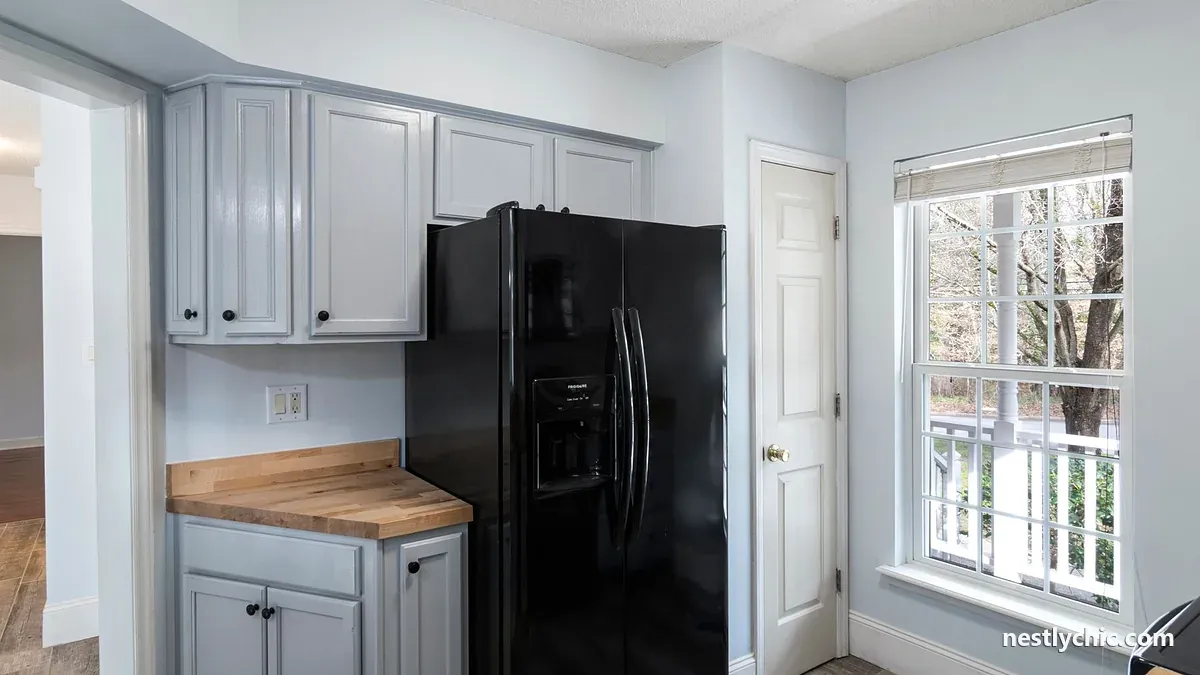
Short answer: The counter depth vs standard refrigerator choice is a trade of interior depth for floor space and a cleaner line. A counter-depth fridge's cabinet sits roughly in line with your countertops, while a standard-depth fridge sticks out past them and holds more behind every shelf. Neither term has one fixed industry definition, so the label settles nothing. Four measurements do: your counter depth, the fridge's case depth, its depth with doors and handles, and its depth with the doors open.
The question most people are really asking is simpler: "Counter-depth looks better. How much food am I giving up?" No maker publishes a single answer to that, and any guide that gives you one flat number is guessing. What follows is how to get your own number, for your kitchen, from the spec sheets you are already looking at.
Why depth is where the storage lives
Start with the physical reason, because it explains everything else. A refrigerator is an insulated box. Its capacity is roughly width times height times depth, minus the walls, the insulation, the cooling hardware and the air channels that keep cold air moving. Take inches off the depth and every shelf and every crisper drawer gets shallower along its full width. Door bins are the exception, since they hang on the door rather than sitting in the case.
Makers can win some of that volume back by building the box taller or wider. So when a counter-depth model lists a capacity close to a deeper one, the space came from somewhere. Check the height and width lines on both spec sheets before you assume nothing was given up, and check them against your opening, because extra width is exactly what an older cutout may not have.
Depth also changes how food behaves on the shelf. A deep shelf holds a back row behind the front row, and a jar pushed to the back disappears. A shallower shelf hides less, but a wide platter or a covered roasting pan may not sit flat. If you cook large for holidays, compare the interior depth against your biggest pan; our guide to roasting pan sizing for the bird you actually cook covers the pans most households end up owning.
Counter depth vs standard refrigerator: the numbers makers publish
Here is what three major makers said on their own pages when we read them on September 23, 2026. Every figure is the maker's, in the maker's words.
| Maker page (read September 23, 2026) | Counter-depth range | Standard-depth range |
|---|---|---|
| Bosch, counter-depth guide | 23 to 27 inches | 28 to 34 inches |
| Samsung, counter-depth buying guide | "28 to 29 inches" in one passage; "about 22 to 32 inches deep, not including handles" in another | 30 to 35 inches |
| LG, counter-depth refrigerators page | 24 to 30 inches | Described only as "deeper" |
Bosch's guide to counter-depth refrigerators, read September 23, 2026, says standard models "typically" range from 28 to 34 inches deep and counter-depth models "typically" fall between 23 and 27. Samsung's counter-depth buying guide, read the same day, gives two different counter-depth ranges on the same page. LG's counter-depth refrigerator page, also read that day, says most counter-depth models are 24 to 30 inches deep.
Put those side by side and the problem is plain. Bosch's standard-depth range starts at 28 inches. Samsung calls 28 to 29 inches counter depth. LG's counter-depth range reaches 30. One maker's standard-depth fridge can be another maker's counter-depth fridge. Nobody here is wrong. The term is a category name, not a measurement, and makers measure depth to different points: the case alone, the case plus doors, or the case plus doors and handles.
Counter depth still sticks out: doors, handles and hinges
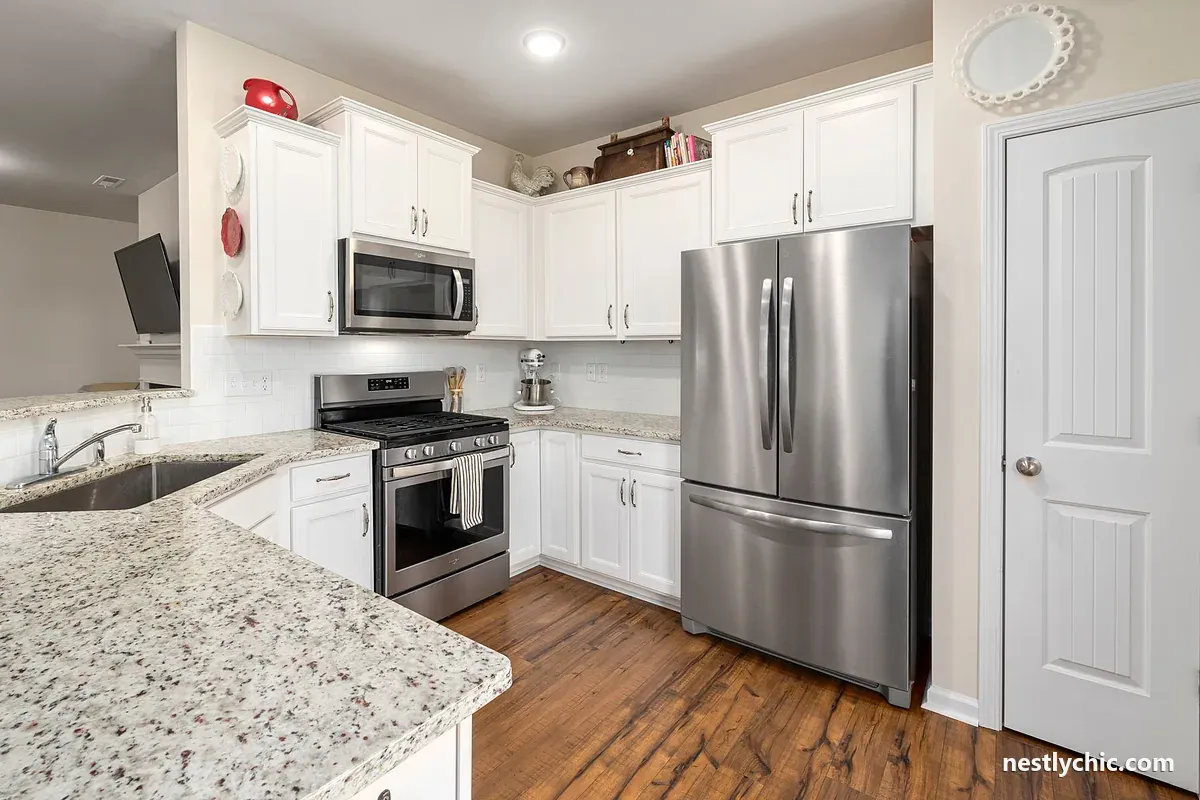
The showroom picture of a fridge sitting perfectly flush with the cabinets is usually a different product. GE Appliances draws the line on its page explaining counter-depth refrigerators, read September 23, 2026: counter-depth models are "designed to align with the edges of your kitchen counters," while cabinet depth describes "any refrigerator designed to fit within the standard cabinet measurements, providing a built-in appearance." A freestanding counter-depth fridge gets close to the counter line. It does not disappear into it.
The doors are the reason. Samsung's guide says that on counter-depth models "doors and handles can add a few extra inches," and tells buyers to review each model's full depth "including depth with doors and handles." How much a door adds is not trivial. LG's page for its Zero Clearance counter-depth model gives that door's thickness as 2.2 inches and says earlier doors were 3.9 inches. Add a handle to either and you can see how a case that lines up with your counter still ends several inches past it.
Hinges matter too. A door swings on a pivot, and on many models the door's edge travels past the side of the case as it opens. Samsung's guide advises leaving 2 to 4 inches of clearance on the hinge side. LG says its Zero Clearance hinges let both doors open fully with the case "nearly flush" to cabinetry, and it still recommends 0.16 inches between the sides and the wall for that model. The lesson is not which hinge to buy. It is that hinge clearance is model-specific, so read it on the installation sheet, not in a general guide.
The four measurements that settle it
Ignore the label and write down four numbers.
- Your counter depth. GE's page says to measure "from the wall to the counter edge (not including the backsplash)." Bosch says the same thing in its own words: back wall to the counter's front edge. If you want to know what depth your cabinets were likely built to, our guide to standard kitchen cabinet dimensions walks through it.
- The maker's required rear clearance, added to the case depth. A refrigerator does not make cold. It moves heat out of the box and releases it into the room, and that heat needs air to leave through. Bosch's guide gives "a minimum clearance of 2 inches from the back wall, 1 inch from the upper cabinet, and 1/4 inch on either side of the fridge." Other makers set their own figures, so use the one on the installation sheet for the model you are considering. Case depth plus rear clearance tells you where the front of the case will actually land.
- Depth with doors and handles, closed. This is what your walkway sees every day. Compare it with your counter depth: the difference is how far the fridge will stand proud of the counter.
- Depth with the doors open. Samsung's guide advises measuring "with doors and compartments fully opened." Then measure from the counter edge to the nearest island, wall or opposite cabinet, and check that an open door plus a person standing in front of it still fits.
Two households with the same kitchen can reach different answers here. Where the fridge sits across from an island or beside a doorway, measurement four usually decides it. Where the fridge sits in an alcove at the end of a run, a few extra inches of protrusion may cost nothing at all.
What you give up, and what you get
| Factor | Counter depth | Standard depth |
|---|---|---|
| Shelf depth | Shallower; fewer rows behind the front row | Deeper; more rows, more room for bulk |
| Large flat items | Wide trays and platters may not sit flat | More room for trays, platters and cases of drinks |
| Visibility | Less food hides at the back | Back rows are easy to lose track of |
| Walkway | Case sits near the counter line; doors still stand proud | Case and doors both extend past the counter |
| Look | Closer to the cabinet line | Visibly stands out from the run |
| Fit in an old opening | May regain volume through extra height or width, so check both | Usually made for openings built around standard depth |
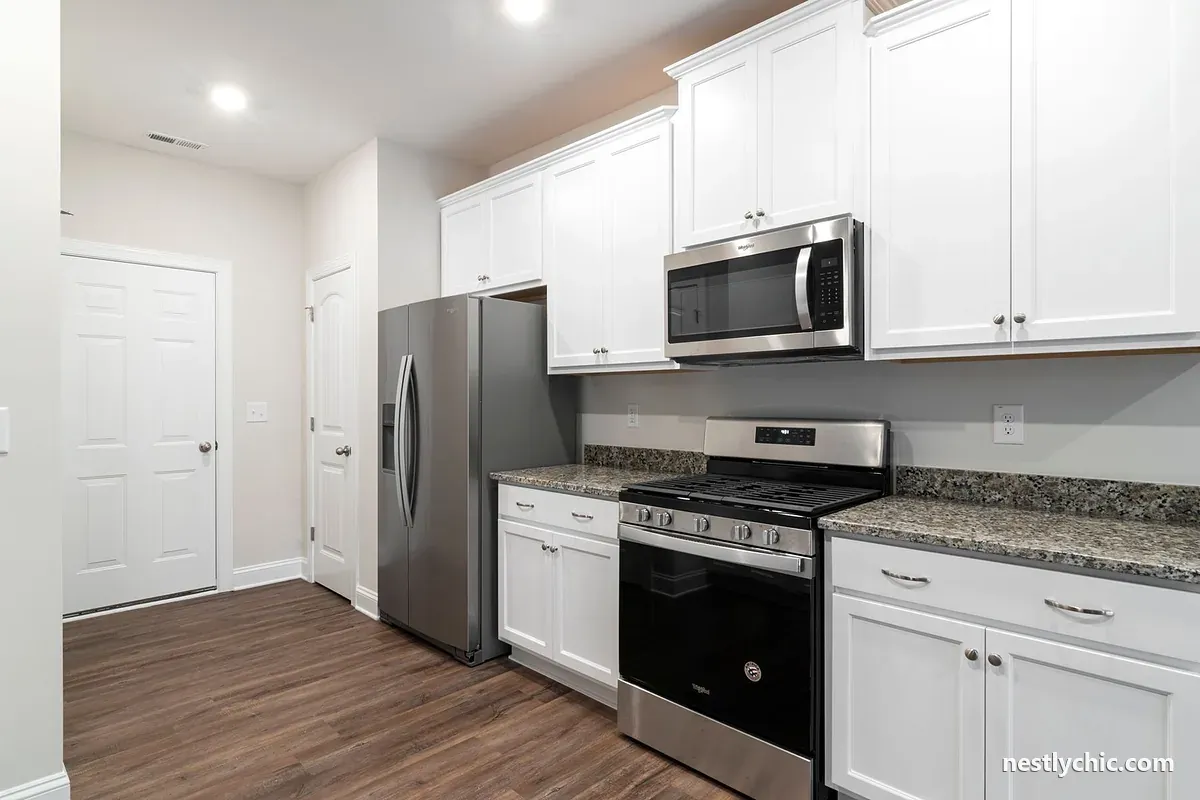
The row people skip is the last one. If you are replacing a fridge in an existing opening, a counter-depth model that makes up volume by being wider can fail the width check even though it passed the depth check.
How to put a number on the food you would lose
This is the part the showroom does not do for you, and it takes about ten minutes.
Pick two models from the same maker, at the same width and in the same door configuration: one counter depth, one standard depth. Put their spec sheets side by side and compare total capacity, then the fresh-food and freezer figures separately. The difference is your answer to "how much am I giving up," and it is a far better answer than any rule of thumb, because it is about two fridges you could actually buy.
The cubic-foot figures are comparable for a reason. In the United States, the Department of Energy's refrigerator test procedure, published at 10 CFR Part 430, Appendix A, is the method for measuring "the total refrigerated volume in cubic feet," and it points to an industry standard, AHAM HRF-1-2019, for how that volume is determined. Both depths are measured the same way, so the gap between two spec sheets is a fair comparison of volume.
What a cubic foot does not tell you is shape. A cubic foot spread across tall door bins holds different food than one on a deep shelf. So after you compare the numbers, look at the interior photos or the product diagram and ask one practical question: where would my weekly shop and my largest dish actually go? For a sense of how much fridge space a household of your size tends to use, our guide to sizing a kitchen to the household covers one, two, four and six people.
One honest limit. This guide covers fit and tradeoffs only. How well a particular model holds temperature, or how it holds up over years, is a question for an independent testing organization such as Consumer Reports. We do not lab-test refrigerators, and we will not pretend otherwise.
Which depth suits which kitchen
Counter depth tends to make sense when:
- The fridge faces an island or sits along a narrow galley walkway, where a few inches of protrusion is felt every day.
- It sits next to a doorway or the main path through the kitchen.
- The household shops often in smaller loads rather than one big weekly trip.
- You value the cabinet line and can live with less deep-shelf space.
Standard depth tends to make sense when:
- You do one large weekly shop, buy in bulk, or regularly store party trays and holiday dishes.
- The fridge sits in an alcove or at the end of a cabinet run, where protrusion costs little floor space.
- You are replacing a fridge in an opening built around a deeper unit and want the best chance of a clean fit.
- Capacity per inch of width matters more than the look.
If this is your first kitchen you own, the fridge is one of the few purchases that shapes how the room works for years. Our guide to what changes when you own the kitchen covers the other decisions worth making in the same order.
FAQ
How deep is a counter depth refrigerator?
It depends on the maker. On pages read September 23, 2026, Bosch gave 23 to 27 inches, LG gave 24 to 30 inches, and Samsung gave both 28 to 29 inches and about 22 to 32 inches (not including handles). Measure the specific model's case depth and its depth with doors and handles rather than relying on the label.
Does a counter depth refrigerator sit flush with the cabinets?
Not completely. The case can sit close to the counter line, but Samsung's guide notes that doors and handles "can add a few extra inches." A truly flush look usually comes from a built-in or cabinet-depth unit installed into a cabinet opening, which is a different category.
Does a counter depth refrigerator hold less food?
At the same width and height, usually yes, because the lost depth comes out of every shelf and drawer. GE Appliances describes counter-depth models as having "a slightly smaller capacity." To see how much less, compare a counter-depth and a standard-depth model from the same maker, at the same width and in the same configuration.
How much clearance does a refrigerator need around it?
Each maker sets its own figures. Bosch's guide gives a minimum of 2 inches from the back wall, 1 inch from the upper cabinet and 1/4 inch on either side. Samsung's guide advises 2 to 4 inches on the hinge side of the door. Use the installation sheet for the exact model you are considering.