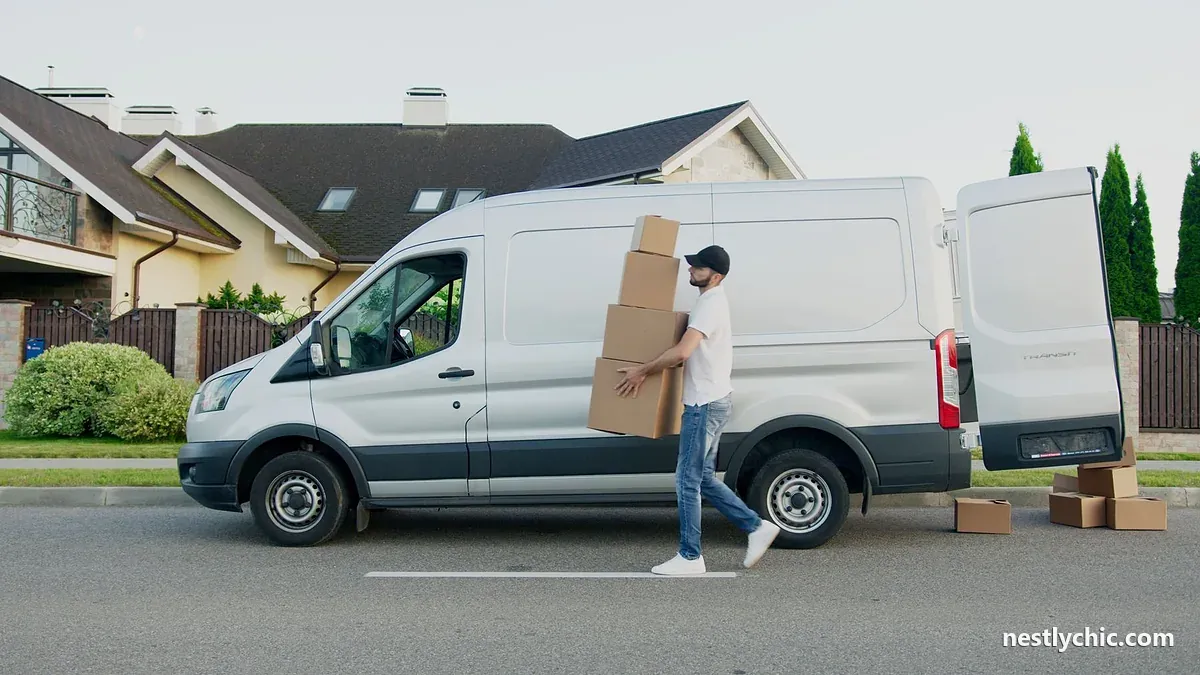
Short answer: Will my refrigerator fit through the door? It will if the fridge dimension that has to cross each opening is smaller than the narrowest clear point anywhere on the route, from the curb to the kitchen. That means measuring every doorway at its tightest spot (trim, stops, knobs and all), plus hallways, corners, stairs and the gap beside a kitchen island, then comparing those numbers with the maker's spec sheet. If it is close, the refrigerator's doors may come off, but LG, for one, recommends its service center do that. Moving the fridge itself is a job for a trained crew of at least two.
The real question behind the search is usually this one: "It fits the space. Will it fit through the hallway?" Measuring the opening in the kitchen is the step everyone remembers. The route is the step that sends refrigerators back on the truck.
Why the gap is only half the question
A kitchen opening is measured once, in one place, and it was planned for a refrigerator. The route into the house was planned for people. Front doors, hallway doors and the kitchen doorway itself were sized for walking through, and nobody checked them against the appliance you picked.
Samsung says as much in its US buying guide, "What Size Refrigerator Do I Need?", read September 24, 2026: "Some customers have reported having to return their refrigerators because they didn't fit inside their front door, elevator, stairs or hallways." The same guide tells buyers to "map out a path from your entryway to your kitchen and measure the width of each hall, corner and doorway along your path to make sure there's enough clearance."
So there are two separate tests. The first is whether the fridge fits the opening, which our guide to standard kitchen cabinet dimensions covers in detail. The second, which this article covers, is whether it can get there.
Will my refrigerator fit through the door? The two sets of numbers
The comparison is simple once you have the right numbers on both sides. Most mistakes come from using the wrong number for the fridge.
The refrigerator's numbers
GE Appliances' support page on prepping pathways and measuring your space, read September 24, 2026, says an appliance's dimensions can be found "in the product specifications, as well as the Installation Instructions for the specific model." Download both before you order. A single model can have several depth figures: the cabinet alone, with the doors, with the handles, and with the doors open. Samsung's guide notes that measurements should factor in "handles, doors and compartments when fully opened."
That matters because the number printed in large type on a listing is not always the one that has to pass through a doorway. Samsung, for example, lists its counter-depth refrigerators at 28 to 32 inches deep, "excluding handles." Handles and doors add to that, and on a tight route the difference decides the outcome.
A refrigerator has a footprint with two horizontal measurements, width and depth. Only one of them crosses a given doorway, depending on which way the fridge is turned. Note both, and note the height.
The route's numbers
GE's pathways page lists the places to measure: "installation space, gate, front door/door jam, hallways, kitchen island, stairway." It adds to "measure the space at the narrowest point (take note of molding and base boards)" and to account for "door knobs, latches, shelves and other wall-mounted items."
The narrowest point is rarely where you would put the tape first. A front door is usually measured frame to frame, but the door itself, standing open on its hinges, the stop molding and the knob all intrude into that space. Measure the clear gap the fridge would actually pass through, at the tightest height, and write it down exactly, without rounding up.

Walk the route from the curb
The most reliable way to do this is to walk the path the delivery crew will take, with a tape measure and a notepad, and record every choke point in order. GE's page also reminds buyers that "sidewalks and driveway should be available and clear of snow, ice, and debris prior to delivery."
A route check covers:
- The approach. Gate, path, steps up to the door, any porch railing.
- The entry door. Clear width at the narrowest point with the door fully open, plus the height.
- Every interior doorway the fridge passes, including the kitchen doorway, which can be narrower than the front door.
- Hallways. Width at the tightest spot, including radiators, shelves, light switches and anything hanging on the wall.
- Every turn. Note where the route changes direction and how much room there is on each side of the turn.
- Stairs. Width, handrails, the landing, and headroom at any low point.
- The kitchen. The gap between the island or peninsula and the counters beside the refrigerator opening.
Then find the single smallest number on the list. That is the one the refrigerator has to beat.
Samsung's guide adds one detail most buyers miss: "If you plan to unbox your fridge in your kitchen, make sure to check the measurements of the shipping box as well." A boxed refrigerator is bigger than the refrigerator.
Corners and stairs stop fridges that clear every door
A fridge that is narrower than every straight opening can still get stuck at a turn. To go from a hallway through a side doorway, it has to pivot, and a pivot needs room in both the hallway and the doorway at once. A narrow hallway that meets a narrow door at a right angle is the classic place a delivery ends. This is why Samsung's guide names corners alongside halls and doorways, and why the route check above asks for the room on each side of every turn.
Stairs add height and handling to the problem. A refrigerator going up or down stairs is tilted, carried at an angle, and supported from below. A low ceiling over a landing, a light fixture or a bulkhead can stop it even when the stair is wide enough. Measure headroom along the stair, and tell the retailer about the stairs when you order, because it may change who they send and what equipment they bring.

If it is close: doors, handles and the house door
When the numbers are close, there are three ways to gain room, and none of them is a job to improvise.
The refrigerator's own doors. Many refrigerators are designed so the doors can come off for delivery. LG's support article on removing and assembling refrigerator doors, dated January 22, 2025 and read September 24, 2026, explains why: "If your entrance door is too narrow for the refrigerator to pass through, the refrigerator doors can be removed and reinstalled." It is also direct about who should do it: "We strongly recommend that you call your LG service center to remove and assemble the doors." Check whether the installation instructions for your model list a depth or width with the doors removed, and ask the retailer whether their crew does this on delivery.
The handles. Handles often add to the depth. The installation instructions say whether they detach and how.
The house door. GE's pathways page tells buyers to "remove any door/hinges, hand rails, or any other obstructions that may prevent the appliance(s) from fitting into its place." Taking an interior door off its hinges recovers the width the door slab takes up when it stands open. Ask in advance whether the crew will do this or expects it done before they arrive.
If the numbers still do not work with all three, the answer is a different refrigerator, not a harder push.
Why moving it is a crew job
A refrigerator is heavy, tall, and narrow in one direction, which makes it a tip-over hazard the moment it leaves the floor. GE's refrigerator size guide, read September 24, 2026, notes that "a large refrigerator with ice maker and/or water dispenser can weigh in excess of 400 lbs." A load that heavy, tilted onto a hand truck or carried on a stair, can fall, and on a stair whoever is below it is in its path.
The makers treat even part of the job as a two-person task. LG's door-removal article states that the work "requires at least two or more people" and that "if you remove and assemble the door on your own you bear the risk of damage to the unit or self-injury." If the doors alone need two people and a warning, the whole appliance does too.
That is why this guide gives no moving technique. Your part is the tape measure, the clear route and the questions below. Moving the refrigerator belongs to a delivery crew trained and equipped for it.
The old refrigerator leaves the same way
If you are replacing a refrigerator, the old one usually goes out the route the new one comes in. Measure it too, especially if it is larger than the new one. If it has a water line for an ice maker or dispenser, ask whether the delivery service disconnects it or whether you need a plumber to do that before delivery day. Retailers set their own haul-away terms, so confirm what yours includes when you order.
Questions to ask before delivery day
These settle most surprises, and they are easier to ask when you order than on the doorstep:
- Does delivery include removing the refrigerator doors and handles if the route needs it?
- Will the crew remove a house door or a stair rail, or do you need to do that first?
- What happens if the refrigerator does not fit on the day?
- Does delivery include taking away the old unit, and disconnecting its water line?
- Are there stairs, an elevator or a steep approach they need to know about in advance?
Ordering a refrigerator well ahead of move-in gives you room to fix any of these. Our three-month kitchen buying timeline shows where large appliances fit in the order of purchases. Once it is in, register the warranty while the paperwork is still on the counter.
What this guide cannot tell you
We cannot tell you whether a specific model will fit your specific house. Nobody can do that from a general guide, because the answer depends on your narrowest opening and on that model's own spec sheet. Samsung's buying guide points to its model-specific "Will-It-Fit" guides, and makers publish dimensions in their installation instructions. Those documents, plus your route measurements, are the answer. A retailer's sales page on its own is not.
FAQ
What refrigerator measurement has to fit through the door?
Whichever of the refrigerator's two footprint measurements, width or depth, crosses the doorway as it is carried. Check the spec sheet for depth with and without doors and handles, because a listed depth may exclude handles.
How do I measure a doorway for a refrigerator?
Measure the clear opening at its narrowest point, with the door fully open, and include anything that sticks into the gap: stop molding, trim, knobs and latches. GE's pathways guidance specifically names molding, baseboards, door knobs and latches.
Can I take the refrigerator doors off myself to get it inside?
The installation instructions say whether the doors come off, but LG strongly recommends having its service center do it and states the job requires at least two people. Ask whether your delivery crew removes and refits doors as part of delivery.
What if the refrigerator will not fit through any door?
Then the route does not work for that model, and a narrower or shallower model is the realistic fix. Ask the retailer what happens if it does not fit before you order, not on delivery day.