Most homes need four glass shapes: a tall everyday tumbler, a short tumbler, one all-purpose wine glass, and one optional glass for the drink your household actually serves most. Everything past that is specialty glassware, and a kitchen can run for years without it.
The number of each shape does not come from a chart. It comes from how often you run the dishwasher and how many glasses break in a year, and those are the two numbers this page helps you find.
What glassware do I need at home? Start with what gets poured
Most glassware guides open with the home bar: coupes, flutes, highballs, snifters, a glass for every cocktail. That list suits a household that mixes drinks several nights a week, and most households don't.
List what your household actually drinks in an ordinary week, then buy one shape per job. For most homes the list looks like this:
- Water, juice, iced tea and soft drinks, all day.
- Something short: milk for a child, a small juice at breakfast, a drink over ice.
- Wine, or anything served a little more carefully, now and then.
- One household-specific drink, which might be beer, sparkling wine, cocktails or nothing.
That is where the four shapes come from. Glassware sold as a 16-piece or 24-piece "set" usually splits the same four jobs into more shapes than a household will reach for.
The four shapes, and the job each one does
| Shape | The job | What to check before buying |
|---|---|---|
| Tall tumbler | Water and everyday cold drinks, several times a day | Whether it fits your dishwasher's top rack and your cabinet shelf height |
| Short tumbler | Breakfast drinks, children's drinks, drinks over ice | A heavy base, since this glass takes the most knocks |
| All-purpose wine glass (stemmed or stemless) | Wine of any color, and anything served with a little ceremony | Stem or no stem, which changes storage height and breakage |
| One optional shape | The single drink your household serves most, if it is not covered above | Whether it truly earns a shelf, or whether a tumbler already does the job |
The tall tumbler is the workhorse and gets the largest count. It is also the glass a household runs out of first, for the same reason teaspoons run out before forks: it gets used between meals, not just at them.
The short tumbler is the one people forget to buy. Without it, a tall glass gets used for a small pour, and the tall glasses run out twice as fast.
The all-purpose wine glass replaces a whole shelf. Several of the entertaining guides on page one make the same point: one general wine shape handles red and white well enough for a household that isn't collecting.
The fourth shape is optional on purpose. If nobody in the house drinks beer from a pint glass or champagne from a flute, don't buy either because a list said to.

Stemmed or stemless: the choice that decides breakage
This is the one real decision inside the four shapes, and it comes down to handling more than looks.
A stemless glass is shorter, more stable and easier to store. It fits more cabinet shelves, it can go wherever a tumbler goes, and it doesn't tip over when someone reaches across the table. It also warms whatever is in it faster, because a hand wraps around the bowl.
A stemmed glass is taller and more fragile at the joint. It needs more shelf height, and it is the glass most likely to break in a dishwasher or a crowded sink.
If shelf height is the constraint, measure before you buy. The upper-cabinet interior heights that decide whether a tall glass stands upright are set out in standard kitchen cabinet dimensions, and a stemmed glass that only fits lying down is a glass that eventually gets knocked.
How many of each: set by the wash cycle, not the guest list
We publish no recommended glass count here. Counts for the whole table live in one place on this site, how many place settings a household actually needs, and glassware follows the same arithmetic with one extra factor.
The arithmetic is short:
1. How many drinks per person per day actually use a glass, counting the water glass that gets refilled and the one that gets left on a desk and replaced with a clean one.
2. How many people drink at home on a normal day.
3. How many days pass between dishwasher runs, measured honestly rather than hoped for.
Multiply the three and you have the number of everyday glasses that must be clean at the worst point of the week. Then add the extra factor.
4. Breakage. Glass is the one part of the table a household loses steadily. A home with small children or a hard floor will lose more glasses than plates, and the everyday tumbler count should carry a buffer for that. The wine glass count doesn't need one in most homes, because it gets used less and handled more carefully.
The hosting count is a separate question. Don't size the everyday tumbler shelf for the largest party you host. Size it for the wash cycle, then decide whether hosting needs a separate top-up of the all-purpose wine glass, which is the glass most often short at a dinner.
What the glass itself is made of, briefly
Two things on the label are worth reading.
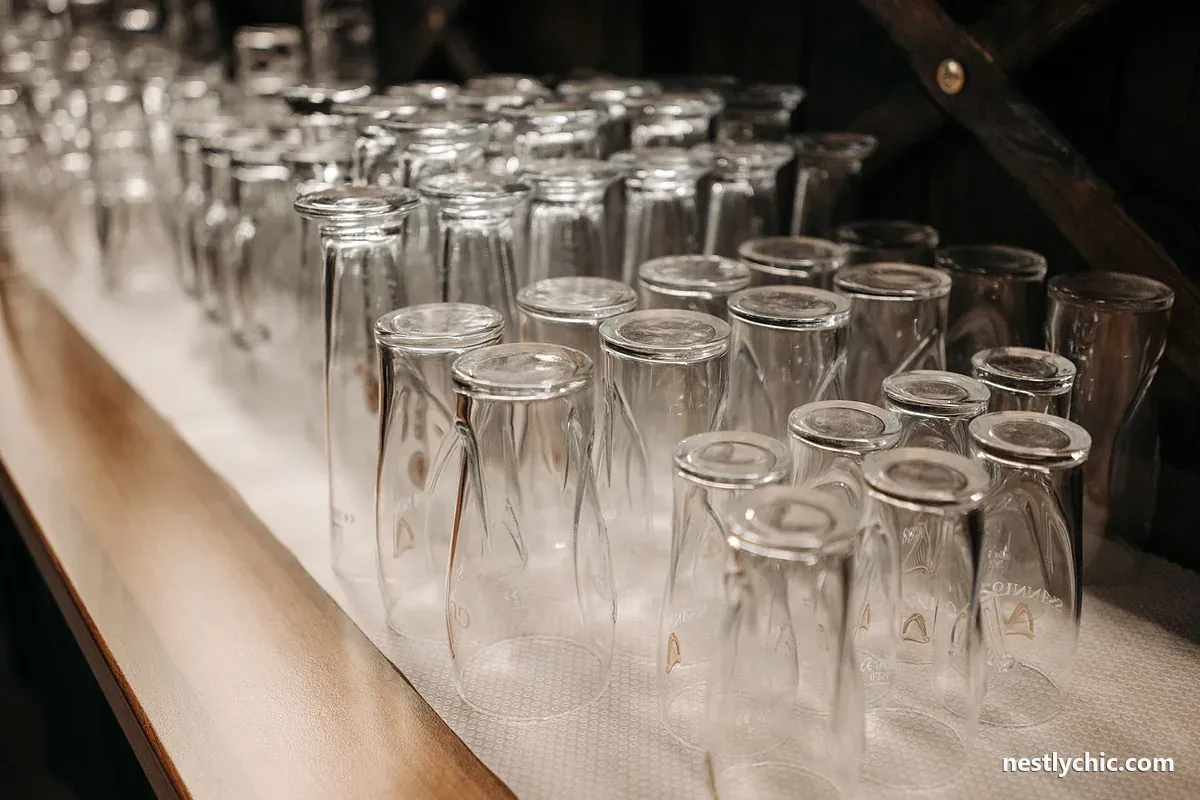
Whether the glass is described as tempered. Tempered glass is stronger against knocks, and it breaks differently from ordinary glass when it does fail. That difference matters for a household with children, so it is worth knowing which kind you are buying before it becomes the everyday tumbler.
Whether the glass is sold as crystal. Crystal is usually bought for clarity and ring, and its care instructions can be stricter than those for everyday glass, sometimes including hand washing. Read the care instructions before buying a glass for daily use, because a glass that has to be washed by hand becomes the glass that sits unused.
What the makers say about care, which decides lifespan
The fastest way to shorten a glass's life is to ignore the maker's handling notes, and those notes are published.
Libbey's care and handling page (read 2026-09-11) tells users to place stemware in the top rack of the dishwasher and not to place glasses in the bottom rack. It also warns against extreme temperature changes, "do not put hot items in cold glassware; do not put cold items in hot glassware", against carrying several glasses at once by the rims, and against striking flatware against glassware or dropping items, which it says can cause weakness leading to breakage. The full list is on Libbey's care and handling page.
Read those together and a buying rule falls out of them. A glass has to fit the top rack of your dishwasher to live a normal life. A tumbler too tall for the top rack ends up in the bottom rack against the maker's advice, or gets washed by hand, and both shorten its working life. Measure the clearance under your top rack before choosing the tall tumbler.
The glassware you can skip
- Shape-specific wine glasses for each grape, unless someone in the house genuinely cares about the difference.
- Martini and specialty cocktail glasses, unless cocktails are a weekly habit. Several entertaining guides make the same point: one coupe-style glass covers most of what a martini glass does.
- Matching juice glasses as a separate category from the short tumbler.
- Novelty sets that come as one of each of six shapes, which give a household six glasses and no working count of any one.
None of this is a reason not to own nice glassware. It is a reason to buy the daily four first and add special glasses once you know which drinks your house actually serves.
Before you buy, four checks
The top-rack clearance of your dishwasher, against the height of the tall tumbler and any stemmed glass.
The interior shelf height of the cabinet the glasses will live in, against the tallest shape.
The care instructions, in the maker's own words, including whether hand washing is required.
Whether the pattern is sold as individual pieces. Glass breaks more often than anything else on the table, and a shape that can be bought singly is a shape that can be topped up. This fits the wider first-kitchen logic in where to spend and where to save in a first kitchen: spend on what gets used daily and replaced often, save on what comes out twice a year.
FAQ
What glassware do I need at home? Most homes need four shapes: a tall everyday tumbler, a short tumbler, an all-purpose wine glass, and one optional glass for the drink the household serves most. Specialty glasses can be added later once you know what gets poured.
How many drinking glasses should a household have? It depends on how many glasses get used per person per day, how many people drink at home, and how many days pass between washes, plus a buffer for breakage. The same arithmetic that sets place settings sets glass counts, with breakage added.
Are stemless wine glasses a good everyday choice? They are more stable, easier to store and fit more cabinets, and they can double as a tumbler. They warm the drink faster than a stemmed glass because a hand holds the bowl. For a household that values easy handling over formality, they are a practical choice.
Can drinking glasses go in the dishwasher? Many can, but check the maker's care instructions. Libbey's published guidance, for example, places stemware in the top rack and advises against putting glasses in the bottom rack or exposing them to sudden temperature changes.
The short version
Buy the four shapes your household actually uses. Count the everyday tumblers by the wash cycle and add a buffer for breakage. Make sure the tall glass fits both the top rack and the cabinet shelf before you buy it. Everything else on the glassware shelf is optional, and waiting a year to decide costs nothing.
Sources, read 2026-09-11: Libbey, care and handling (shop.libbey.com). This page ranks and recommends no product, quotes no price and carries no affiliate link. Nothing here was tested or owned by this site.