There is no single most durable dinnerware, because dinnerware fails in four different ways and no material is best at all four. A plate can chip at the rim, break outright, craze or crack from a temperature change, or simply wear until it looks tired. Those are separate problems with separate causes.
The useful move is to work out which failure is actually happening in your household, then read what the makers themselves promise about that specific failure. They publish it, and the exclusions are more informative than the marketing.
What "most durable dinnerware for everyday use" actually has to survive
1. Rim and foot chipping. The commonest damage in a real kitchen and almost never a dramatic event. Plates knock together in a sink, in a stack, or in a dishwasher rack. Thin rims and sharp edges concentrate the impact.
2. Outright breakage. A plate hits a hard floor. This is a function of drop height, floor material and the mass of the piece as much as it is of the material.
3. Thermal cracking and crazing. A sudden temperature change, or a fine network of surface cracks in a glaze over time. This is a real hazard rather than a cosmetic one, and the underlying mechanics are the same ones set out in why glass and metal bakeware behave so differently in an oven.
4. Surface wear. Metal marking from flatware, dulling, scratching and staining. Nothing here is dangerous. It is the reason a set looks old before it is old.
Households almost always have one of these problems, not four. A household with small children has a breakage problem. A household with a full dishwasher and a stainless flatware set has a marking problem. They do not have the same buying question.
What the makers commit to, in their own words
This is the closest thing to evidence available to a buyer, because it is what a company will pay to honor.
Corelle Brands publishes a limited three-year warranty on Vitrelle glass dinnerware against cracking, breaking or chipping from the date of purchase, applying to products damaged during normal household use, and excluding damage resulting from misuse, negligence, accidental breakage or attempted repair (Corelle product warranties, safety and usage page, read 2026-09-08). Corelle describes the material itself as made by a glass lamination process that thermally bonds two clear skin layers of glass to a white or beige core layer.
The Fiesta Tableware Company warrants all first-quality dinnerware against chipping under normal usage conditions for five years from the date of delivery, replacing pieces found to be defective with identical or equivalent pieces on a one-for-one basis, and expressly excludes all breakage and chipping caused by drops, falls or knocking against something (Fiesta Factory Direct warranty page, read 2026-09-08).
Lenox publishes a replacement promise covering a dinnerware or serveware item that is defective or breaks during normal use, conditional on prior registration and proof of breakage, for the original owner (Lenox warranties page, read 2026-09-08).
Now read the exclusions rather than the headline. Two of the three name accidental breakage or knocks explicitly as outside the warranty, and knocks are how plates chip. A chip warranty is a warranty against a plate that chipped for no reason, which is a defect claim. It is not insurance against your household.
That is not a criticism of any of them. It is the single most useful thing a buyer can understand about the category, and none of the shopping guides say it.
The published limits that matter more than the warranty
The care instructions carry the harder information, and they are safety statements rather than commercial ones.
Corelle's published usage guidance states that its products can be used for serving and reheating food in microwaves or preheated conventional ovens up to 350 degrees Fahrenheit (176 Celsius), that they must not be used under a broiler or griller, and that sudden temperature changes should be avoided: do not add liquid to a hot item, place a hot item on a wet surface, or handle it with a wet or cold cloth (Corelle product warranties, safety and usage page, read 2026-09-08). The same page states that Corelle MilkGlass is not for use in any type of oven and that Corelle Stoneware can withstand temperatures up to 400 degrees Fahrenheit.
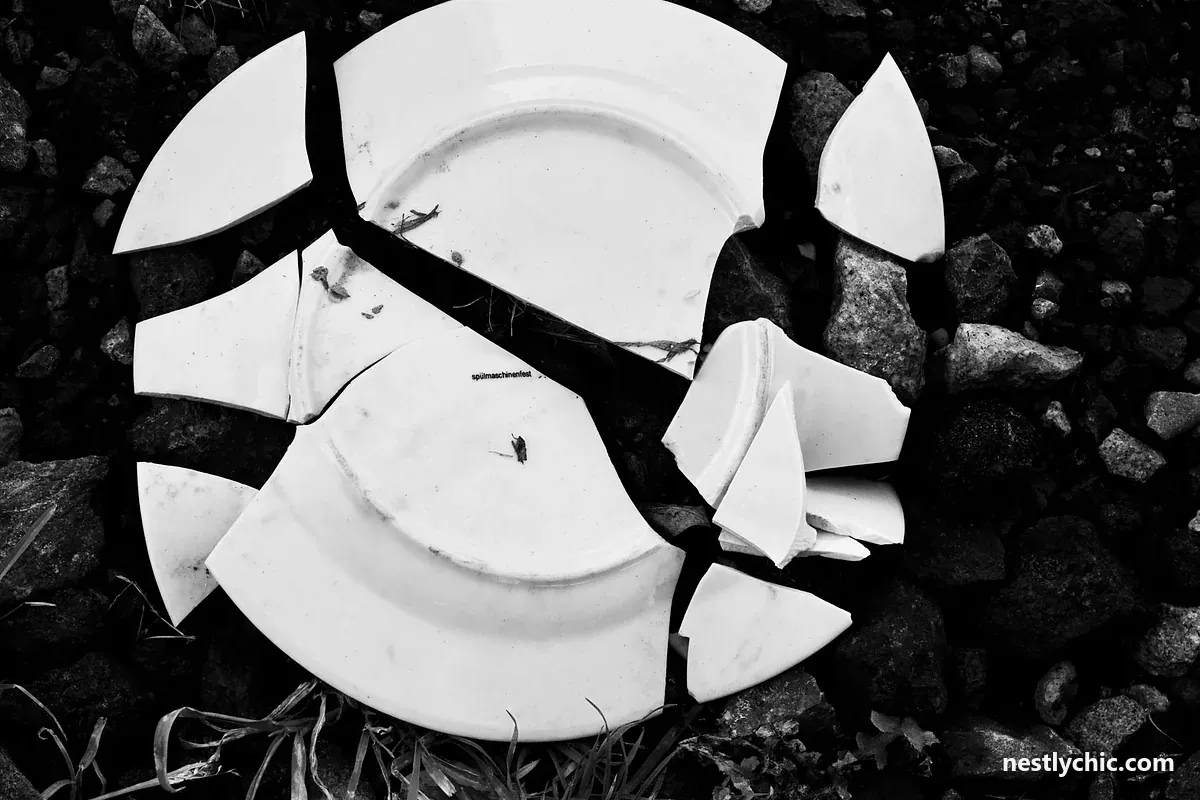
And the line every household should read once: Corelle states plainly that you should not use or repair any item that is chipped, cracked or severely scratched, because damaged items may break or shatter without warning.
Take that at face value. A chipped plate is not a plate with a cosmetic flaw. The maker of one of the most impact-resistant materials on the market says to stop using it, and that logic carries across materials. The wider judgement of when a kitchen item has stopped being serviceable is in knowing when kitchen items are actually worth replacing.
The material families, and what each trades away
Described as tradeoffs. Nothing here is a ranked pick, and no set is recommended.
| Family | Generally strong against | Generally weak against | The practical catch |
|---|---|---|---|
| Laminated or vitrified glass | Impact and chipping, and it is light | Sudden temperature change, per the maker's own care limits | Failure, when it comes, can be sudden rather than gradual |
| Stoneware | Knocks, because the wall is thick and heavy | Weight itself, and the load on a shelf and a wrist | Heavier pieces do more damage to whatever they land on, including each other |
| Porcelain | General daily use, fired dense and hard | Thin rims on some ranges | The name covers a wide range of thicknesses, so the range matters more than the word |
| Bone china | Its strength relative to how thin and light it is | Being thin, at the rim, and any metal decoration | Metal banding usually rules out a microwave regardless of the body |
| Melamine and food-contact plastics | Dropping, which is why it appears where children eat | Heat, with real published limits | Serving material, not a heating material, and the limits are a separate subject on this site |
Two things are true of every row. Thicker and heavier survives knocks better and hurts more when it falls. And decoration, especially metal decoration or decoration on the surface that touches food, adds its own set of constraints that have nothing to do with the body of the plate.
The standards that exist, and who they are for
There is a formal standards regime for tableware, and it is aimed at food establishments rather than homes. NSF publishes food equipment standards; NSF/ANSI 36 is the standard listed as covering dinnerware for food establishments, applicable to items such as plates, bowls, saucers, cups and tumblers, according to the ANSI standards store listing for that standard (read 2026-09-08). NSF's own description of the 2025 revision of NSF/ANSI 2 states that the standard was extended to encompass glass and glass-like tableware, including beverage ware, dinnerware and flatware, with certification involving toxicological review together with impact resistance and thermal shock testing.
Why that matters to a household buyer: it establishes that impact resistance and thermal shock are things that can be tested formally, and that a certification exists for commercial buyers. A domestic set carrying no such mark is not thereby unsafe. It simply means the buyer is reading warranty language and material description instead of a test result, which is the honest position and the reason this page will not rank anything.
The decision, as four questions
Which failure is happening now? Look at the pieces you already own. Chips in the same place on several plates point at the rack, the stack or the sink rather than at the material.
What is the floor? Tile and stone change the answer for every material. Nothing survives everything.
Who is carrying the stack? Weight is a real constraint for a child putting plates away and for anyone lifting a full stack to a high shelf, and it is part of the same sizing question as matching the kitchen to the size of the household.
Is durability where this budget should go at all? For some households it plainly is. For others the money does more elsewhere, which is the argument in where to spend and where to save in a first kitchen.
FAQ
What is the most durable dinnerware for everyday use? There is no single answer, because chipping, breaking, thermal cracking and surface wear are separate failures. Laminated glass and heavy stoneware are commonly bought for impact resistance, but every material has a published limit somewhere, and the useful comparison is between the makers' own warranty and care documents rather than between adjectives.
Do chip-resistant dinnerware warranties cover a dropped plate? Generally not. The Fiesta Tableware Company's published warranty expressly excludes all breakage and chipping caused by drops, falls or knocking against something, and Corelle's excludes accidental breakage. Both cover failure under normal household use, which is a defect claim.
Is it safe to keep using a chipped plate? Corelle's published safety guidance says not to use or repair any item that is chipped, cracked or severely scratched, because damaged items may break or shatter without warning. Follow the guidance published for the specific set you own.
Does heavier dinnerware chip less? Thicker walls and rims resist knocks better as a general matter, which is why stoneware is bought for family use. The tradeoffs are weight on the shelf, weight in the hand and more force delivered to whatever the piece hits.
Why do my plates chip in the same place every time? Repeated damage in one location usually points to handling rather than to the material: the dishwasher rack, the way the stack is loaded, or contact in the sink. Changing the handling is cheaper than changing the dinnerware.
Sources, read 2026-09-08: Corelle FAQ and Corelle product warranties, safety and usage pages (corelle.com); The Fiesta Tableware Company warranty (fiestafactorydirect.com); Lenox warranties page (lenox.com); ANSI standards store listing for NSF/ANSI 36, Food Equipment: Dinnerware, and NSF's knowledge library description of the NSF/ANSI 2 revision (nsf.org). This page ranks no product, recommends no set, quotes no price and carries no affiliate link. Brands appear only where a statement is taken from that company's own published document. Nothing here was tested by this site.