This page does not tell you whether a specific piece you own is safe, and it will not. Nobody can do that from a description, and the only thing that settles it is a laboratory test using the prescribed method.
What it does is tell you what the regulator's framework actually is, which is more useful than reassurance and more useful than alarm, because most of what circulates on this subject is one or the other.
Four facts, and each one changes how you read a piece of pottery.
1. There are FDA action levels for leachable lead in ceramicware. FDA's Compliance Policy Guide for pottery, import and domestic, sets action levels for lead, and there is a companion guide covering cadmium. Where extractable lead exceeds those levels, FDA may consider the ceramicware adulterated and subject to enforcement action.
2. Lead is not authorized for use as a food additive or color additive in foodware. FDA states there are no regulations authorizing lead for use as a color additive or food additive, including as a component of foodware, cookware or food contact surfaces. The action levels exist because lead can be present in glazes, not because its use is permitted.
3. "Lead Free" on a label is not a guarantee. FDA has reported receiving pieces of traditional pottery imported from several manufacturers in Mexico, labeled as "Lead Free," that in fact contained levels of extractable lead. FDA's position is that ceramicware containing extractable lead when tested by the method prescribed in the CPG should not be labeled "Lead Free."
4. Decorative and ornamental ceramicware has its own labeling requirement. FDA established labeling requirements for ornamental and decorative ceramicware containing lead, requiring a specific label identifying the danger of using it with food. Which means a piece sold as decorative is being sold as not for food, and that is a category rather than a suggestion.
What that framework means for a buyer
The action levels are enforcement thresholds rather than a mark you can look for. There is no consumer-facing symbol that says a piece was tested and passed. What FDA describes is a system in which ceramicware produced in certified facilities and exported to the United States is expected to give FDA reasonable assurance that it will not exceed the action levels, and in which enforcement follows when it does.
So the useful consumer questions are about provenance, not about appearance.
Where was it made, and by whom? A piece from a manufacturer supplying a mainstream retail chain sits inside a different supply chain from a piece bought at a market abroad.
What is it sold as? A piece sold as decorative, with the labeling FDA requires for ornamental ceramicware containing lead, is being told to you as not for food.
Is there any documentation at all? A named maker with published information is a different proposition from an unattributed piece.
The categories FDA's own warnings concentrate on
Stated as categories, because this page names no specific product and clears none.
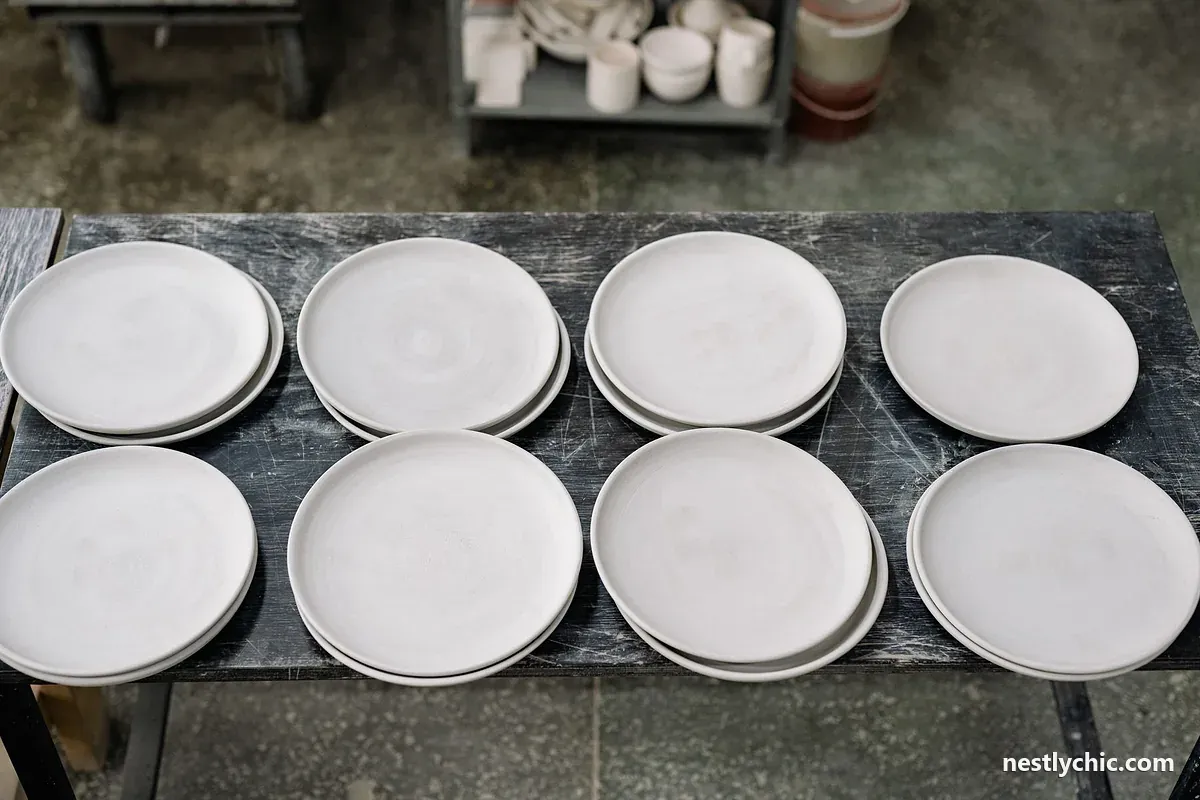
Traditional and handmade pottery, particularly where glazes are applied and fired by traditional methods.
Imported pottery, where FDA has issued warnings and import-alert framing.
Decorative and ornamental ceramicware, which is the category with its own required labeling.
Vintage and inherited pieces, where no current manufacturer information exists and where older glazing practice may differ from current practice.
Highly decorated interior surfaces, meaning decoration on the part of the piece that touches food rather than on the outside.
None of that is a verdict on any piece. It is where the regulator's attention is, and it is a reasonable place to put your own caution.
Home test kits, and what they are not
A home lead test kit is not a compliance test, and this is the single most important practical point on the page.
The prescribed method referred to in FDA's CPG is a laboratory leaching procedure with a defined protocol. A consumer swab is a different thing performed under different conditions.
Which cuts both ways, and both directions matter.
A negative result on a home kit does not mean a piece meets the action levels. The kit is not performing the test the levels are defined against.
A positive result is not a compliance determination either, though it is a reason to stop using the piece for food and to look for better information.
So a home kit is a rough screening tool at most, and treating its result as an answer is the mistake this section exists to prevent.
What to do with a piece you are unsure about
Do not use it for food while you are unsure. That is the low-cost option, and a decorative piece can be decorative.
Look for the maker and any published information.
Look at what it was sold as. Ornamental and decorative ceramicware carrying the FDA-required label is not being offered as foodware.
Do not use unknown pieces for acidic foods or for hot food and drink, because acidity and heat are the conditions under which leaching from a glaze is a concern. That is a precaution rather than a determination.
And do not treat an old family piece as automatically fine because it has been used for decades. Length of use is not a test result.
Where this sits relative to the rest of this site
This is the terminal page for every glaze, lead and food-contact-ceramic statement on this site. No other page here makes a claim about glaze safety, and where one touches the subject it links here rather than restating it.
Body type does not decide this. Whether a piece is stoneware, porcelain, bone china or earthenware is a firing and porosity question and it is separate from glaze composition. We set out what the material names do decide in porcelain, stoneware, bone china and earthenware: what the material changes.
The symbols on the underside do not decide it either. Dishwasher, microwave and oven marks are manufacturer claims about heat and cycles, and they say nothing about what the glaze contains.
Secondhand and vintage buying is where this comes up most, and it is covered from the buying side, with the same FDA framing, in buying kitchen equipment secondhand: what is safe and what is not.
FAQ
Is there a lead limit for dishes in the US? FDA's Compliance Policy Guide for pottery, import and domestic, sets action levels for leachable lead in ceramicware, with a companion guide for cadmium. Where extractable lead exceeds those levels, FDA may consider the ceramicware adulterated and subject to enforcement action.
Does "Lead Free" on a label mean it is safe? Not by itself. FDA has reported receiving imported traditional pottery labeled "Lead Free" that in fact contained extractable lead, and states that ceramicware containing extractable lead when tested by the prescribed method should not be labeled "Lead Free."
Is lead allowed in dishes at all? FDA states there are no regulations authorizing lead for use as a color additive or food additive, including as a component of foodware, cookware or food contact surfaces. Action levels exist because it can be present, not because its use is permitted.
Are decorative ceramics safe to eat off? FDA established labeling requirements for ornamental and decorative ceramicware containing lead, requiring a label identifying the danger of using it with food. A piece sold in that category is being sold as not for food.
Can I test my dishes at home? A home kit is not the laboratory leaching method the action levels are defined against, so a negative result is not a compliance determination and a positive one is not either. It is a rough screening tool at most.
What should I do with an inherited piece I am unsure about? Keep it out of food use while you are unsure, look for the maker and any published information, and avoid acidic or hot contents in the meantime. Length of previous use is not a test result.
Sources: US Food and Drug Administration, Compliance Policy Guide Sec. 545.450, "Pottery (Ceramics); Import and Domestic, Lead Contamination", and CPG Sec. 545.400 covering cadmium contamination; FDA "Guidance for Industry: Safety of Imported Traditional Pottery Intended for Use with Food and the Use of the Term 'Lead Free' in the Labeling of Pottery / Proper Identification of Ornamental and Decorative Ceramicware"; FDA "Questions and Answers on Lead-Glazed Traditional Pottery"; and FDA "Lead in Food and Foodwares". All checked 2026-08-28 for the existence of action levels and enforcement framing, the statement that no FDA regulations authorize lead as a color or food additive including in foodware and food contact surfaces, the reports of imported traditional pottery labeled "Lead Free" containing extractable lead, the position that such ware should not be labeled "Lead Free", the labeling requirement for ornamental and decorative ceramicware, and the expectation that ware from certified facilities gives reasonable assurance of not exceeding action levels.
Two disclosures. Our fetcher received an HTTP 404 on the FDA foodware page we first tried on 2026-08-28 and did not open the CPG documents directly, so the above is reported from FDA's own indexed guidance and CPG listings rather than from documents we read line by line, and is labeled as such. No numeric action level is quoted anywhere on this page for that reason, and a writer with working access should open CPG Sec. 545.450 and 545.400 and add the figures with their units before this page publishes. That is our retrieval failing, not anything on FDA's side.
This page names no specific product, clears no specific piece, gives no exposure or dose estimate and offers no health advice. If you are concerned about lead exposure, that is a question for a healthcare professional and for your state or local health department, not for a website.