Cast iron is worth buying if you sear, fry and move pans between the stovetop and the oven, and if you are willing to dry it and oil it after use. It is not worth buying if lifting a heavy pan one-handed is difficult, if most of what you cook is acidic or liquid, or if you cook on a glass ceramic cooktop whose maker advises against it. It is a good pan with three specific costs, and the costs are the part the internet skips.
Almost every page ranking for this question is published either by a company that sells cast iron or by an enthusiast who already owns several. Those pages are not dishonest, but they answer a question the reader did not ask. The reader asked whether there is a reason not to buy one. There are three, they are all checkable before you spend anything, and the third one is written down in the use and care documentation for the range already sitting in the kitchen.
What seasoning actually is, and why that changes the commitment
Seasoning is not a coating that arrives on the pan and then wears off like paint. It is oil that has been heated on the iron until it changes chemically and bonds to the metal.
de Buyer, which makes carbon steel pans seasoned the same way, describes the mechanism in its own instructions: a thin layer of oil heated on the pan "begins to bond with the steel through polymerization, transforming the oil's carbon molecules into a hard, protective layer that strengthens over time."
Two consequences follow, and they are the whole maintenance argument.
The surface is built rather than bought. Lodge states that its cookware arrives "seasoned and ready to use," and describes how: "we add a layer of soy-based vegetable oil to the cookware and bake it at a high temperature." That factory layer is a starting point, not a finished nonstick surface. Lodge's own guidance is that "one of the best ways to care for your skillet is simply by using it," and that it is "smart to hold off on dishes with tomato or lemon until you've built up your seasoning."
The surface is repairable, which is the flip side. A stripped or patchy pan is re-seasoned rather than replaced. Where a method is needed, it should come from the maker of the pan you own, not from a general rule: Lodge publishes its own oven method for Lodge cookware, a thin layer of oil wiped on inside and out, the pan placed upside down in an oven preheated to 450 to 500 degrees Fahrenheit with a sheet or foil on the lower rack, baked for one hour, then cooled. Those are Lodge's figures for Lodge pans. Another manufacturer may publish a different oil, a different temperature and a different time, and yours is the one that applies to your pan.
Oil choice is also a manufacturer statement rather than a universal one. Lodge names vegetable oil, rendered fat or canola. de Buyer names grapeseed, avocado, canola, peanut or sunflower for its steel pans and states its own preference among them. No single smoke point governs every oil and every pan, so this page quotes none.
The day to day version of that commitment
Stripped of enthusiasm, the routine is short and it is non-negotiable, because the failure mode is rust rather than inconvenience.
The pan is washed by hand. Lodge's own instruction is to "hand wash with warm, soapy water," then dry completely and apply "a light layer of oil." de Buyer states plainly that carbon steel, which behaves the same way, "is NOT dishwasher safe."
The pan is dried immediately rather than left on a rack. That single habit is what separates a pan that lasts decades from one that is orange in two weeks.
Acidic cooking is limited while the seasoning is thin. Long tomato braises are the job of a coated pan, and the difference between the two surfaces is set out in enameled versus bare cast iron, which is the page that owns that comparison.
If that routine sounds like something that will not happen in your kitchen, that is a real answer and not a failure of character. A stainless pan plus a nonstick pan covers most everyday cooking without any of it, which is the argument made in the two pans that cover most home cooking.

Weight, and the part that belongs above the fold
Cast iron is heavy, and the weight is a safety question rather than a comfort one.
A full pan is a two-handed lift. A skillet coming out of an oven, or a Dutch oven with a braise in it, weighs the pan plus its contents, and it is being moved at whatever height the oven sits. In a kitchen with a wall oven at chest height that is a meaningfully harder movement than lifting the same pan off a burner.
The handle reaches the temperature of the pan. On bare cast iron there is no insulated grip, on the stovetop or in the oven, and the handle stays hot long after the burner is off. A dry cloth or a mitt is not optional equipment with this pan, and a damp cloth conducts heat rather than blocking it.
Grip and wrist limitations decide this before anything else does. Anyone with reduced grip strength, a wrist or shoulder problem, or a household where a child may try to move a pan should treat weight as the deciding criterion rather than a footnote.
Manufacturers publish the weight of each individual piece on the product page or the packaging. No figure appears here because it differs by size, by maker and by whether the piece is bare or enameled. The practical test is to lift the exact piece empty in a shop, then add the weight of a full meal to that in your head. If a piece is being bought used, the same lift test applies before money changes hands, along with the other checks in buying kitchen equipment secondhand.
The cooktop question most cast iron guides do not raise
This is the check that is worth running before any of the above, because it can end the decision in a minute.
GE Appliances states in its own support documentation for radiant smooth glass cooktops: "Cast Iron cookware is not recommended. If the cookware has a burr or rough spot, it will scratch the glass surface." The same document notes that cast iron holds intense heat once heated, which can cause the element's temperature limiter to shut it down.
GE also states the exception: "Porcelain Enamel Coated Cast Iron cookware is okay to use as long as the cookware is covered completely with porcelain enamel."
That is one manufacturer's position on its own appliances, and it is not automatically the position of every range maker. It is quoted here because it is a published statement rather than a rumor, and because it points the reader at the right document: the use and care guide for the range in your kitchen. If that guide says the same thing, the honest answer to "should I buy a bare cast iron skillet" may be no, or may be "buy the enameled version instead."
Induction is a separate question with a friendlier answer, because cast iron is ferrous and works on induction by definition. Confirming compatibility for any other pan is a different check, and it is covered in how to check if cookware is induction compatible.
Oven use has its own limit, and on cast iron it is usually the lid, the knob or a silicone handle cover that sets it rather than the iron. Where to find the figure for your specific piece is in is my pan oven safe.
Where cast iron genuinely earns its place
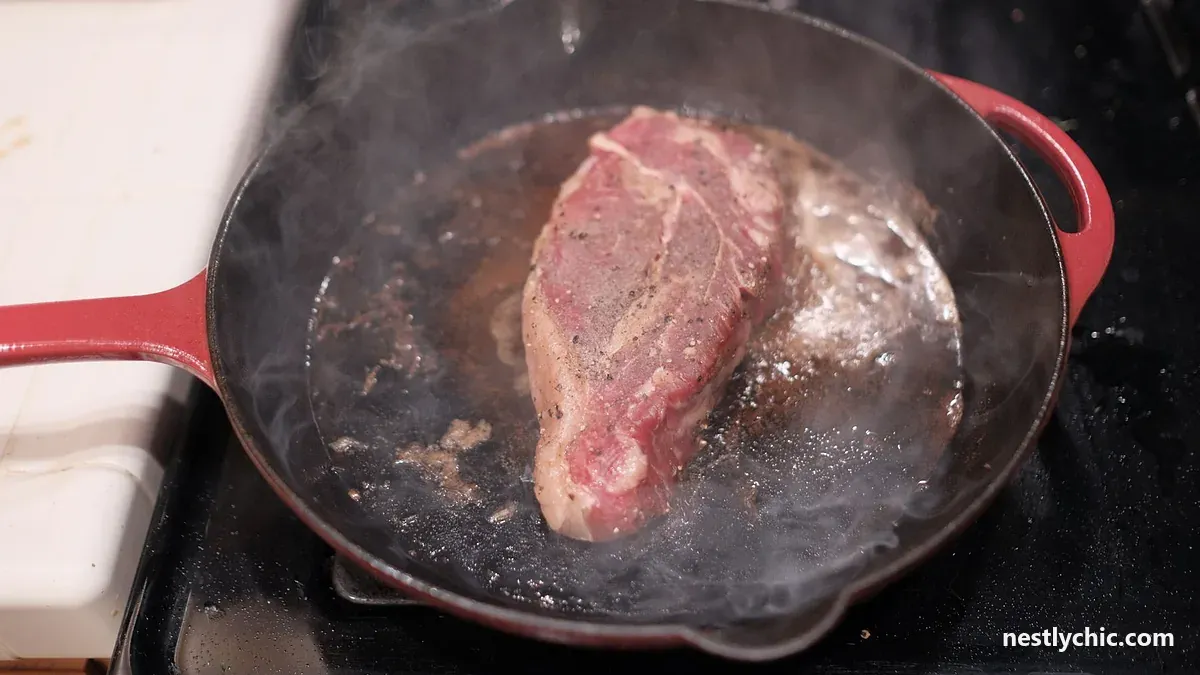
Heat retention. A heavy pan that has been preheated does not lose its temperature when cold food lands in it, which is why it browns well and why it is the usual choice for searing.
Stovetop to oven in one piece. No plastic handle, no transfer to a second dish.
It does not wear out. There is no coating with a finite service life, which is the structural difference between cast iron and nonstick and the reason the comparison in the four home cookware materials treats them as different classes of purchase rather than competing versions of the same thing.
It responds to being used. The surface improves with cooking rather than degrading, which is the opposite of how most kitchen equipment behaves.
Where it genuinely loses
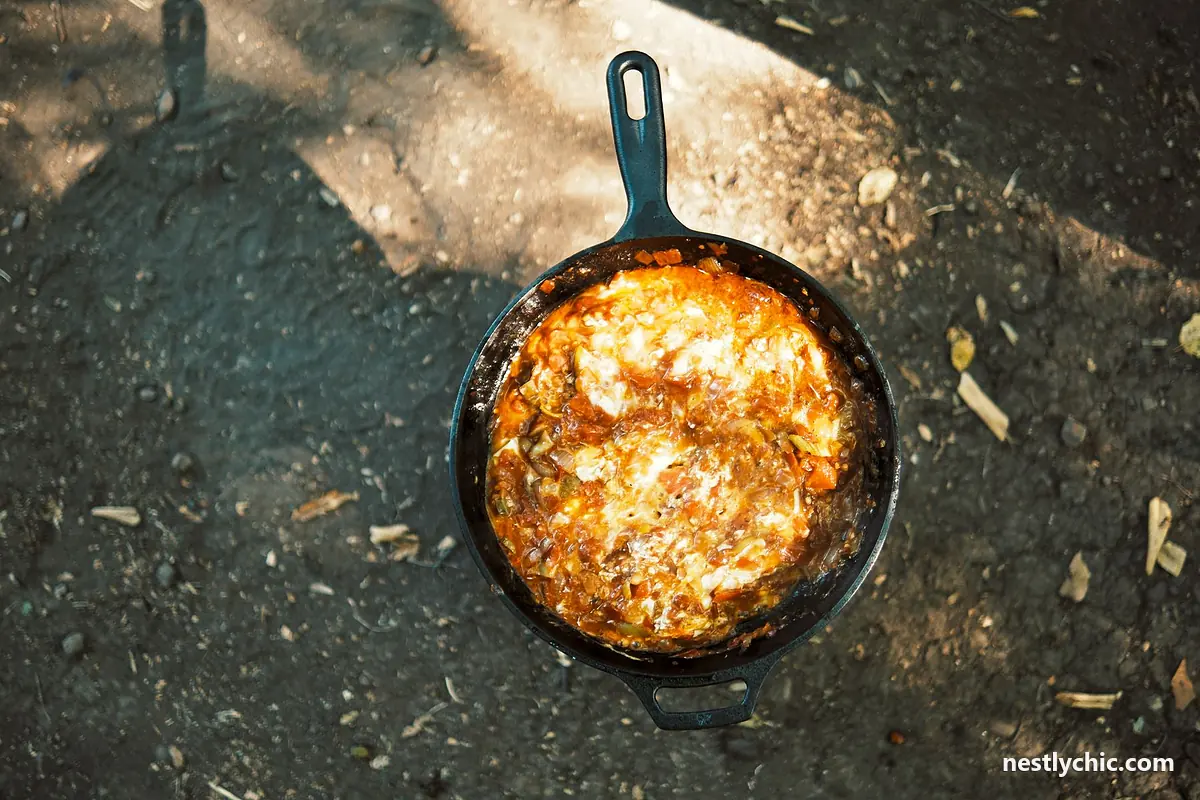
Slow to change temperature. The same mass that holds heat also resists being turned down, so it is a poor pan for anything that needs a fast response. Lodge's own advice is to start "at medium-low and working up from there," and it names "cooking at a too-high temperature" as a common mistake.
Acidic and long-simmered dishes. Handled by enameled cast iron instead.
Delicate foods early on. A pan whose seasoning is still thin is not yet an egg pan, whatever the marketing photograph shows.
Storage. It is heavy, so a high shelf is the wrong home for it, and it needs to be stored dry.
The household fit checklist
| Question | Why it decides |
|---|---|
| What does your range's use and care guide say about cast iron | A published "not recommended" ends the decision or redirects it to enameled |
| Can you lift the exact piece, full, at oven height | Weight is the deciding criterion, not a footnote |
| Will it get dried and oiled after every wash | This is the whole maintenance commitment in one habit |
| Do you sear and roast, or simmer and boil | Searing and roasting are its jobs; simmering acidic dishes is not |
| Is there a safe place to put a hot, heavy pan down | The handle is as hot as the pan and stays hot |
| Do you want a pan that improves, or one that needs nothing | Cast iron is the first; a coated pan is the second |
| Is it going on a high shelf | If yes, choose the smaller size or a lighter material |
What this page does not tell you
Whether any cookware material is "safe" or "non-toxic." Those are not statements this page makes about any pan. What it reports is what the material is and what the manufacturer publishes about it, and the document that applies to your pan is the one that came with it.
Whether cooking in bare iron changes the iron content of food. That is a nutrition question, not a purchasing one, and no claim about it is made here.
How to clean a pan or bring a rusted one back. Cleaning method is outside what this site covers.
Which brand to buy, or what anything costs. No product is recommended and no price appears anywhere on this site. Lodge, de Buyer and GE Appliances are named above solely as the sources of the statements attributed to them.
A seasoning temperature of our own. The one quoted above is Lodge's, for Lodge cookware, and it is labeled as such.
FAQ
Is cast iron a good first pan for a beginner? It depends on the household rather than on the cook's skill. The pan is heavy, its handle gets as hot as the pan, and it needs drying and oiling after washing. Where any of those is a problem, a stainless pan and a nonstick pan are the better first purchase.
What does "pre-seasoned" actually mean? Lodge describes its factory process as adding a layer of soy-based vegetable oil and baking it at a high temperature. That is a base layer to cook on, not a finished nonstick surface, and it develops with use.
Can I put cast iron on a glass cooktop? Check your range's own documentation first. GE Appliances states that cast iron is not recommended on its radiant smooth glass cooktops because a burr or rough spot will scratch the glass, and that porcelain enamel coated cast iron is acceptable when fully covered by the enamel.
How often does it need re-seasoning? There is no universal schedule. Regular cooking maintains the surface, and a full re-seasoning is for a pan that has been stripped or has rusted. The method to use is the one published by the maker of your pan.
Can it go in the dishwasher? Lodge's instruction for its cast iron is to hand wash with warm, soapy water, dry completely, then apply a light layer of oil. de Buyer states that its carbon steel, which is seasoned the same way, is not dishwasher safe.
Is cast iron or enameled cast iron the better buy? They do different jobs rather than competing for the same slot, and that comparison has its own page on this site rather than a summary here.
Sources: seasoning mechanism and care statements are quoted from de Buyer's published carbon steel seasoning instructions and from Lodge Cast Iron's own beginner's guide and how-to-season pages. The cooktop statements are quoted from GE Appliances' published support documentation for radiant smooth glass cooktops. No weight, price, lifespan or oil smoke point figure appears on this page, because each is specific to a piece, a brand or a product and the reader is routed to their own documentation instead. Nothing on this page is presented as tested or measured by this site.