Both are cast iron. What differs is what is on the outside of it, and that one difference decides the maintenance, the cooking, the weight and what each one is actually good at.
Bare cast iron has a cooking surface you build and maintain. The seasoning is a layer you create through use, and it is the thing that makes the pan release food. Damage it and you rebuild it.
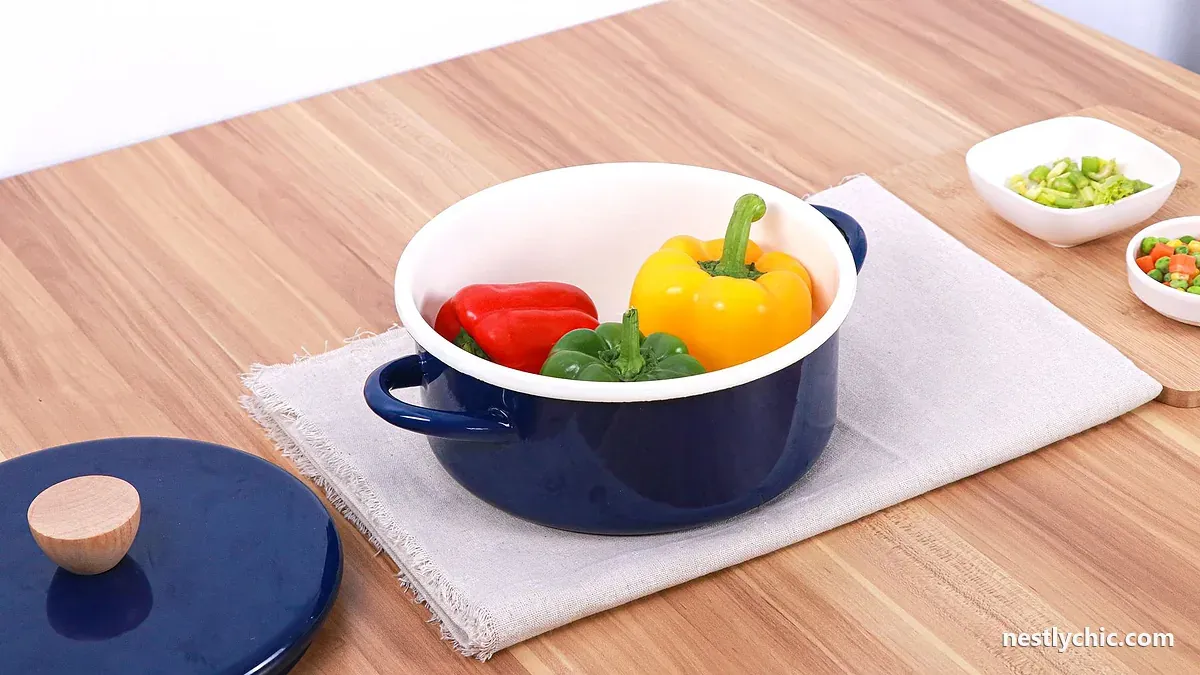
Enameled cast iron has a glass coating fused to the metal. There is nothing to build and nothing to maintain, and there is also nothing to repair. Chip it and it stays chipped.
That is the whole trade, and everything below follows from it.
The four differences that decide it
1. Maintenance versus fragility
Bare asks for a routine and forgives almost everything else. It cannot chip, it cannot craze, and a neglected pan can be brought back.
Enameled asks for nothing routine and is less forgiving of a single event. A knock on a hard surface, or a thermal shock, can chip or craze the coating, and there is no home repair for that.
So the honest framing is not "one is more work." It is that one asks for a small ongoing habit and the other asks you not to have one bad moment.
2. Acidic food, where people have it backwards
The familiar advice is that acidic food ruins cast iron. What actually happens is more specific.
On bare cast iron, prolonged contact with acidic ingredients can strip seasoning, which is the maintained layer rather than the pan. The pan is fine; the surface has to be rebuilt.
On enameled cast iron, the glass coating is the barrier, so acidity is not the same issue. This is the real reason enameled Dutch ovens are the default for long-simmered tomato-based cooking.
What follows practically: if a household cooks a lot of acidic braises, the enameled version removes a repeated annoyance. If it does not, the point is smaller than the internet suggests.
3. Heat behavior
Both are cast iron underneath, so both are heavy, both take a while to heat and both hold heat well once there.
Bare can take very high direct heat and is the version associated with searing.
Enameled has a coating with its own limits, and those limits are the manufacturer's rather than general. This is one of the few places where a figure genuinely matters and where a general figure would be wrong, which is why none appears here. Where to find yours, and why oven-safe is a per-handle question as well as a per-pan one, is set out in is my pan oven safe.
4. What you can see
Enameled is the version you can put on a table, and the interior is usually light-colored, which makes it easy to see how a sauce is developing or whether a fond is browning or burning.
Bare is black inside and out, which is not a defect and does make judging color harder.
That is a real cooking difference and it goes unmentioned, because it sounds cosmetic and is not.
The thing they share, which decides it for some households
Weight. Both are cast iron and both are heavy, and a full Dutch oven of either type is a two-handed lift out of an oven at height.
That is a genuine constraint rather than a footnote. For anyone with wrist, shoulder or grip limitations, or in a kitchen where the oven is at chest height, the size that fits the cooking may not be the size that can be handled safely. The honest answer is to lift an empty one in a shop before buying, and to add the weight of what will be in it.
A hot handle is the other shared hazard. On both types the handle reaches oven temperature, and on both it stays hot long after the pan has left the heat.
Which to buy first, if you are buying one
That depends on what the household cooks rather than on which is better, and both answers are defensible.
A bare skillet is the everyday searing and stovetop pan.
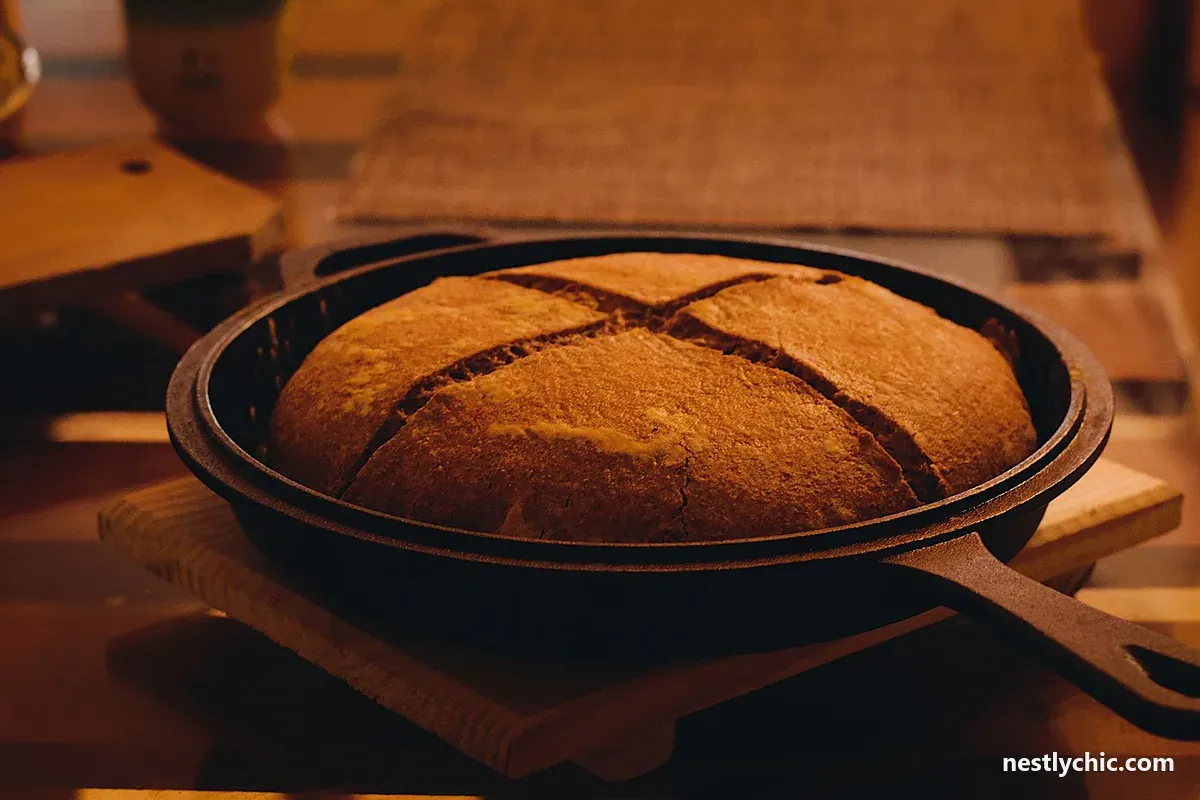
An enameled Dutch oven is the braising, stewing, soup and bread pot.
They are not competing for the same slot in a kitchen, which is the part the comparison articles miss. Most households that own both use them for entirely different jobs.
If you are still deciding what a kitchen needs before it needs anything specialized, the two pans that cover most home cooking is the page that comes first, and the sizing question for a Dutch oven specifically is in dutch oven size by household.
What this page will not tell you
How to season a pan or restore a rusted one. That is a maintenance procedure and it is not what this site covers.
Whether a chipped enamel pan is safe to keep using. That is a materials and safety question rather than a cooking one, and this page does not clear a specific piece of cookware.
Which brand. No product is recommended anywhere on this site and no price appears anywhere on it.
A temperature limit. Yours is published by your manufacturer.
The buying checklist
| Question | Why it decides |
|---|---|
| What do you cook most, searing or braising | Bare for the first, enameled for the second |
| Do you cook acidic dishes for hours | Enameled removes the seasoning problem entirely |
| Can you lift it full, at oven height, safely | The shared constraint, and the one to test before buying |
| Will it live on a table | Enameled is the one that goes to the table |
| Are you willing to maintain a surface | Bare asks for a routine; enameled does not |
| Will it be stored where it can be knocked | Enamel chips and does not repair |
| What is the maker's oven limit for this exact piece | Manufacturer-specific and worth reading before purchase |
FAQ
What is the actual difference between enameled and bare cast iron? Both are cast iron. Bare has a seasoning layer you build and maintain, which can be damaged and rebuilt. Enameled has a glass coating fused to the metal, which needs no maintenance and cannot be repaired if it chips.
Can I cook tomatoes in cast iron? On bare cast iron, prolonged contact with acidic ingredients can strip seasoning, which means rebuilding a surface rather than damaging the pan. On enameled, the coating is the barrier, which is why it is the usual choice for long acidic braises.
Which is better for searing? Bare cast iron is the version associated with very high direct heat. Enamel has a manufacturer-stated limit and that figure is specific to your piece.
Is enameled cast iron less work? It needs no maintenance routine, and it is less forgiving of a single event such as a knock or a thermal shock. That is a trade rather than a straightforward advantage.
Are they both this heavy? Yes. Both are cast iron and weight is the shared constraint. Lift an empty one before buying and add the weight of what will go in it.
Which should I buy first? They do different jobs rather than competing for the same slot: a bare skillet is the stovetop searing pan and an enameled Dutch oven is the braising pot. What your household cooks decides it.
Sources: this page quotes no temperature figure, no weight figure, no price and no lifespan figure, and cites none. Oven and heat limits are manufacturer-specific and the reader is routed to their own documentation, which is the same discipline applied on this site's is my pan oven safe page. No brand is named and no product is recommended.