Two pans cover the large majority of everyday home cooking: one 10 to 12-inch stainless or nonstick skillet for searing, browning, and stovetop meals, and one 3 to 4-quart saucepan with a lid for sauces, grains, and reheating. Most published "essential pans" lists land somewhere between five and ten pieces, but far fewer of those actually get used weekly than the list implies. Starting with two and adding only what a household's real cooking pattern demands avoids paying for pans that end up stacked unused in a cabinet.
Even the more conservative guides on this topic, including a well-known consumer-testing publication, still land on around five pieces as the recommended starting set: a skillet, a saucepan, and a stockpot at minimum, often with a cast iron pan and a nonstick pan added on top. That's a reasonable set for someone who already knows they cook broadly. For a kitchen that's just starting out, an even tighter floor is worth stating plainly: two pans, chosen well, will get a household through most weeknight cooking while it figures out what it actually needs next.
The Two-Pan Starting Point
| Pan | Size | Covers |
|---|---|---|
| Skillet | 10 to 12 inches | Searing meat and vegetables, eggs (if nonstick or well-seasoned), stir-fries, pan sauces, most single-pan dinners |
| Saucepan | 3 to 4 quarts, with a lid | Rice and grains, sauces, soups for one or two, reheating, boiling small batches |
A larger skillet (12 inches over 10) is usually the better default if storage allows only one, since food can always be cooked in a smaller batch in a larger pan, but the reverse doesn't work. The same logic applies to picking one saucepan size over buying two: 3 to 4 quarts covers most single-household or small-family portions without being oversized for everyday use.
Why Two Is Actually Enough
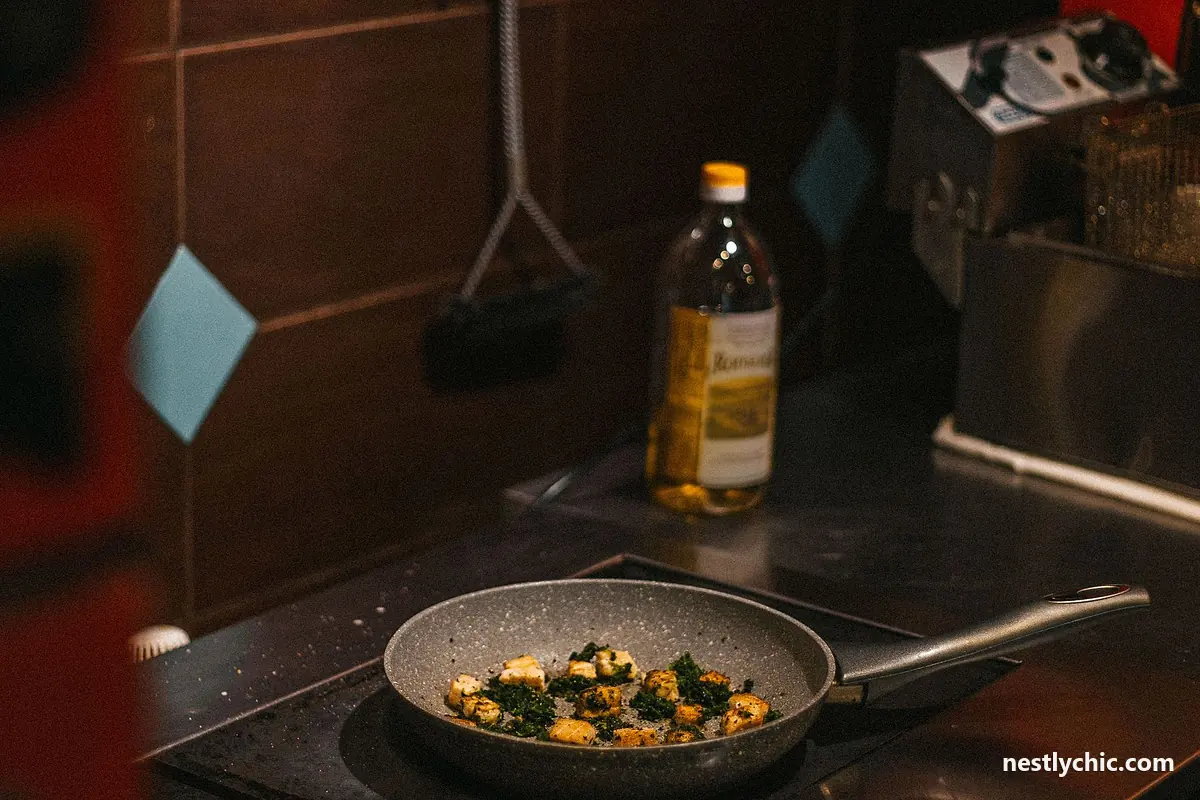
A skillet and a saucepan together cover searing, sautéing, boiling, simmering, and reheating, which is the bulk of what a typical week of home cooking actually requires. What they don't cover well: large-batch cooking (soup for a crowd, a big pot of pasta), high-heat specialty searing, and baking, none of which come up in most households' first few weeks in a new kitchen. Buying for those needs before they're confirmed is how a ten-piece set ends up with three or four pieces that rarely leave the cabinet.
What Material to Start With
Whether that starting skillet is stainless, nonstick, or something else depends on what gets cooked most. A household that cooks a lot of eggs, fish, or delicate foods is usually better served starting with nonstick; a household focused on searing meat and building pan sauces is better served starting with stainless. See the full material comparison for how stainless, nonstick, cast iron, and carbon steel actually differ, since the right starting pan depends more on cooking style than on any material being universally "better."
When to Add a Third Pan, and What It Should Be
The signal to add a third pan isn't a timeline, it's a repeated frustration with the first two. A few common patterns and what they point to:
- Cooking large batches of soup, stock, or pasta regularly points to a stockpot (6 to 8 quarts) next.
- Wanting a hard sear that stainless or nonstick doesn't quite deliver, or cooking dishes that move from stovetop to oven points to cast iron or carbon steel next.
- Baking sheet pans, casseroles, or roasting isn't a pan problem at all, that's bakeware, a separate category from the pots-and-pans conversation here.
Buying reactively, once an actual gap shows up in real cooking, tends to result in pieces that get used, unlike buying an entire set upfront based on what a list suggests might eventually be needed.
Set Versus Two Pieces: Which Is Actually Cheaper
A multi-piece set often costs less per item than buying the same pieces individually, but a two-pan household buying only what it needs usually spends less overall than buying a set sized for cooking habits it doesn't have yet. See cookware sets versus individual pieces for the full breakdown of when a set genuinely pays off and when it's mostly padding.
Fitting This Into the Broader Kitchen Setup
Two pans are a small piece of the first-purchase list, but they're usually one of the first things bought, since cooking a real meal depends on having at least this much. See the new home kitchen checklist for where cookware fits against knives, prep tools, and the rest of the first-week list, and kitchen essentials by budget for how two well-chosen pans fit into a starter, comfortable, or buy-once budget tier.
FAQ
Is two pans really enough to cook everything? Not everything, large-batch cooking, high-heat searing, and baking all fall outside what a skillet and saucepan handle well. For the range of everyday weeknight cooking most households actually do, though, two pans genuinely cover most of it.
Should my first skillet be stainless or nonstick? It depends on what gets cooked most. Nonstick suits eggs, fish, and delicate foods with easy cleanup; stainless suits searing and building pan sauces. See the material comparison for the fuller tradeoff.
What size skillet should I buy if I can only get one? A 12-inch skillet is usually the safer default over a 10-inch, since a smaller portion can always be cooked in a larger pan, but not the reverse.
Is a cookware set a waste of money if I only need two pans? Not automatically a waste, but often more than a starting household needs. A set makes more sense once cooking habits are established and the extra pieces are genuinely likely to get used regularly; see set versus individual pieces for that decision in full.
When should I add a stockpot? Once large-batch cooking, a big pot of pasta, a full pot of soup, becomes a regular occurrence rather than an occasional one. Buying it before that point usually means it sits unused.