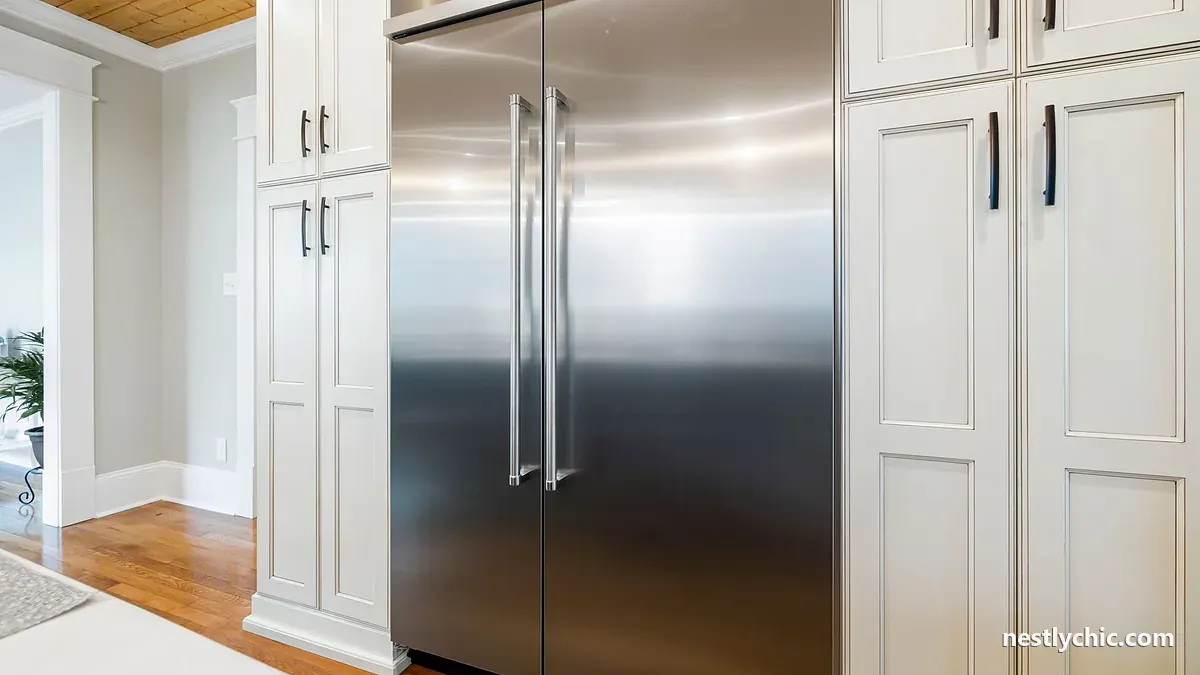
Short answer: In the french door vs side by side refrigerator decision, total capacity rarely settles it, because makers sell both styles in overlapping sizes. What changes is how the cold space is split and what you trade for that split. A French door gives you wide fresh-food shelves and a freezer drawer you bend down to. A side-by-side gives you a full-height freezer and narrow shelves. A top freezer is the simplest layout, usually the lowest price tier, and it gives up freezer room.
That is the whole decision in one paragraph. The rest of this guide shows where the money goes, how much room each door needs in front of it, and which household habits point to which layout. Every size figure below is quoted from a named maker's own page, read on September 23, 2026. Nothing here was bench-tested by us, and no models are ranked.
The three configurations at a glance
| Configuration | Where the cold space goes | Door layout | Price position | What it costs you in daily use |
|---|---|---|---|---|
| French door | Most of it to the fresh-food section on top | Two half-width doors above, a pull-out freezer drawer below | Starts above side-by-side, per Whirlpool | Bending and digging for frozen food |
| Side-by-side | A vertical split, freezer as a full-height column | Two tall, narrow doors | Starts below French door, per Whirlpool | Narrow shelves that refuse wide trays |
| Top freezer | Fresh food below, a small freezer box above | One full-width door plus a freezer door | Usually the entry tier | Least freezer room, low shelves in the fresh section |
Read the last column first. The price differences are real, but the daily cost is the part you live with for the next decade.
French door vs side by side refrigerator: where the money goes
The question behind this search is usually blunt: they both hold food, so why does one cost so much more? Whirlpool answers it on its own comparison page. It states that "side-by-side refrigerators typically start at a lower price point than French door configurations," and explains that higher French door prices often come from base models that ship with more features and capacity than the entry side-by-side. In other words, the cheapest French door is usually a more loaded machine than the cheapest side-by-side, so the comparison is not quite like for like.
There is also a plain mechanical reason. Every door on a refrigerator needs its own gasket, hinge and seal line, and every seal is a place cold air can escape. A top freezer has two doors stacked one above the other. A side-by-side has two. A French door has three openings: two doors meeting in the middle plus the drawer. Where the two French doors meet, there is no fixed wall between them, so many designs use a hinged flap on one door that swings into place to close the gap. More openings, more seals and more moving parts all add to the build.
Features then stack on top: through-the-door dispensers, in-door ice makers, extra drawers and interior finishes. Two refrigerators with the same outer box can sit tiers apart once those are added.
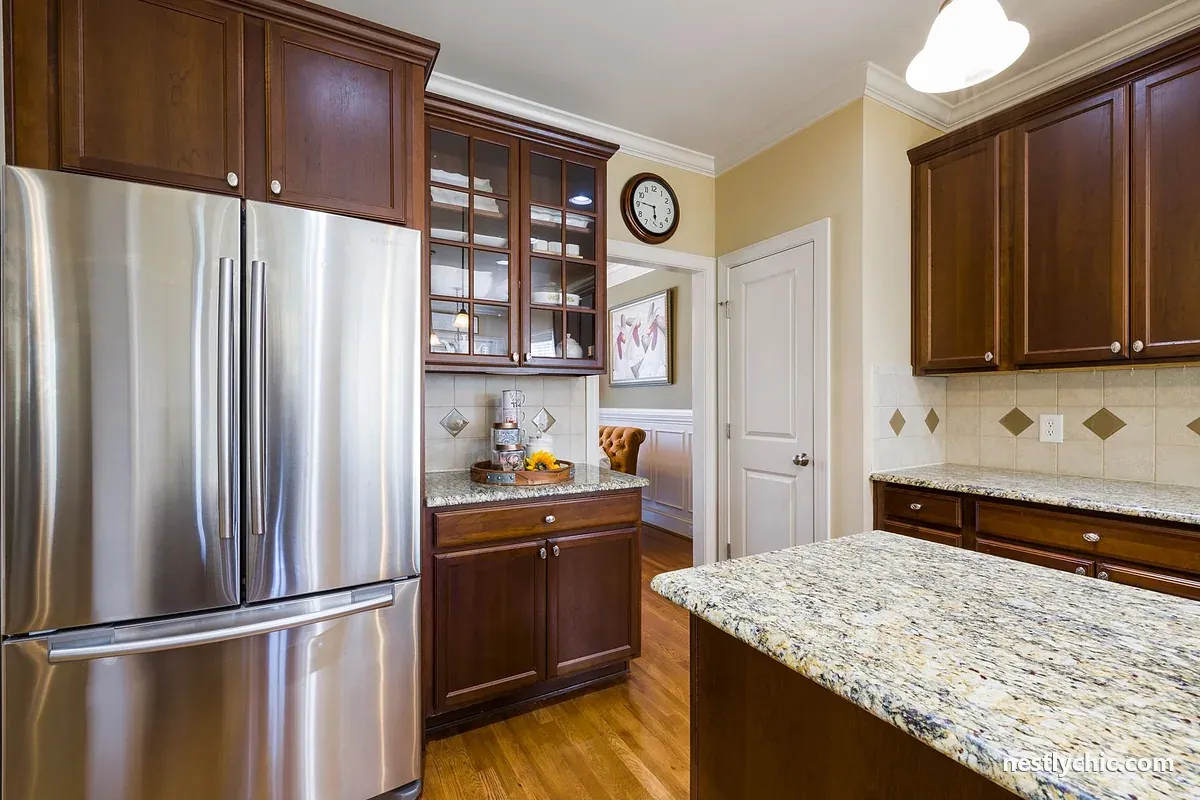
How each configuration splits the cold space
Total cubic feet is one number. The split between fresh and frozen is the number that decides whether a refrigerator suits you.
French door: fresh food first
Whirlpool describes French door capacity as having the majority allocated to the refrigeration compartment. That is the whole point of the design. The fresh section spans the full width of the cabinet, so a sheet cake, a roasting pan of marinating chicken or a full pizza box goes in flat. The freezer becomes a drawer underneath, often with a sliding upper basket. It holds plenty, but items stack in layers, so the bag at the bottom is the one you forget until spring.
Side-by-side: a freezer that gets its full share of height
A side-by-side splits the cabinet vertically. The freezer runs from floor to top, so frozen food sits at eye level on shelves rather than in a pile. The door racks run the full height too, which gives plenty of room for jars, condiments and drinks. The cost is width. Each compartment gets only part of the cabinet's width, so the fresh-food shelves are noticeably narrower than a French door's, and the back of each shelf is harder to see. A wide platter or a large sheet pan may simply not fit flat.
Top freezer: small freezer, simple box
Whirlpool's guide to top-mount refrigerators puts their total capacity at roughly 10 to 21 cubic feet, and the freezer is only a small share of that. Samsung's current US top freezer lineup lists capacities of 15.6, 18 and 21 cubic feet. The freezer is at eye level and easy to scan, but it is small, and the lowest fresh-food shelves and crisper drawers sit near the floor.
Capacity ranges overlap, so the label will not decide it
This is the point most comparison pages skip. When you put two makers' published ranges side by side, the configuration barely predicts total capacity:
- Samsung, in its US refrigerator sizing guide (read September 23, 2026), lists French door refrigerators at 18 to 32 cubic feet and side-by-side models at 22 to 28 cubic feet.
- Whirlpool gives French door capacity as most often 20 to 28 cubic feet and side-by-side as generally 21 to 28 cubic feet.
Those ranges sit almost on top of each other. So "the French door is bigger" or "the side-by-side holds more" is only true of two specific models, never of the styles. What the ranges hide is the split. A French door and a side-by-side with the same total can differ a great deal in how much of it is freezer.
The practical fix is simple. On any model you are considering, open the spec sheet and look for the fresh-food and freezer capacities listed separately, which most makers publish. Compare those two numbers against how you actually shop, not the headline total. How many total cubic feet your household needs is a separate question from the layout, and it depends on how often you shop and how many people eat at home.
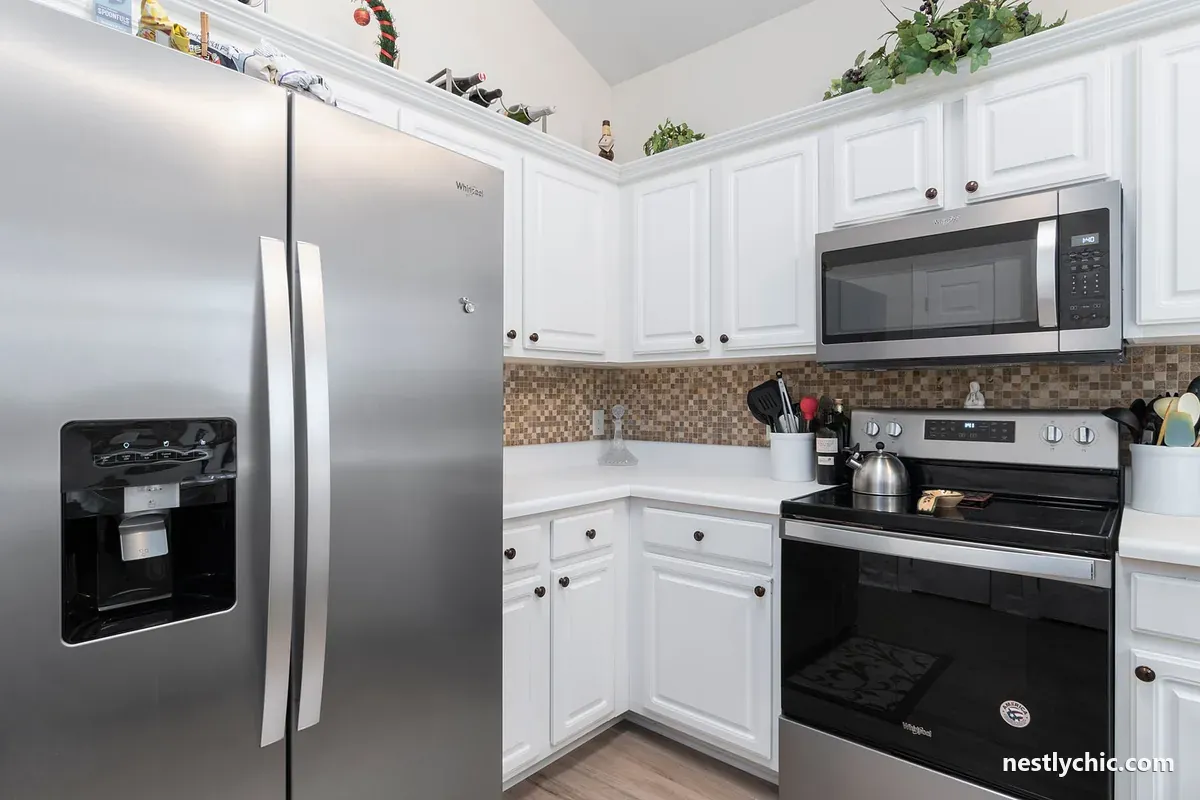
Width, depth and the door swing nobody measures
Width is where the three styles differ least at the top end. Samsung's sizing guide states that both its standard side-by-side and French door refrigerators are 36 inches wide, and Whirlpool says most of its side-by-side models run 33 to 36 inches wide and most of its French door models 30 to 36 inches. Whirlpool's top freezer guide puts most of its top freezer models between 24 and 33 inches wide, which is why this style is the usual answer for a narrow opening.
Depth matters too. Samsung gives counter-depth models as 28 to 32 inches deep, not including handles. A standard-depth refrigerator sticks out further than that, so check your own cabinet run against the spec sheet. Our guide to standard kitchen cabinet dimensions shows which measurements to take before you shop.
The measurement people forget is the space in front and to the side. The GE Appliances refrigerator size guide, read on September 23, 2026, asks for about 2 inches of space on the side the door swings open and at least 1 inch of breathing room at the top and back. It also notes that side-by-side and French door styles need less clearance to open fully, which suits a refrigerator that sits beside a wall.
The reason is geometry. A French door or side-by-side door is roughly half the cabinet's width, so it swings through a smaller arc into the room. A top freezer's fresh-food door spans the full width of the cabinet, so it needs the most room in front. If an island sits close to the refrigerator, that single wide door can be the one that fails.
What you give up with each one
Every layout has a daily cost. Makers' pages rarely lead with it, so here it is plainly.
- French door: frozen food lives low, in a drawer. You bend or crouch to reach it, and the drawer pulls out into the room, which needs its own clear floor space. Where the two doors meet, the center seal flap is one more moving part at the seal line.
- Side-by-side: the fresh section is narrow. Wide trays, a large cutting board with prepped food on it or a platter for a gathering may not fit flat. If you batch-cook on sheet pans, check the interior shelf width against the pans you own, and our guide to what size sheet pan to buy covers the pan side of that measurement.
- Top freezer: the freezer is the smallest of the three, and the fresh-food section's lowest shelves and drawers are near the floor. That is the section you open most often.
One trade runs the other way. A side-by-side keeps both fresh and frozen food at eye level. For someone who reaches into the freezer several times a day, that can matter more than shelf width.
Matching the configuration to how your household cooks and shops
Configuration follows habits more than headcount. Use the pattern that sounds most like your kitchen:
- You buy fresh food several times a week and cook in wide dishes. A French door fits. The wide fresh section is where most of the space goes, and the freezer is visited less often.
- You buy frozen food in bulk or stock up once a month. A side-by-side makes frozen food easier to see and rotate, because it sits on shelves rather than in a stack.
- The opening is narrow, the budget is tight, or you already own a chest freezer. A top freezer gives up freezer space you may not need and usually sits in the lowest price tier.
- The kitchen is a galley, or an island sits close in front. Favor the half-width doors of a French door or side-by-side, and measure the drawer pull-out space if you choose French door.
If you are still working out how big a kitchen your household really needs, our breakdown of sizing a kitchen to the household walks through it by household size. And if the refrigerator is competing for budget with everything else in a new kitchen, the priorities in where to spend and save in a first kitchen help decide how much of it should go here.
What this guide does not judge
We do not test refrigerators, and this page does not rank brands or models. Reliability differs by model, not by configuration alone, and independent testing organizations such as Consumer Reports publish reliability and performance results for specific models. Running cost is also model-specific and is not covered here. The job of this page is narrower: to show what the configuration itself does to your space, your floor and your price tier, so you walk into a showroom already knowing which layout suits you.
FAQ
Is a French door refrigerator bigger than a side-by-side?
Not as a rule. Samsung's sizing guide lists French door models at 18 to 32 cubic feet and side-by-side models at 22 to 28 cubic feet, and Whirlpool's ranges overlap in the same way. Compare two specific models' spec sheets, and read the fresh-food and freezer figures separately.
Why is a French door refrigerator more expensive than a side-by-side?
Whirlpool states that side-by-side models typically start at a lower price point than French door configurations, and it attributes much of the gap to French door base models carrying more features and capacity. The design also has more openings and seals: two doors plus a freezer drawer.
Which refrigerator configuration works best in a narrow kitchen?
It depends on which dimension is tight. If the opening is narrow, top freezer models are the usual answer, since Whirlpool lists most of its top freezer models at 24 to 33 inches wide. If the space in front is tight, the half-width doors of a French door or side-by-side need less swing room, which GE's size guide also notes.
Is a top freezer refrigerator a bad choice for a family?
Not automatically. Its limit is freezer space: the top compartment is a small share of the total, so check the freezer figure on the spec sheet. A family that shops often, or already owns a separate freezer, may never miss the rest.
Do French door and side-by-side refrigerators come in the same widths?
Often, yes. Samsung states that its standard side-by-side and French door refrigerators are both 36 inches wide, and Whirlpool puts most of its side-by-side models at 33 to 36 inches wide and most French door models at 30 to 36 inches. Always confirm the exact width on the model's spec sheet before buying.