Short answer: The gas vs induction vs electric range choice comes down to how each one makes heat, and what your kitchen already has behind the range. Gas burns fuel under the pan and needs a gas supply; EPA lists gas stoves as an indoor source of nitrogen dioxide, and CPSC encourages carbon monoxide alarms outside every sleeping area. Induction makes the pan itself the heater, so it needs magnetic cookware and, per NYSERDA, a 240-volt outlet. Radiant electric heats an element that then heats the pan, works with any flat pan, and is slowest to cool down. Switching types means licensed work.
The question most new owners actually have is simpler: "I can finally choose. What actually changes about cooking?" Quite a lot, and not always in the direction the showroom suggests. What follows starts with the safety facts for gas, because they apply before any other comparison does, then works through the cooking, the cookware and the work behind the wall.
First, the safety line for any gas appliance
Any kitchen with a gas range is a kitchen with an indoor combustion appliance, and two federal agencies speak to that directly.
The U.S. Consumer Product Safety Commission's page on carbon monoxide alarms names "gas ranges and ovens" among the consumer products associated with CO poisoning deaths. It describes CO alarms as "life safety devices" and states that "the CPSC encourages all consumers to install CO alarms outside the bedrooms in each sleeping area of their home." The same page notes a limit worth knowing: "CO alarms are not intended to protect consumers against low-level CO exposures." A working alarm is the baseline, not the whole answer.
The EPA's page on nitrogen dioxide and indoor air quality (last updated April 29, 2026, read September 24, 2026) lists "unvented combustion appliances, e.g. gas stoves" among the primary indoor sources. It states that low-level exposure "may cause increased bronchial reactivity in some asthmatics" and "increased risk of respiratory infections, especially in young children." Its guidance is that "venting the NO2 sources to the outdoors, and assuring that combustion appliances are correctly installed, used and maintained are the most effective measures," including an exhaust fan vented to outdoors over gas stoves.
CPSC's position is measured, not alarmist. In a statement dated January 11, 2023, read September 24, 2026, the agency's chair at the time said that "research indicates that emissions from gas stoves can be hazardous" and that CPSC was "looking for ways to reduce related indoor air quality hazards," while adding: "I am not looking to ban gas stoves and the CPSC has no proceeding to do so."
That is where the evidence stands on these pages. Gas cooking is a recognized indoor source, venting and correct installation are the named mitigations, and neither agency, on these pages, calls for removing gas ranges from homes. If anyone in the household has asthma or another respiratory condition, that is a question for their doctor, and it belongs in this decision. Choosing and fitting a range hood is its own project, and the EPA's language above is the standard to hold it to.
Gas vs induction vs electric range: the side-by-side
The differences all trace back to one thing: where the heat is made.
| Gas | Radiant electric | Induction | |
|---|---|---|---|
| Where heat is made | A flame under the pan | A coil or element, which then heats the pan | Inside the pan itself, by a magnetic field |
| What the pan must be | Any cookware that suits the burner | Flat-bottomed cookware in contact with the glass or coil | Magnetic cookware |
| Turning the heat down | The flame drops as soon as you turn the knob | The element and glass stay hot and keep heating for a while | Heat in the pan drops as soon as you change the setting |
| After you switch off | Grates stay hot | Element and glass stay hot | Glass is warm from the pan, not from its own heating |
| Cleaning | Grates and burner caps come off | Smooth glass, but spills can bake on while it is hot | Smooth glass that heats less, so spills bake on less |
| What the kitchen needs | A gas supply; check the spec sheet for any outlet it also needs | A dedicated range circuit; the spec sheet gives the requirement | A 240-volt outlet, per NYSERDA; the spec sheet gives the rest |
| Indoor air | Combustion byproducts, per EPA | No combustion | No combustion |
Two things stand out. First, induction and gas share the quality many cooks value most, fast response when you turn the heat down, for opposite reasons: gas because the flame changes instantly, induction because the pan is the heater. Radiant electric is the outlier, because the element and glass carry stored heat. Second, radiant electric and induction look almost identical from across the room, and they are not the same appliance at all.
What changes about cooking day to day
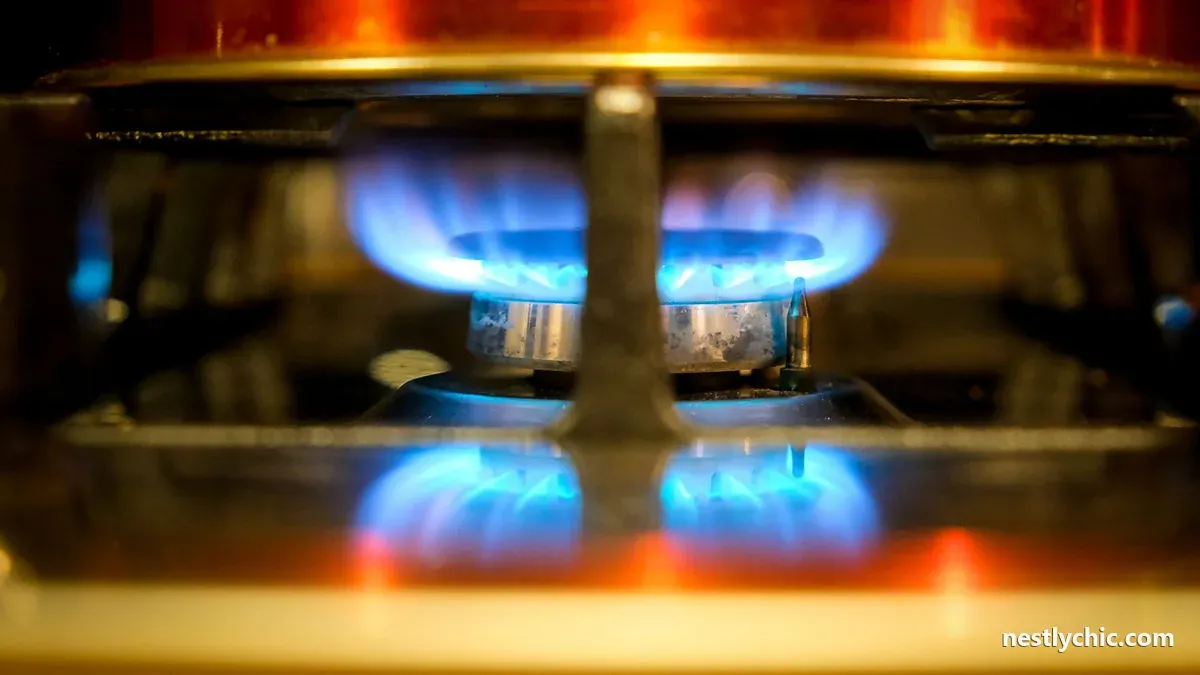
Gas gives feedback you can see: the size of the flame is the heat. Cooking directly over an open flame, such as charring a pepper, needs gas. Its drawbacks are the combustion itself, covered above, and heat that spreads up and around the pan into the room rather than staying in the pan.
Radiant electric is the simplest to live with. Any flat pan works, controls are straightforward, and there is no flame. The cost is patience. It is slower to respond, so turning a boiling pot down often means sliding it off the element for a moment, and the glass stays hot long after the element is switched off.
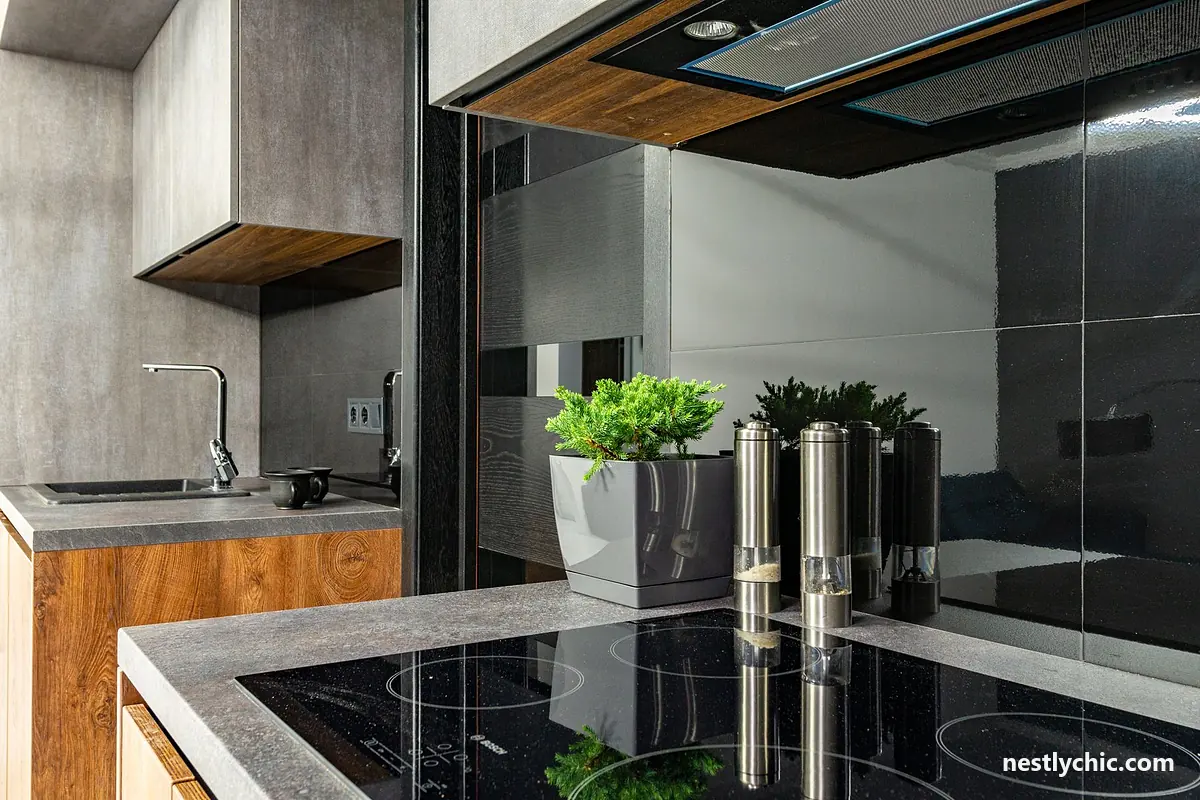
Induction asks for a short learning period and the right pans. Because the pan heats directly, a lot happens quickly, and anyone coming from electric should expect to turn things down sooner than they are used to. Pans that are warped or have a thin, uneven base may not sit flat on the glass. The payoff is fast, precise control on a surface that is easy to wipe clean.
The oven is a separate decision. Dual-fuel ranges pair a gas cooktop with an electric oven, so if the cooktop is the part you care about, check what kind of oven sits underneath it.
The cookware question
Gas and radiant electric work with essentially any pan that suits the burner or element. Induction is the only one that rejects cookware outright.
NYSERDA, New York's state energy research agency, gives the test in its guide to switching to induction: check your pots and pans "by simply holding a magnet to them," and if the magnet is attracted, the cookware "should work with your new induction stove." Our guide to checking whether your cookware is induction compatible explains why some stainless steel fails that test and what to look for in a pan's construction. Do the magnet test before you buy the range, not after, because the answer can change the budget.
The work behind the wall: where this guide stops
In a kitchen you own, nobody else decides what goes behind the range. That is the freedom, and it is also where the licensed trades come in.
Keeping the same type is the simple case. A gas range still needs its gas supply disconnected and reconnected, and that is not a DIY job. This guide gives no connection steps for gas of any kind. Have a licensed professional do it, and have the connection checked.
Going from gas to induction or electric means two jobs. NYSERDA's guide states that "induction does require a 240-volt outlet," and advises working "with your contractor or gas utility to safely remove any gas or propane infrastructure like connection points, fuel lines, or tanks." A new circuit is work for a licensed electrician, who is also the right person to judge whether your electrical panel has the capacity for it. The old gas line is work for a licensed plumber or gas fitter, depending on your state, or for your gas utility. Either job may need a permit where you live.
Going from electric to gas means running a gas line, which is work for a licensed professional, and it brings in the combustion considerations in the first section of this article.
If your plan involves any of these, stop at the plan. Get the trades to quote before you buy the range, because what the wall needs can decide which range makes sense. Our look at what changes when you own the kitchen covers the other decisions that shift from landlord to owner.
How to decide
Start with the house, then the cook.
- What is already there? A working gas supply, a range circuit, or both. Keeping what exists avoids trade work altogether.
- Who is in the household? If anyone has asthma or a respiratory condition, EPA's statements on NO2 are part of the decision, and their doctor is the right person to weigh them.
- What do you cook? Open-flame cooking points to gas. Fast, precise control on an easy-clean surface points to induction. Simple, works-with-everything cooking points to radiant electric.
- What pans do you own? Run the magnet test before pricing induction.
- What is the whole cost? The range, any trade work, and any cookware you would need to replace. Our note on where to spend and where to save in a first kitchen helps place a range in that budget.
What this guide does not cover
We do not compare running costs or energy bills, and we do not rate individual models. We have not tested these ranges ourselves. For performance testing of specific models, independent testing organizations such as Consumer Reports publish lab results. What we have set out here is how each type works, what it needs, and what the named agencies say about it.
FAQ
Is induction better than gas?
It depends on what you value. Induction changes the heat in the pan as soon as you change the setting, much like gas, involves no combustion, and needs magnetic pans and a 240-volt outlet. Gas gives a visible flame and works with any suitable pan, and EPA lists gas stoves as an indoor source of nitrogen dioxide.
Do I need an electrician to switch from gas to induction?
In most homes, yes, unless a suitable range outlet is already there. NYSERDA states induction requires a 240-volt outlet, and adding a circuit is work for a licensed electrician. The gas line also has to be dealt with by a licensed plumber, gas fitter or your gas utility.
Is a gas stove safe to have in my home?
CPSC's chair at the time said in January 2023 that research indicates gas stove emissions can be hazardous, and that CPSC was not looking to ban gas stoves. EPA names venting to the outdoors and correct installation as the most effective measures, and CPSC encourages CO alarms outside each sleeping area. Anyone with a respiratory condition should raise it with their doctor.
Will my old pans work on an induction range?
Only if they are magnetic. NYSERDA's test is to hold a magnet to the base: if it is attracted, the pan should work.