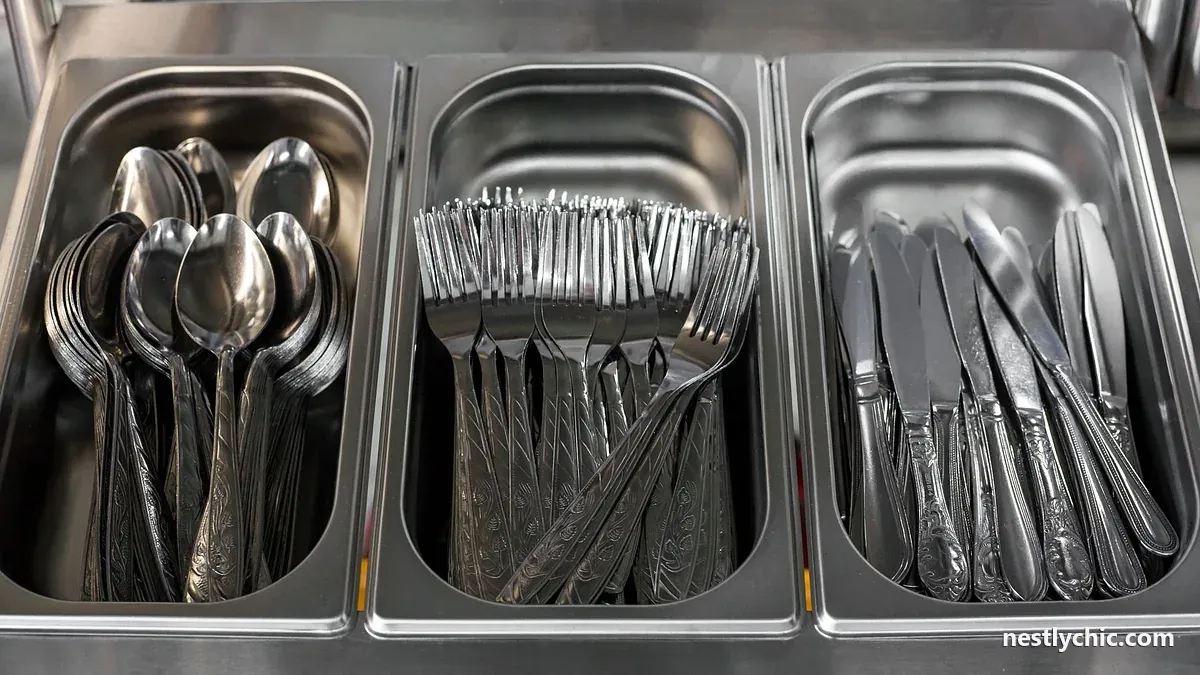
The two numbers are chromium and nickel percentages. 18/8 is 18 percent chromium and 8 percent nickel. 18/0 is 18 percent chromium and no nickel. That much is straightforward and it is stated by the British Stainless Steel Association, which is a trade body for the material rather than a seller of cutlery.
Then there is the third figure, and it is the one worth knowing about.
The BSSA's own article on cutlery grades states that "18/10" is used on some cutlery as an alternative to "18/8" and is claimed to indicate better quality steel, but that in practice the "10" does not indicate an actual higher nickel content and is purely a marketing ploy. Both are the steel known as 304 in the American AISI grade designation system.
So the real division is not 18/10 against 18/8. It is 18/8 and 18/10, which are the same austenitic steel, against 18/0, which is a different family altogether.
What the difference between the families is
18/8 and 18/10 are austenitic, AISI 304, containing nickel.
18/0 is ferritic, AISI 430, containing no nickel.
And what nickel does is the whole point. The BSSA describes 18/0 as used where corrosion resistance is not too demanding, as an alternative to the 18/8 type, and notes that type 304 had equivalent or higher corrosion resistance compared to other alloys when tested in various environments.
So the difference you are paying for is corrosion resistance, which in a domestic kitchen shows up as pitting, spotting and dulling after years of dishwashers, salt, acidic food and being left wet in a sink.
There is one other observable difference and it is not a quality signal: ferritic 18/0 is magnetic and austenitic 304 generally is not. A magnet on the back of a spoon tells you which family you are holding.
The two families, side by side
The division that matters, under the labels the boxes use.
| What the label covers | 18/8 and 18/10 | 18/0 |
|---|---|---|
| Nominal composition | 18 percent chromium and 8 percent nickel, with the "10" not indicating an actual higher nickel content | 18 percent chromium and no nickel |
| Steel family | Austenitic | Ferritic |
| AISI designation | 304 | 430 |
| Corrosion resistance, on the BSSA's account | Type 304 had equivalent or higher corrosion resistance compared to other alloys when tested in various environments | Used where corrosion resistance is not too demanding, as an alternative to the 18/8 type |
| Magnet on the back of a spoon | Generally not magnetic | Magnetic |
The first row is the one that costs money, because the two labels in the middle column are two names for the same steel. What the table leaves out is everything that decides whether a set is pleasant to eat with: weight, balance, stock thickness, finish and workmanship, none of which is printed on the box either.
What this means when you are buying
Comparing 18/10 to 18/8 is comparing two labels for the same steel, on the BSSA's account. If a set is priced higher purely because the box says 18/10, that difference is not buying you a different alloy.
Comparing either of those to 18/0 is a real comparison, and it is about corrosion resistance over the life of the set.
And a great deal of flatware is sold with no grade marked at all, which is worth noticing. A set that does not state its grade has not told you which family it is in, and the magnet test is what remains.
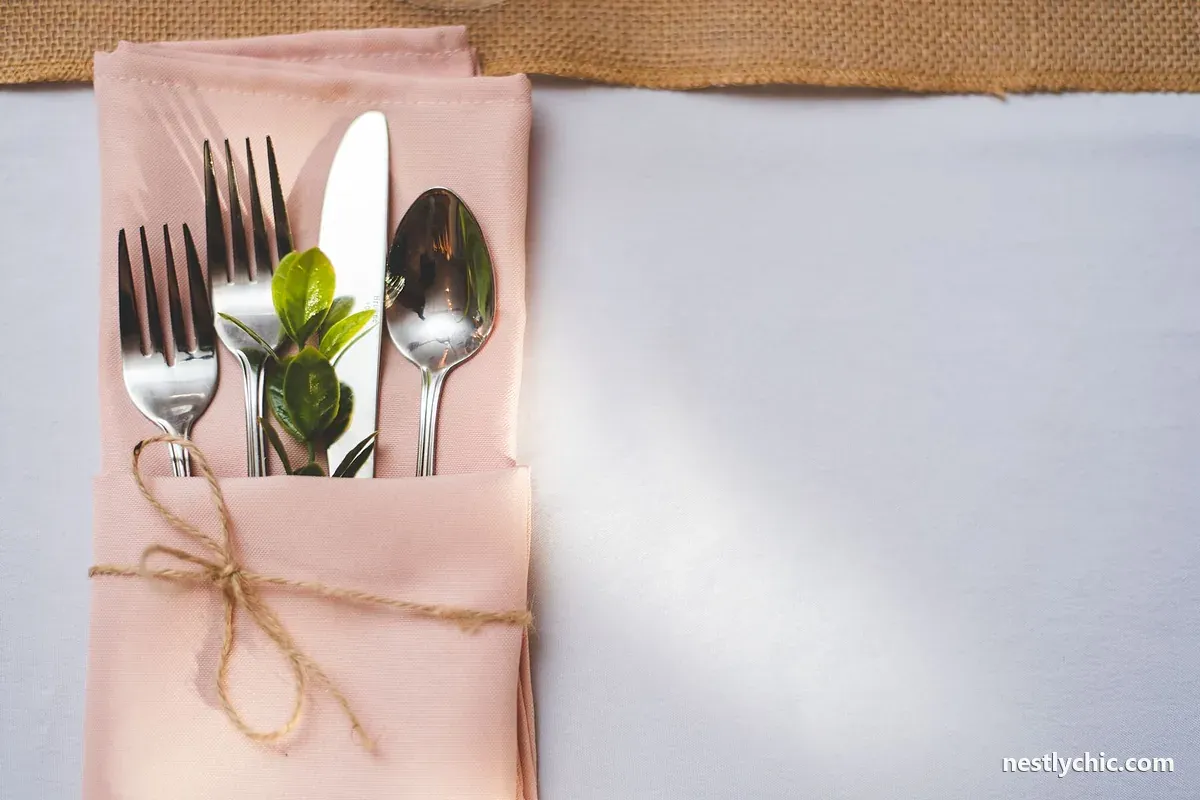
What actually decides whether a set feels good
Alloy is one input and it is not the one people notice daily.
Weight and balance. How a fork sits in the hand is a manufacturing and design question rather than an alloy one, and it is what makes a cheap set feel like a toy. Two sets of the same grade can feel completely different.
Thickness of the stock. Thin metal flexes.
Finish. Polished, brushed and matte finishes show marks differently, and a mirror finish shows every water spot.
Edge and tine quality. Whether a fork's tines are even and whether a knife's edge is properly formed is workmanship rather than material.
None of that is on the box either, and it is the reason handling a set before buying is worth more than reading a grade off packaging.
The knife caveat
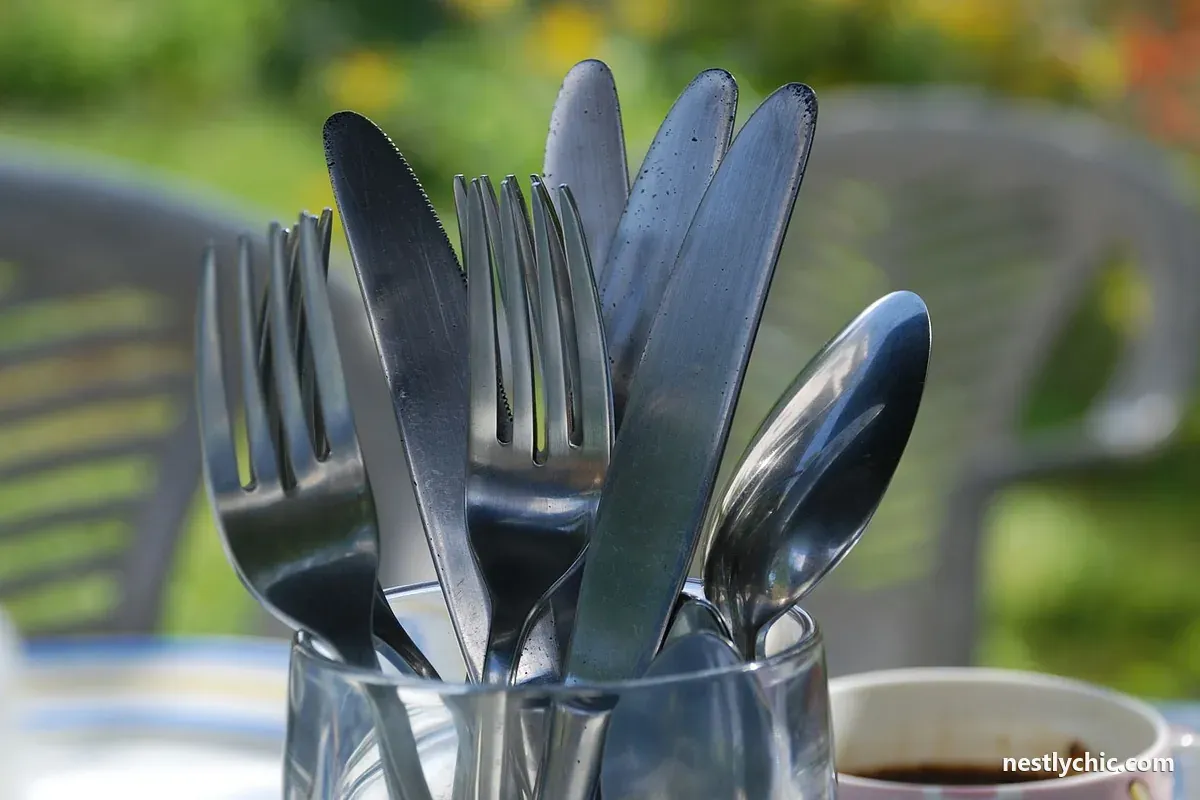
Knife blades in a flatware set are frequently a different steel from the handles and from the rest of the set.
Table knives need to hold an edge, which is a different requirement from corrosion resistance, so a set described as 18/10 may have blades in a harder, higher-carbon steel that is more prone to spotting.
Which is why the knives in a set are usually the first pieces to show marks, and it is not a defect in the set.
Care, briefly
Salt and acidic residue left on the surface is what does the damage, not the dishwasher itself.
Prolonged soaking is worse than a dishwasher cycle.
Different metals in prolonged wet contact is a known cause of marking, which is the argument against leaving flatware piled in a sink with pans.
How to clean anything is not this site's ground, and nothing here describes a cleaning method or a product.
How many, and what to buy
The count question is arithmetic and it runs on the same three inputs as dinnerware: household size, dishwasher frequency, and headroom. We work that through in how many place settings a household actually needs.
The composition question is the same trap as dinnerware sets: a piece count on a box is settings multiplied by pieces per setting, and some of those pieces go unused. What a setting contains, and which pieces sit in a drawer, is in what is actually in a place setting.
No brand or product is recommended anywhere on this site, and no price appears anywhere on it.
FAQ
What do the numbers in 18/10 flatware mean? Chromium and nickel percentages: 18 percent chromium and, nominally, 10 percent nickel. The British Stainless Steel Association states that the "10" does not indicate an actual higher nickel content than 18/8 and is purely a marketing ploy, and that both are AISI 304.
Is 18/10 better than 18/8? On the BSSA's account they are the same steel, AISI 304, with two labels. The meaningful comparison is between those and 18/0.
What is 18/0? A ferritic stainless steel with 18 percent chromium and no nickel, known as AISI 430. The BSSA describes it as used where corrosion resistance is not too demanding, as an alternative to the 18/8 type.
How can I tell which one I have? Ferritic 18/0 is magnetic and austenitic 304 generally is not, so a magnet on the back of a spoon separates the two families. It does not distinguish 18/8 from 18/10, because they are the same steel.
Why do my knives spot when the rest of the set does not? Table knife blades are frequently a different steel from the rest of the set, because holding an edge and resisting corrosion are different requirements. It is common rather than a fault.
Does the grade decide whether a set feels good? No. Weight, balance, stock thickness, finish and workmanship decide that, and two sets of the same grade can feel entirely different. Handling a set is worth more than reading the grade.
Sources: British Stainless Steel Association, "Cutlery stainless steel grades 18/8, 18/10 and 18/0", checked 2026-08-28, for the chromium and nickel percentages, the statement that the "10" in 18/10 does not indicate an actual higher nickel content and is purely a marketing ploy, the AISI 304 and 430 designations, and the description of 18/0 as used where corrosion resistance is not too demanding. Our fetcher did not open the BSSA page directly on that date, so this is reported from the association's own indexed article rather than from a page we read line by line, and is labeled as such; a writer with working access should confirm the wording directly before publish. No price, weight or lifespan figure appears anywhere on this page, and no brand or product is named or recommended.