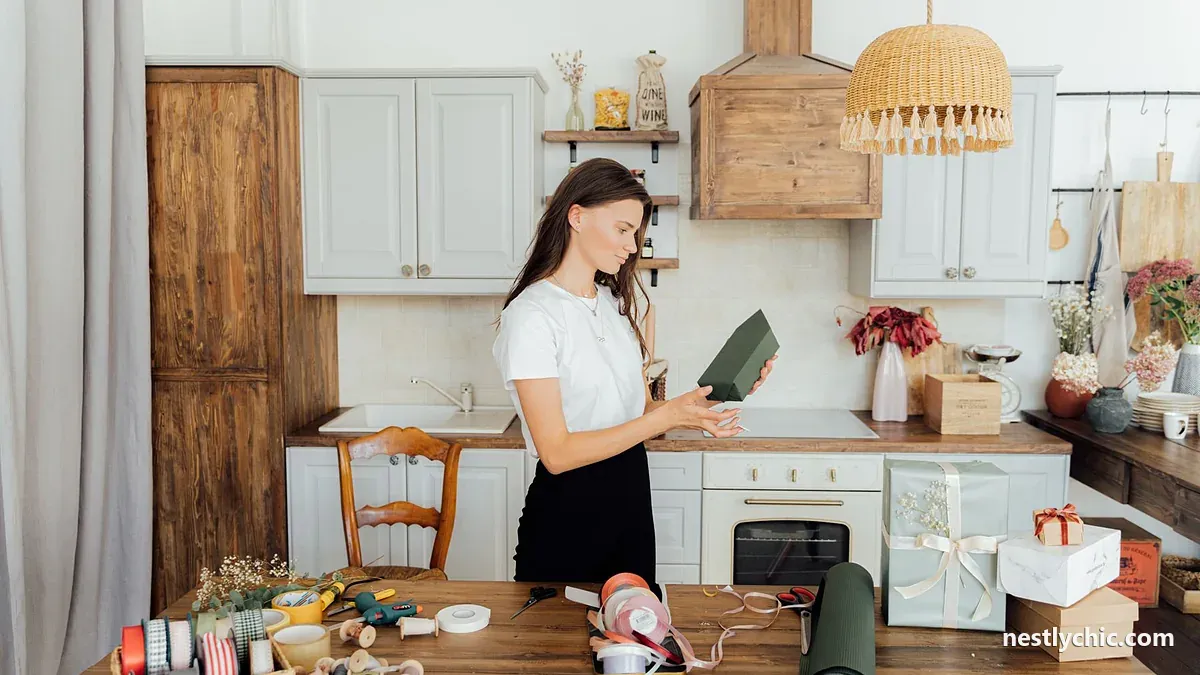
The worst housewarming gifts for a kitchen are the ones that duplicate something the household already owns, depend on a stove, oven or counter you have never seen, or quietly hand the new owner a maintenance job. That puts cheese boards, knife block sets, boxed cookware sets, single-task gadgets and hand-wash-only showpieces at the top of the list. They are popular for the same reason they fail: they look like a kitchen gift, they wrap neatly, and they let the giver skip the one question that matters, which is what this particular kitchen is actually missing.
This article stays on the kitchen side of that question. It explains why each common gift tends to end up in a cupboard, and what the kitchen reasoning says to give instead.
Why the worst housewarming gifts keep getting given
Most gift lists are written for an imaginary empty kitchen. Real kitchens are rarely empty. Anyone who has cooked for a few years arrives at a new address with a skillet, a saucepan, plates, a knife or two and a drawer of utensils. The move changes the room, not the household.
Popular gifts also share three traits that have nothing to do with usefulness:
- They are visibly "kitchen." A board or a knife block reads as a kitchen gift at a glance, so it feels safe.
- They come boxed and sized for giving. Sets, bundles and gift packs are designed to be handed over, not to fill a specific gap.
- They need no information. You can buy one without knowing the stove type, the oven width or how much counter space exists.
That last trait is the real problem. A kitchen gift that needs no information about the kitchen is, almost by definition, a guess.
The four ways a kitchen gift fails
Almost every disappointing kitchen gift fails in one of four ways. Knowing the failure mode is more useful than memorizing a list, because it tells you what to check before you buy.
| Failure mode | What it looks like | The question that prevents it |
|---|---|---|
| Duplicate | The household already owns one, often several | What did they have in the last kitchen? |
| Fit | It does not work with the stove, oven or counter | What type of cooktop, and how big is the oven? |
| Care burden | It needs oiling, hand washing or special storage | Will this add a chore they did not ask for? |
| Single use | It does one task a knife or pan already does | What does it replace? |
The rest of this article walks through the gifts that show up most often, and which of these four failures each one tends to hit.
Cheese boards and serving boards: the duplicate with a chore attached
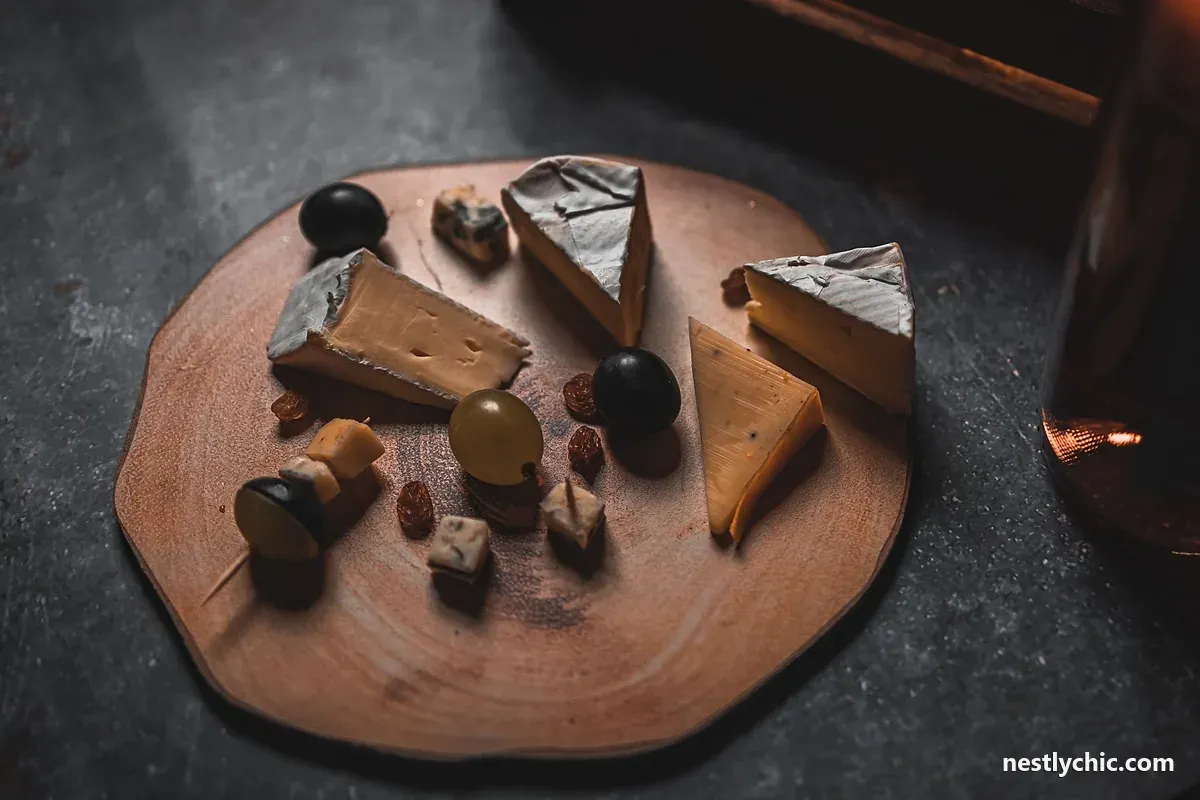
The cheese board is the classic example of the fourth cheese board problem. Boards are easy to buy, look good wrapped and seem personal. They also accumulate, because nearly everyone who entertains already owns one, and every previous housewarming, wedding and holiday added another.
A wood board is also not a zero-maintenance object. John Boos, a long-established maker of wood cutting boards and butcher blocks, says on its block care and maintenance page (read September 27, 2026) to apply its board oil "a minimum of once a month (depending upon use and household conditions)" and not to put its wood boards in the dishwasher. None of that is a flaw in the board. It simply means a board that sits in a cupboard still wants attention, and a household with three of them is signing up for three times the upkeep.
If the household genuinely lacks a surface for serving, a board is fine. If you do not know, it is one of the likeliest duplicates in the room.
Knife block sets: more pieces than anyone reaches for
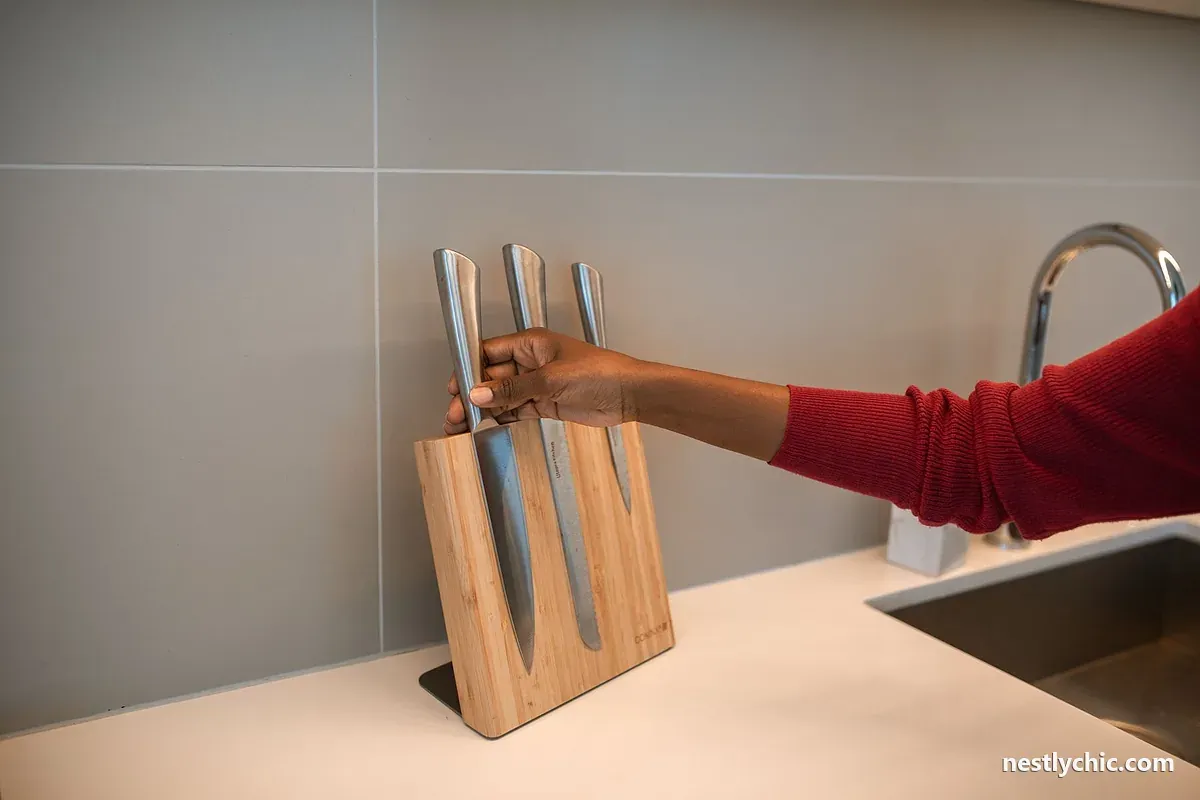
A knife block set is the gift that feels generous because it contains so many things. That is also its weakness. Most home cooks lean on a small number of knives, and a set adds pieces that rarely leave the block, plus a block that takes permanent counter space in a kitchen whose layout the giver has never seen.
Knives are also personal in a way most kitchen items are not. People get used to a particular handle, weight and length. A household that already has a chef's knife it likes is unlikely to switch because a new block arrived. Sets in general front-load pieces the owner did not choose, and a gifted set does that even more, because the owner did not choose any of it.
Boxed cookware sets: the gift that may not work on their stove
Cookware sets combine two failures at once. They duplicate pans most households already own, and they can fail outright on the fit test.
The fit issue is the cooktop. Induction cooktops only heat compatible pans. ENERGY STAR explains on its electric cooking products page (read September 27, 2026) that induction cooking tops need compatible cookware, names cast iron, stainless steel and enameled cast iron as materials a household may already own that work, and gives a simple check: "If the magnet sticks to the cookware, it will work with induction." A set bought without knowing the stove is a set that might not heat at all. Our guide to checking whether cookware is induction compatible covers the magnet test in more detail.
A new house often means a new cooktop the owners did not pick. Even the recipients may not know yet whether they will keep the stove that came with the house. That is exactly the moment not to commit them to a full set of pans.
Single-task gadgets: clever once, then stored
Avocado slicers, strawberry hullers, herb scissors, banana holders, specialty egg tools and similar items are popular gifts because they are inexpensive, novel and fun to unwrap. They fail the single-use test: each one does a job a knife, a spoon or a pan already does, and each one needs a drawer slot in a kitchen that is still being organized.
A new kitchen is when drawer space is most contested. Everything is being unpacked, and the household is deciding what earns a place. A gadget arriving in that week competes with tools they already rely on, and it usually loses. We go through the common offenders and the tool that replaces each in kitchen gadgets you don't need.
Bakeware and appliances sized for a kitchen you have not seen
Bakeware and countertop appliances look like safe practical gifts, and in the right kitchen they are. The trouble is that both depend on measurements the giver usually does not have.
- Bakeware has to fit the oven, and ovens vary. A large sheet pan or roasting pan that does not fit leaves no room for air to move, or does not go in at all. Our guide to choosing a sheet pan by measuring the oven, not the recipe explains why the oven decides the size.
- Countertop appliances have to fit the counter, the space under the upper cabinets and the outlets. A stand mixer, bread machine or large air fryer is a significant commitment of counter space in a kitchen the owners are still arranging.
Neither is a bad gift in principle. Both are bad gifts when bought blind.
Hand-wash-only and fragile showpieces
Crystal glasses, delicate serving pieces, hand-painted platters and anything labeled hand wash only share a quiet cost: every use means extra work. In a busy household these items tend to become "for special occasions," which in practice often means rarely.
Fragile pieces also arrive at an awkward moment. A household that has just moved may already have lost a few glasses or plates in transit and is deciding what to replace. A showpiece that needs careful handling is not what fills that gap. If you do give glassware or dishes, everyday pieces that match what they already use, and that go through the dishwasher, are far more likely to be used.
Secondhand appliances and "we never used it" regifts
Passing on a used appliance can feel practical, and among close family it sometimes is. As a housewarming gift it carries real risks: the new owners inherit the wear, the missing manual, the unknown history and whatever is left inside it. Anything that heats food, holds food or has a seal deserves a close look before it enters someone else's kitchen, and a gift puts the recipient in the awkward position of having to do that inspection politely.
How to check a kitchen gift in under a minute
Before buying anything for someone's new kitchen, run it through four quick questions:
- Would they have owned this in their last home? If yes, it is probably a duplicate.
- Does it depend on the stove, oven, counter or cabinets? If yes, find out the specifics or choose something else.
- Does it need special care? Oiling, seasoning, hand washing and polishing are chores, not features.
- Does it replace a job already done by a knife, pan or spoon? If yes, it is a gadget.
A gift that passes all four is usually something consumable, something that wears out, or something the household has told you they need. Asking directly is not a failure of imagination; it is the one method that removes all four risks at once. If the household keeps a list, our housewarming and first-home registry guide explains what tends to belong on one.
What tends to work better
The gifts that survive the four questions are rarely exciting on the table, which is exactly why they get used:
- Things that get used up: good olive oil, vinegar, spices, coffee or tea the household already likes.
- Things that wear out: dish towels, a new set of wooden spoons, a replacement for a tired nonstick pan when you know the stove type.
- Things that often go missing in a move: measuring spoons, a vegetable peeler, a kitchen timer, an instant-read thermometer.
- Things you were asked for: the most reliable gift of all.
None of these depend on the size of the oven, the type of cooktop or the depth of the cabinets, which is why they rarely end up in storage.
Frequently asked questions
What are the worst housewarming gifts for a kitchen?
The worst housewarming gifts for a kitchen are duplicates (cheese boards, extra knife sets, more mixing bowls), items that depend on the stove or oven (cookware sets, large bakeware), single-task gadgets, and hand-wash-only showpieces. Each one either repeats what the household owns or adds a job they did not ask for.
Is a cookware set a bad housewarming gift?
It often is, for two reasons. Most households already own the core pans, and a set bought without knowing the cooktop may not work on it. ENERGY STAR notes that induction cooktops need compatible cookware and that a magnet sticking to the pan is the simple test. Unless you know the stove and know they need pans, choose something else.
Are cheese boards a good housewarming gift?
They are one of the most frequently duplicated kitchen gifts. Wood boards also need regular oiling; John Boos says to oil its boards a minimum of once a month, depending on use and household conditions. A board works as a gift only when you know the household does not already have one.
Why do people keep giving the same kitchen gifts?
Because those gifts look obviously kitchen-related, come boxed for giving and need no information about the recipient's kitchen. That convenience is the reason they so often miss.
What should I give instead of a gadget?
Something that gets used up or wears out: pantry basics, dish towels, wooden spoons or a small tool that commonly goes missing in a move, like measuring spoons or a peeler. These fit every kitchen regardless of its layout or appliances.