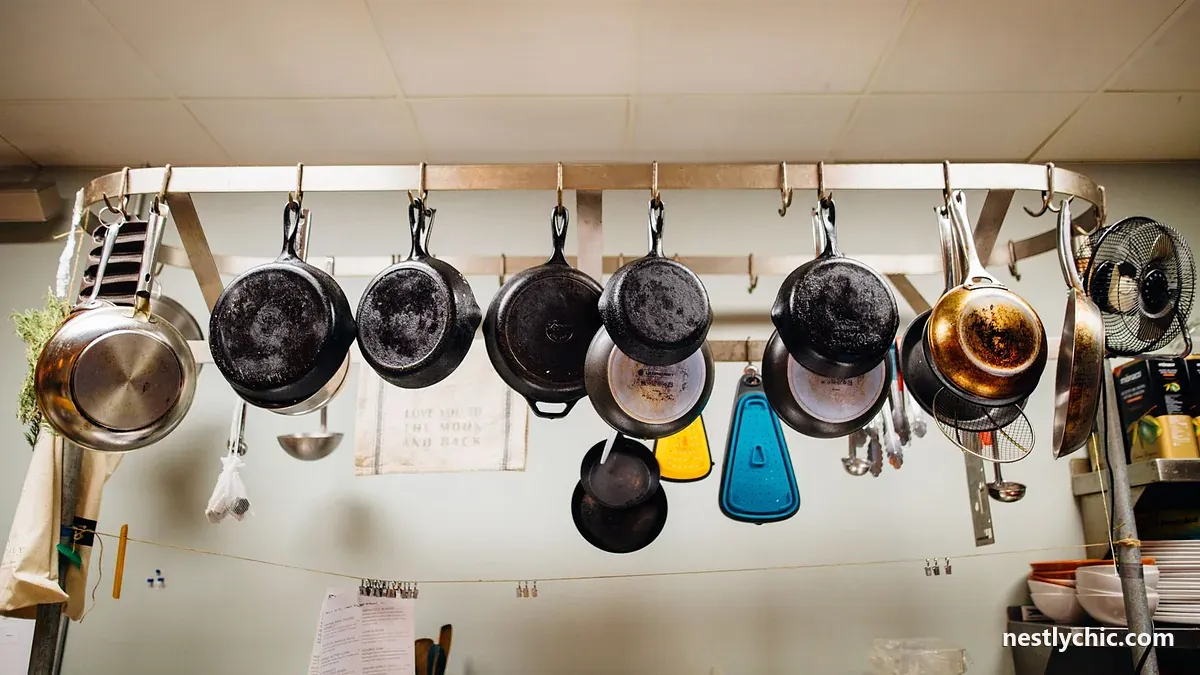
There is no fixed lifespan for a nonstick pan, and the calendar is the wrong instrument. Condition decides. A nonstick pan has reached the end of its working life when the coating is no longer intact: scratched through to the metal underneath, flaking or peeling, blistered or discolored from overheating, or no longer releasing food at normal heat with normal fat. The National Capital Poison Center's published guidance for nonstick cookware includes inspecting it regularly for damage and replacing it if needed, which is a condition test rather than an age test. A well-treated pan can outlast a badly treated one by years, so the question to ask is what the surface looks like today.
About that "three to five years" figure
It appears in almost every article on this subject, and it is worth being straight about where it comes from. In the sources reviewed for this page, no cookware manufacturer's published care guidance and no public health or standards body states a service life of three to five years for a nonstick pan. It circulates as a rule of thumb in consumer coverage that repeats itself.
That does not make it useless as a rough expectation. It makes it something other than a specification, and it should not be the reason you keep a flaking pan for another eighteen months or throw out an intact one at the anniversary. Nothing below depends on it.
When to replace a nonstick pan: the checks
Each of these is a look at the pan, and each is a purchase decision rather than a repair job. This site does not publish restoration, re-coating or repair procedures for cookware, and a coating that has failed cannot be restored at home.
1. Scratched through to the metal
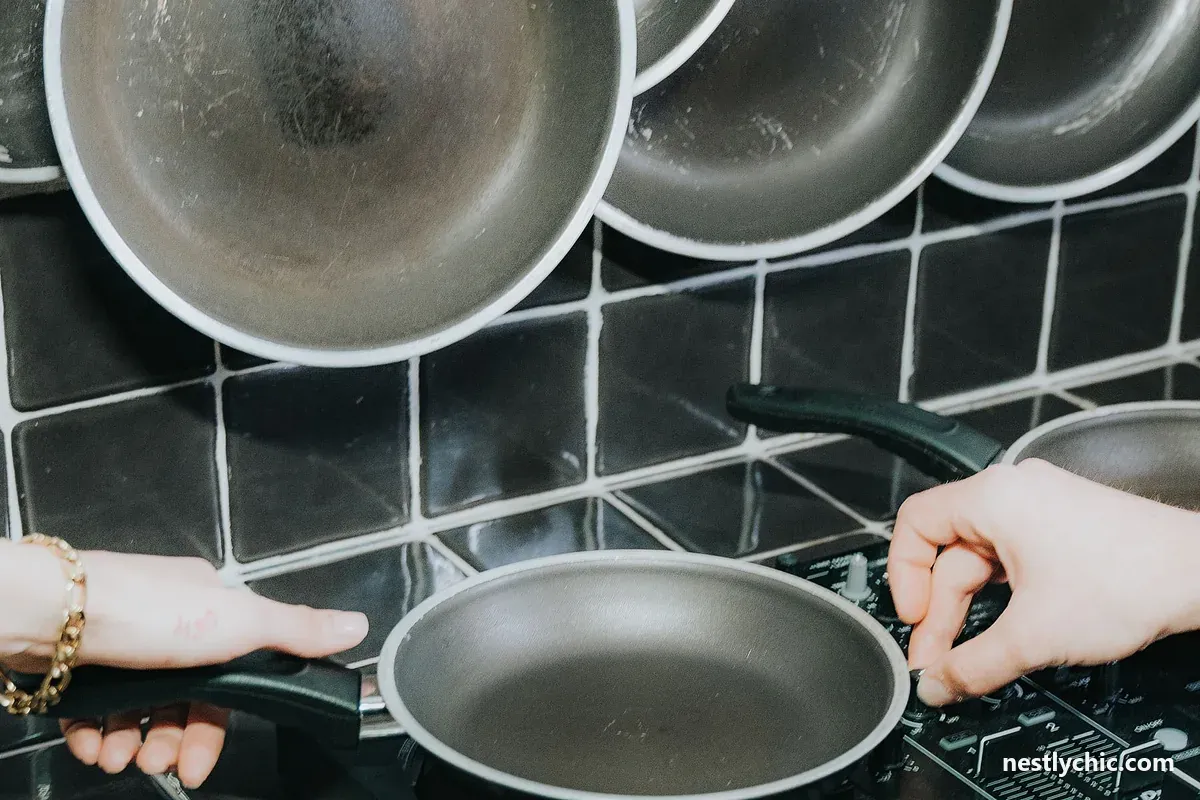
The distinguishing feature is not the scratch, it is the depth. A surface mark that has not broken the coating is different from a groove that shows the metal beneath it. If you can see a different color and a different sheen at the bottom of the mark, the coating is breached at that point.
T-fal's published care instructions state the rule that prevents this: never cut food directly in the pan or gouge the nonstick surface in any way. Once it has happened, it is not reversible.
2. Flaking or peeling
Coating lifting at an edge, or coming away in flakes, is the clearest end-of-life signal there is, and it is not a partial failure. Once a coating has started to release, the loss continues with use.
3. Blistering, bubbling or a burned discoloration
Raised bubbles in the surface, or a patch of brown or bronze staining that will not shift, generally indicate the pan has been taken well past the heat the coating tolerates. The heat side of that story sits with the published oven-safe and coating temperature limits, and the National Capital Poison Center's guidance to avoid preheating nonstick cookware empty is aimed at exactly this failure.
4. Food sticks at normal heat with normal fat
This one needs a controlled test rather than an impression, because sticking has more than one cause. Cook something you have cooked in that pan many times before, at your usual heat setting, with your usual amount of oil or butter. If it sticks now and did not before, and the pan is clean and dry when it goes on the burner, the coating has worn rather than the technique changing.
5. A base that no longer sits flat
Put the pan on a flat countertop and press one edge. A pan that rocks has warped, usually from a heat shock the metal did not like. A warped base is a separate failure from a failed coating and it matters most on flat cooktops, where contact area is everything. On an induction range it can stop the pan working properly even when the base is still ferrous, which is a different problem from the one the magnet test diagnoses.
What the research on damaged coatings actually measured
There is one study that gets quoted constantly here, usually without its limits, so it is worth stating precisely.
Luo, Gibson, Chuah, Tang, Naidu and Fang, "Raman imaging for the identification of Teflon microplastics and nanoplastics released from non-stick cookware," published in Science of The Total Environment in 2022 (DOI 10.1016/j.scitotenv.2022.158293), used Raman imaging and an algorithm model to identify particle release from nonstick coatings. The reported figures are that a single surface crack in a Teflon-coated pan can release roughly 9,100 plastic particles, and that broken coating was associated with release on the order of 2.3 million micro and nano plastic particles.
Now the part that usually gets dropped. That study measured particle release. It did not measure a health outcome, and it does not establish one. No conclusion about what those particles do in a person follows from it, and this page does not draw one. The health question, including where the regulators disagree with each other and what is genuinely unsettled, is handled with its sources on the nonstick cookware safety page, which is where every coating-safety claim in this cluster lives.
What the study does support, without stretching, is a plain operational point that the National Capital Poison Center's advice reaches from a different direction: a damaged coating is behaving differently from an intact one, and inspecting for damage is worth doing.
Making the replacement a decision rather than a reflex
A pan reaching end of life is the one moment you get to reconsider the pan, so it is worth spending five minutes on rather than reordering the same thing.
Three questions are usually the useful ones. First, was this pan doing a job that actually needs a nonstick surface? Eggs, fish and delicate batters are the classic cases; a great deal of the rest of home cooking does not require one, and the tradeoffs across materials are laid out in the cookware material comparison. Second, was it the right size? A pan that got over-filled every time was also being over-heated at the edges. Third, is this the pan that keeps failing, or do all of them fail at once? If a whole set is arriving at end of life together, replacing it piece by piece as each one goes is a different budget from replacing it in one purchase.
That last question is part of the wider first-year rhythm of a new kitchen, and the general version of it is in when to replace kitchen items.
One boundary worth stating plainly, because search results blur it: none of the above is a cleaning problem. If food is sticking because of residue buildup rather than coating wear, that is a cleaning question and it is outside what this site covers. The test that separates them is the controlled cook described above, done on a pan that is genuinely clean and dry when it goes on the heat.
Disposal
A failed nonstick pan is metal with a coating bonded to it, and curbside recycling rules for it vary by municipality with no national answer in the United States. Your local waste authority is the source that applies to you, and it is worth a two minute check rather than a guess, because a wrong assumption here contaminates a recycling stream rather than helping it.
FAQ
Do I have to throw out a nonstick pan the moment it gets a scratch? That is your decision, and this page does not make health claims to push it either way. What the sources support: the National Capital Poison Center's published guidance for nonstick cookware includes inspecting for damage and replacing if needed, and the 2022 Raman imaging study in Science of The Total Environment found that damaged coating releases particles that intact coating does not. Neither establishes a health outcome for a person. The full picture of what is and is not established is on the nonstick safety page in this cluster.
How long should a nonstick pan last? There is no specification to quote. No manufacturer care guidance or public health body reviewed for this page states a service life. The widely repeated three to five year figure is a rule of thumb without a source behind it, and condition is the test that actually works.
Can a scratched nonstick coating be repaired or re-coated at home? No home method restores a bonded nonstick coating, and this site does not publish repair or restoration procedures for cookware. Some manufacturers offer commercial re-coating for specific product lines, and that is a question for the maker of your pan.
Is a pan with a warped base finished? Not necessarily, and it is a different failure from a failed coating. A warped base is a contact and stability problem rather than a surface problem. It matters most on induction and flat electric cooktops and least on gas, so whether it is fatal depends on what you cook on.
Does the whole set need replacing when one pan goes? No. Pans in a set do not wear at the same rate, because they do not do the same work at the same heat. Replacing individually as each fails also lets you change size or material for the pan you actually reach for.
CUSTOMER INPUT NEEDED: The byline is unresolved: the live site publishes under "Liam Bennett" while the account holder is Mizanur Himu. This draft makes no claim to have used, tested, worn out or photographed any pan, which is deliberate given that the site's own draft editorial policy commits to presenting nothing as tested that was not. Confirm the byline before publication. The affiliate disclosure page is also still an unpublished Ghost draft, so this article recommends no product and carries no commercial link, and none may be added until that page is live.