Metal utensils get blamed for this and they are not the main cause. Heat is, and the reason people do not know that is that the number which would settle it is on a document almost nobody reads: the manufacturer's own care instructions for the pan they bought.
So the first and most useful instruction on this page is to find that document. Every nonstick pan is sold with a stated maximum oven temperature and a stated set of stovetop conditions, and those figures differ by brand, by coating and by handle. That is why no temperature figure appears anywhere in this article. Yours is not ours to guess at.
Why heat is the answer and utensils are not
A nonstick coating is a thin layer bonded to metal, and it has a service temperature above which it degrades. Metal utensils scratch the surface, which is visible and annoying and generally local. Overheating changes the coating everywhere at once.
The practical version: a pan that has stopped releasing food after a year of ordinary use has usually been run hot, repeatedly, rather than scratched.
The three habits that produce that:
Preheating empty. An empty pan on a burner has nothing absorbing the heat, so its temperature climbs far faster than a pan with food or oil in it. This is the single most common way a home cook exceeds a coating's limit without ever intending to.
High heat as a default. Nonstick exists to make low and medium heat cooking release cleanly. It is not a searing pan, and using it as one is asking it to work above the range it was designed for.
Broiling or oven use above the stated limit. The oven-safe figure is per pan and per handle. Whether yours can go under a broiler at all is a question with a published answer, and we work through where to find it in is my pan oven safe.
The utensil question, answered properly
Metal utensils do scratch coatings, and whether that matters depends on the coating.
A scratch is a local failure. Food sticks at that spot. It does not usually spread.
Whether a coating tolerates metal is a manufacturer claim, and some state that theirs does. That claim is on the same document as the temperature limit, and it is worth reading rather than assuming in either direction.
What is not worth doing is arguing about it in the abstract. Your pan's maker has published a position on it.
Storage, which is the quiet one
Pans stacked directly inside each other grind their cooking surfaces together every time one is lifted out. It is slow, it is invisible until it is not, and it is entirely avoidable by putting something soft between them.
This is the cheapest life-extension available and it costs nothing at all.
What a worn coating looks like, and what to do about it
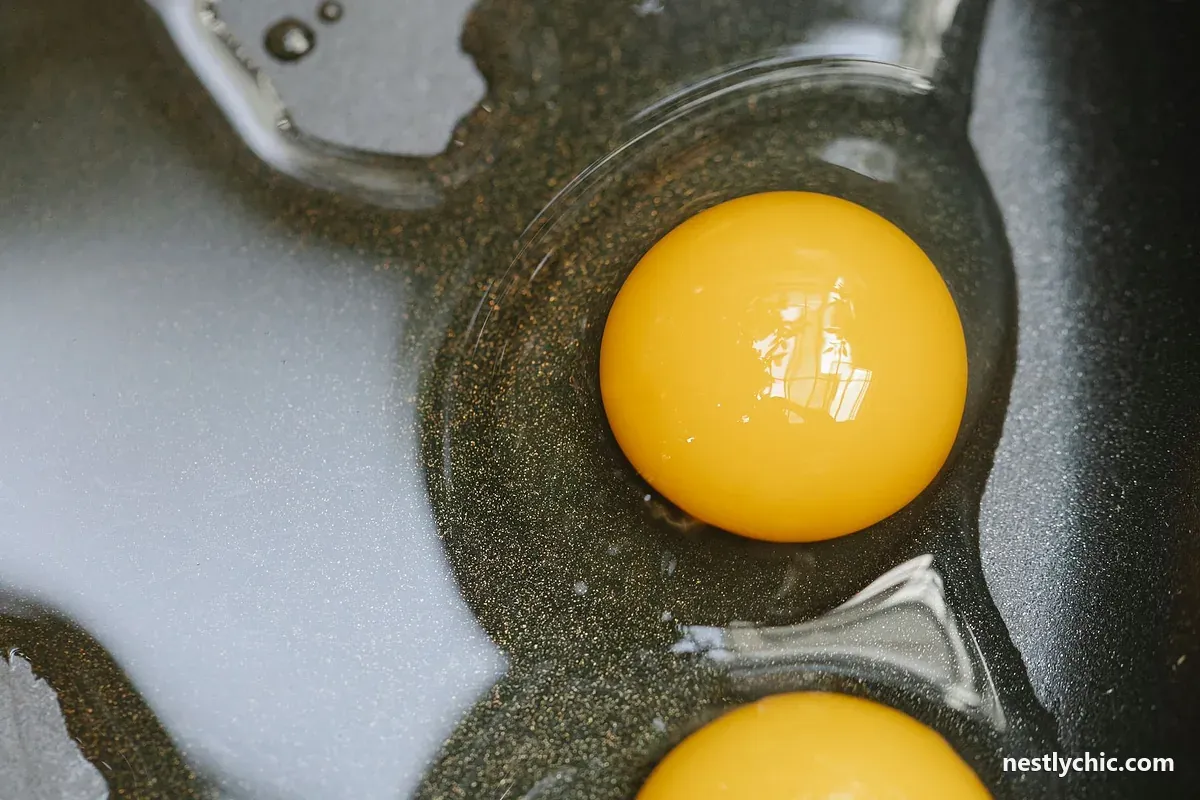
Food that used to release and now does not, evenly across the pan rather than at one spot.
A dull, patchy or discolored surface where it used to be uniform.
Visible bare metal where the coating has come away.
What this page will not do is tell you whether a scratched pan is safe to keep using. That is a health question rather than a cooking one, and it belongs on the page that carries this site's sourcing for coating safety. What the research and the regulation actually say, including IARC's classification work and where the named authorities agree and disagree, is set out in is nonstick cookware safe, which is the terminal page for every coating-health statement on this site. When a pan has reached the end of its usable life as a cooking surface is covered in when to replace a nonstick pan.
And there is no repair. Re-coating a domestic nonstick pan is not a home process and nothing on this page describes one.
The two questions people actually mean
"Am I doing something wrong?" Usually the preheating-empty habit and the high-heat default, both of which are ordinary and both of which are correctable this week.
"Did I buy a bad pan?" Sometimes, and it is not answerable from the outside. What is answerable is whether the pan was used inside the limits its maker published, and most people have never read them.
The habits that extend a coating's life
- Put oil or food in before the heat goes on, so the pan is never empty on a hot burner.
- Use the lowest heat that does the job. Nonstick's whole purpose is release at moderate temperatures.
- Check the oven and broiler limits for your specific pan and handle, on the maker's own document.
- Let it cool before it meets water. Thermal shock is a real mechanism and it is not exclusive to glass.
- Do not stack pans bare inside each other.
- Treat it as a consumable rather than an heirloom. Which is a purchasing decision as much as a care one, and it is one of the arguments in where to spend and where to save in a first kitchen.
What is outside this page
Cleaning method. How to clean a pan, what to use on baked-on grease, and what to do about residue are a different subject on a different site, and nothing here describes a cleaning product or a technique.
Health claims. No statement about coatings and health appears here; that is the terminal page's job and it is sourced there.
Any temperature figure. Yours is published by your manufacturer and this page will not substitute a general number for it.
FAQ
What ruins a nonstick pan fastest? Heat above the coating's service limit, usually reached by preheating an empty pan on a hot burner or by treating nonstick as a searing pan. Scratches are a local problem; overheating changes the whole surface.
Can I use metal utensils? It depends on the coating, and the manufacturer has published a position on it in the care instructions for your pan. Some state that their coating tolerates metal.
What temperature is too hot? That figure is per pan, per coating and per handle, and it is on your manufacturer's own document. No general figure appears here because substituting one for yours would be a guess.
Is a scratched pan still safe to use? That is a health question rather than a cooking one, and this site answers it on its coating-safety page, which carries the sourcing. This page covers what shortens a pan's cooking life.
Can a nonstick pan be re-coated? Not as a home process, and nothing on this page describes one.
Why did mine stop working after a year? Most often repeated heat above the limit rather than a manufacturing fault. The empty-preheat habit and a high-heat default are the two usual causes, and both are correctable.
Sources: this page quotes no temperature figure, no price and no lifespan figure, and cites none, because every one of those is manufacturer-specific and the reader is routed to their own care instructions instead. Coating-safety and health statements are not made here; they live on this site's is nonstick cookware safe page, which carries its own sourcing and dates. Cleaning method is outside this site's scope.