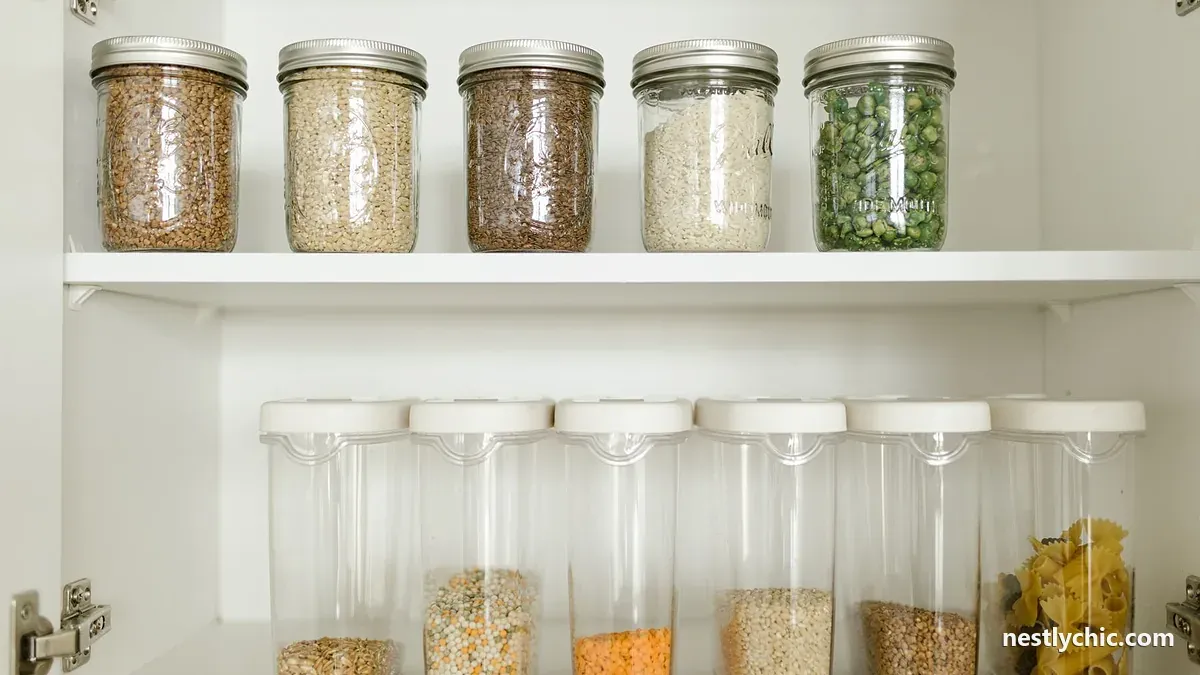
The shortest pantry list that lets a new kitchen cook a real range of meals covers five categories: cooking fats, an acid, aromatics and dried seasonings, a handful of shelf-stable proteins and starches, and baking basics if the household bakes at all. That's roughly 15 to 20 items, not the 40 to 50-item mega lists most pantry guides publish. The distinction that matters: this is the shelf-stable backbone that sits in the cabinet for months, separate from the perishable groceries bought for the first few days of actual meals.
Most pantry-staples content treats "pantry" as everything in the kitchen, mixing shelf-stable goods with things that belong in the fridge or freezer, and pads the list toward 40 or 50 items regardless of how often a household will realistically use each one. That's useful as inspiration, less useful as a shopping list for someone standing in a store with an empty kitchen. What's below is scoped tighter on purpose: shelf-stable items only, sized to get a household cooking a genuine range of meals without an oversized first trip.
Why This Is a Different List From the First-Week Grocery Run
If you've already read the first-week grocery list, that piece covers the perishable side: produce, dairy, and a few days of fresh meals sized to avoid spoilage before a routine is set. This list is the other half, the shelf-stable stock that doesn't spoil in a week and doesn't need replacing on the next trip. Buy both, but understand they answer different questions: one gets you through the first few days, this one gets the pantry to a point where most recipes are possible without a special trip.
The Core Pantry Stock
| Category | What belongs here | Why it earns a slot |
|---|---|---|
| Cooking fats | A neutral oil (such as vegetable or canola) and a flavor oil (such as olive oil) | Covers both high-heat cooking and finishing or dressing |
| Acid | Vinegar (white or apple cider) and something citrus-adjacent if the household uses it often | Balances flavor in nearly everything from a pan sauce to a salad |
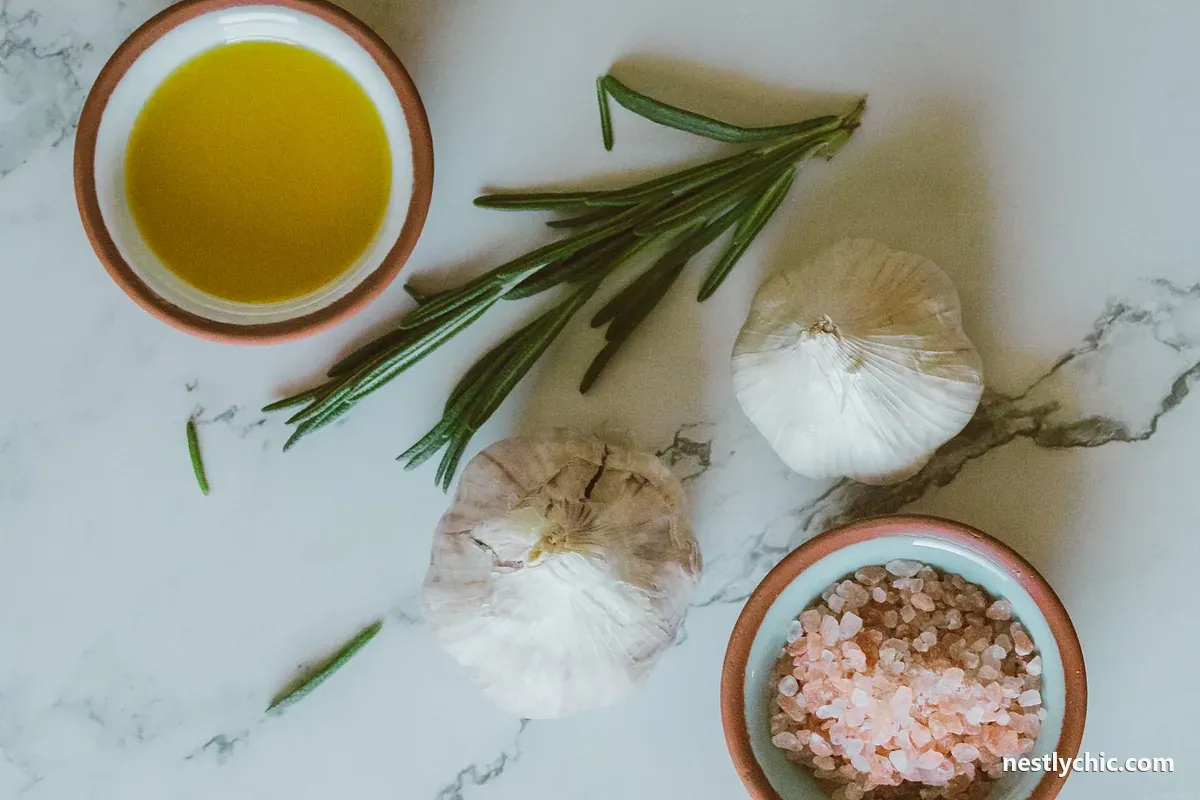
| Aromatics | Garlic, onion (fresh or dried/powdered as backup), a general seasoning blend | The base of most savory cooking across cuisines |
| Dried seasonings | Salt, black pepper, and 3 to 5 dried herbs or spices the household actually cooks with | More than this becomes a spice-rack project, not a starting list |
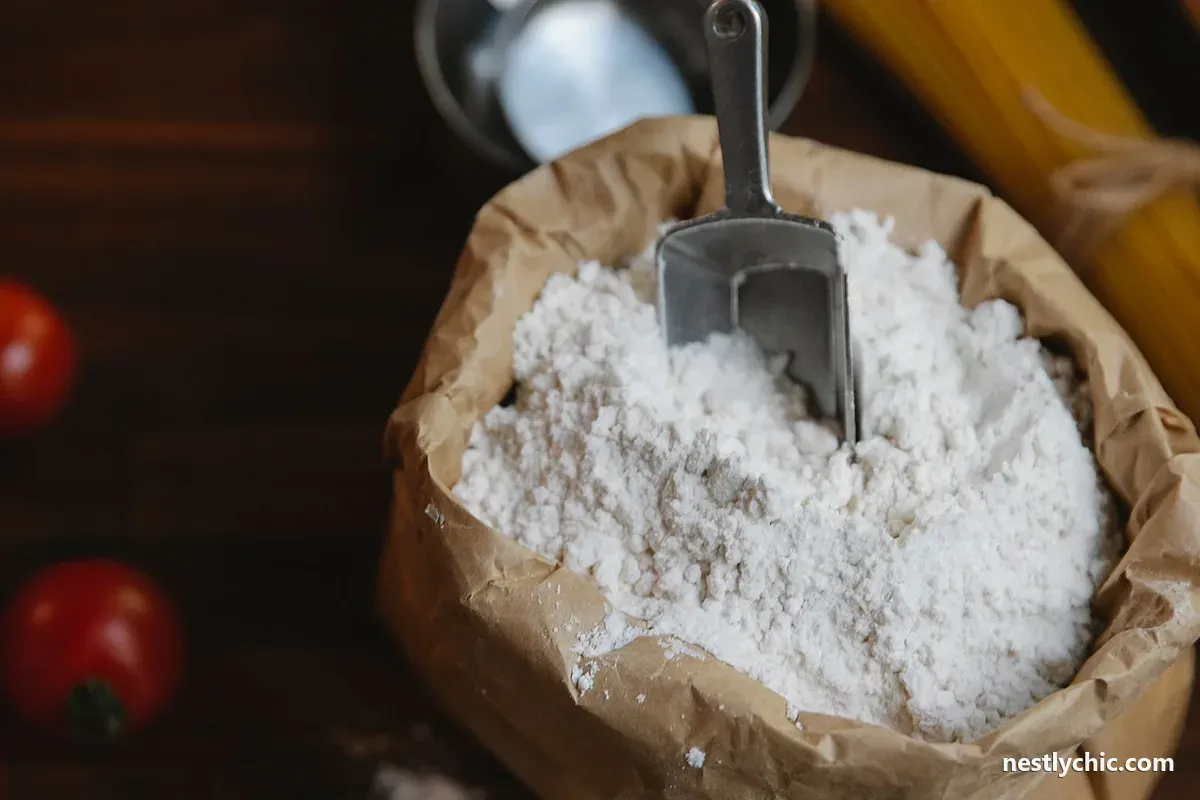
| Shelf-stable starches | Rice, dried pasta, and one all-purpose flour | Covers the bulk of a meal in most cuisines |
| Shelf-stable protein backups | Canned beans, canned tomatoes, and a jar of something like peanut butter | Meals that don't depend on a fridge trip that day |
| Sugars and baking basics (if applicable) | White sugar, baking soda or baking powder | Skip entirely if the household doesn't bake; add later if that changes |
That's the whole list. It's deliberately short of the 40 to 50-item pantry guides common on this topic, because the goal here is the minimum stock that unlocks a real range of cooking, not an exhaustive inventory of every shelf-stable food that exists.
What This List Doesn't Cover, on Purpose
This is a shopping list, not a storage system. It doesn't cover how to decant, label, or organize what you buy, how long any of it keeps once opened, or how to rotate stock so nothing goes stale unnoticed, those are organization and food-safety questions that belong to a kitchen-organization resource, not a first-purchase guide. It also doesn't touch dietary or religious permissibility questions (halal, kosher, or otherwise); a household with those requirements should build the specific brands and products against its own standard, not this list. What it does cover is simply: what to put in the cart so the pantry can support real cooking from week one onward.
How This Fits the Buying Order
A pantry stock like this doesn't need to happen in a single trip, and for most households it shouldn't. See the new home kitchen checklist for where pantry stocking fits against cookware, prep tools, and the rest of the first-purchase sequence, and the budget breakdown by tier for how a pantry stock scales (or doesn't, since most of this list is inexpensive at every tier) against the rest of the setup budget.
Building It Over Two or Three Trips
A reasonable approach: buy the fats, acid, and core seasonings on the first trip, since those unlock the most recipes immediately. Add the starches and protein backups on the second trip once you know which ones actually get used. Save specialty spices and less-common items for later, once cooking habits are clearer, rather than guessing at a full spice rack from a list. This mirrors the general logic of not overbuying before a routine exists. Kitchen linens and small consumables, the boring stuff people forget entirely, are covered separately; see kitchen essentials people forget.
FAQ
Is this list the same as a grocery list for the first week? No. The first-week grocery list covers perishables for immediate meals. This list covers shelf-stable pantry staples that stock the cabinet for months, not days.
Do I need every item on this list before I can cook anything? No. Even the fats, acid, and core seasonings alone unlock a surprising range of simple meals. The rest fills in as cooking habits become clear.
What if my household has dietary restrictions or doesn't eat some of these items? Substitute within the category rather than skipping it. The category (a fat, an acid, a starch) matters more than the specific product; swap items to match your own household's diet.
Should I buy the biggest size of everything to save money? Not necessarily for a first stock. Smaller sizes reduce the risk of an item going stale or unused before the household's actual cooking habits are established; bulk buying makes more sense once those habits are known.
Where do I put all of this once I've bought it? That's an organization and storage question, outside the scope of a shopping list like this one. This piece covers what to buy; how to arrange and label it in the cabinet is a separate decision for a separate resource.